


Why Armenia Needs a New 1,000 MW Nuclear Power Plant: Expert Identifies Five Drivers of Rising Energy Consumption
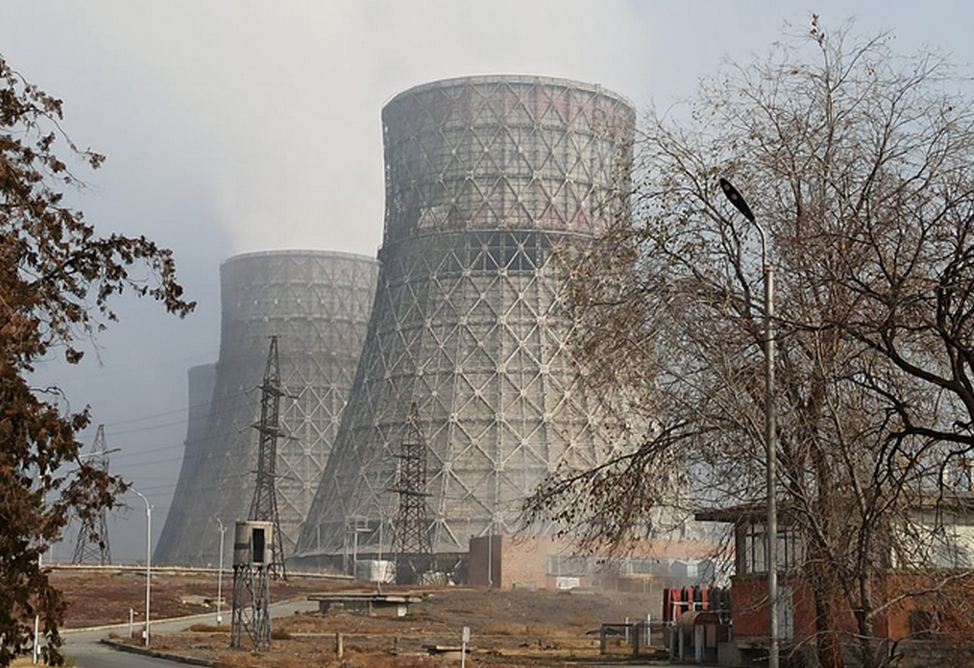
YEREVAN, October 14. /ARKA/. Armenia needs to build a new nuclear power unit with a capacity of at least 1,000 MW to meet the economy's future electricity needs, including the development of high-tech sectors, electric transport, and energy-intensive industries. This view was expressed by Ara Marjanyan, a Candidate of Technical Sciences and a UN national energy expert.
"I think Armenia will make a technically sound, economically justified, and safe decision. In my view, this entails using WWER technology with a capacity of at least 1,000 megawatts, possibly with the prospect of building a second such unit in the future," Marjanyan told reporters on the sidelines of the "Atom – Energy of the Future" youth educational seminar in Yerevan.
Five clusters of future energy consumption
According to the expert, future electricity demand in Armenia will be driven by the development of five key areas: data centers and artificial intelligence technologies, electric transport, the mining industry (with deep processing of raw materials), and the chemical and pharmaceutical industries.
Marjanyan noted that the development of these sectors would require significant amounts of electricity and guaranteed generating capacities.
The expert also stated that Yerevan needs to significantly expand its metro network, which is currently limited to a single line and 10 stations. Specifically, he advocates expanding the network to three lines and 24 stations, as well as establishing rail connections to Zvartnots International Airport and nearby cities—including Ashtarak and Charentsavan, and eventually Sevan. Marjanyan identified the development of the mining industry—specifically the shift toward the deep processing of raw materials within Armenia—as another factor likely to drive up electricity demand. "The production of refined copper and other metals is an energy-intensive process that requires guaranteed generating capacity," he emphasized.
Marjanyan also highlighted the revitalization of the chemical industry and the expansion of pharmaceutical manufacturing as key areas. "All of this will require new capacity," he noted.
He further pointed to a potential rise in electricity consumption resulting from demographic and economic shifts. He estimates that the combined development of these sectors could mean that even 1,000 MW of new nuclear generating capacity by 2036 would prove insufficient to meet future demand.
Why WWER (water-water energetic reactor) instead of small modular reactors?
Commenting on the choice of technology for the new nuclear power plant, Mardjanyan spoke in favor of WWER-type reactors, contrasting them with small modular reactor projects.
"It is appropriate here to use the saying about the crane in the sky versus the tit in the hand. The WWER -1000 reactor is the tit in the hand; this reactor exists as a physical reality. The small modular plant that various countries are talking about is the crane in the sky. It is unknown when it will enter service, and its operating parameters are unknown," the expert said.
He cited the existence of practical experience with this technology and known technical specifications as the main argument in favor of the WWER. "The WWER -1000 is a well-defined, clearly understood reactor with specific parameters and technical details," the expert stated.
As examples of the application of WWER technology, the expert mentioned the construction of nuclear power facilities in Iran, as well as plans to implement nuclear projects in other countries (Kazakhstan and Uzbekistan).
In Mardjanyan's view, uncertainty remains regarding the timelines and operational characteristics of specific small modular reactor projects.
On the construction timeline for the new nuclear power plant
Mardjanyan thinks that practical work on the new nuclear power plant project in Armenia should have begun earlier, though the opportunity to complete the project on schedule still exists.
"Work should have started last year, but it is not too late. I hope Armenia will begin practical work in early 2027," he said.
Surplus Capacity as a Prerequisite for Economic Development
According to an expert estimate, Armenia will need to have at least 1,000 MW of new nuclear generation capacity in place by 2036–2037.
At the same time, Mardjanyan did not rule out the possibility that, roughly five years later, the country might need to build another nuclear power unit with a capacity of around 1,200 MW.
Addressing the potential for a surplus in generating capacity, the expert noted that the energy system's needs must be assessed with long-term economic development goals in mind.
"If we assume that Armenia’s role is merely to grow tomatoes and export 'Jermuk' mineral water, then we have no need for nuclear generation at all—let alone small modular reactors. But if we want a technologically advanced country, Armenia must have a significant share of guaranteed nuclear generation," Mardjanyan stated.
In his view, maintaining a reserve of generating capacity lays the groundwork for the development of new manufacturing facilities and technology sectors.
In this context, the expert regards the construction of a new 1,000 MW nuclear power unit as the minimum necessary benchmark for the long-term development of the country's energy system.
