Anti-Armenian resolutions of PACE fueling Azerbaijan’s bellicose rhetoric
18.11.2015,
10:39
Anti-Armenian resolutions of the Parliamentary Assembly of the Council of Europe fuel Azerbaijan’s bellicose rhetoric, Armenian MP Karen Bekaryan said Tuesday at a parliamentary session.
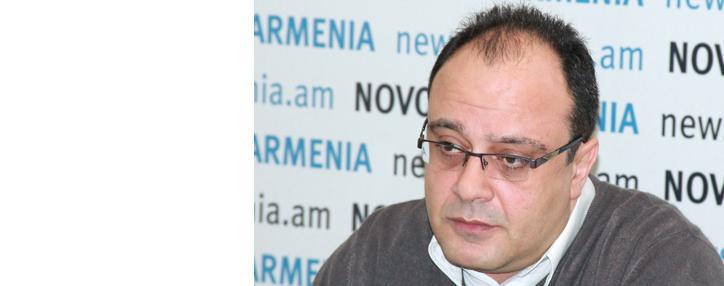
YEREVAN, November 18. /ARKA/. Anti-Armenian resolutions of the Parliamentary Assembly of the Council of Europe fuel Azerbaijan’s bellicose rhetoric, Armenian MP Karen Bekaryan said Tuesday at a parliamentary session.
“It is necessary to tell European partners that such resolutions jeopardize security since allow Azerbaijan to intensify its bellicose rhetoric and its actions on border, which take human lives on both sides,” he said.
Bekaryan also said that European organizations shouldn’t distance Armenian society from European, especially given that Armenia is a member of many European organizations.
He also said that Armenia should intensify its cooperation with European partners, should estimate things taking into account various geopolitical processes and should reorient its own steps.
On November 5, the Committee on Political Affairs and Democracy of the Parliamentary Assembly of the Council of Europe (PACE), approved an anti-Armenian report entitled “Escalation of Violence in Nagorno-Karabakh and Other Occupied Territories of Azerbaijan” by Robert Walter from the United Kingdom, a rapporteur of the PACE Political Affairs Committee.
The report contains numerous anti-Armenian wordings that are unacceptable to both Armenia and Nagorno-Karabakh. The report is put on PACE’s January session.
Karabakh conflict broke out in 1988 when Karabakh, mainly populated by Armenians, declared its independence from Azerbaijan.
On December 10, 1991, a few days after the collapse of the Soviet Union, a referendum took place in Nagorno-Karabakh, and the majority of the population (99.89%) voted for secession from Azerbaijan.
Afterwards, large-scale military operations began. As a result, Azerbaijan lost control over Nagorno-Karabakh and the seven regions adjacent to it.
Some 30,000 people were killed in this war and about one million people fled their homes.
On May 12, 1994, the Bishkek cease-fire agreement put an end to the military operations.
Тalks brokered by OSCE Minsk Group are being held over peaceful settlement of the conflict. The group is co-chaired by USA, Russia and France. ---0-----