

Armenian premier takes first steps to rid some commodity markets from monopolies
02.06.2016,
14:03
Hovik Abrahamyan, Armenian prime minister, took today his first steps to rid some commodity markets from monopolies.
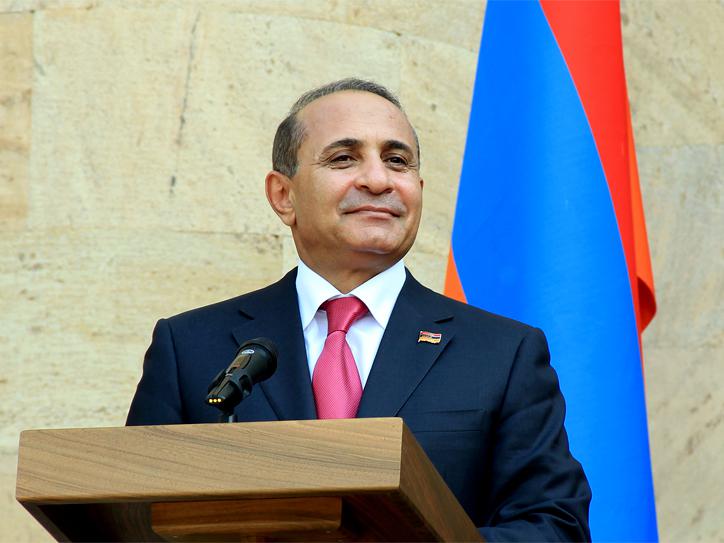
YEREVAN, June 2. /ARKA/. Hovik Abrahamyan, Armenian prime minister, took today his first steps to rid some commodity markets from monopolies.
Abrahamyan instructed the anti-trust agency to look through the matter to see monopolies’ influence on market completion in the country, but, at the same time, he gave his own comments on the situation.
The premier said he has been told recently that the society thinks that sugar, flour, wheat, cooking oil, rice, butter, banana, orange, drug, petrol and diesel markets are monopolized, while in fact there are absolutely no monopolies.
In his words, the thing is that large players oust small and mid-scale businesses from markets and bars new businessmen from entering them.
He still admitted that here are corruption and anti-competitive collusions in the country and declared his intention to crack down on illegalities.
The premier instructed the economy minister to work out some clear instructions with a detailed description of all the procedures necessary for importing commodities. The paperwork, he said, should include certificates, expert examination results, terms etc.
Instructions should be posted on the websites of economy and finance ministries as well as the state revenue committee. They should be also submitted in Russian and English languages in two months.
Abrahamyan also instructed to put a hot line in use in one month.
He declared that the government will make every effort to ensure equal conditions to all economic entities and to leave large players with no room to impose their rules at markets.
The prime minister proposed to discuss ways to limit large economic entities’ powers to particular markets and to prohibit them from doing wholesale and retail businesses at socially important markets.
He said large economic entities should do their wholesale businesses only through an electronic platform controlled by the government, even if importers and wholesale trader are companies connected to each other. In his opinion, this will create equal conditions to all.
Abrahamyan pointed out the necessity to simplify legal procedures related to the matter and reduce the time necessary for laboratory examination and certification paperwork.
Vache Gabrielyan, vice-premier and minister of international economic integration and reforms, will be in charge of the implementation of these instructions. ---0---