

Pashinyan outlines three scenarios for Armenia's future relations with the EU and EAEU
12.10.2026,
15:30
Armenia's strategic goal is to create alternatives for the country and its people, including the possibility of joining the European Union.
YEREVAN, October 12. /ARKA/. Armenia's strategic goal is to create alternatives for the country and its people, including the possibility of joining the European Union. At the same time, reforms to align the country with EU standards will continue regardless of whether it becomes a member of the bloc, Prime Minister Nikol Pashinyan stated in an interview with RFI.
According to the Prime Minister, Armenia has a long history of relations with the European Union. A Partnership and Cooperation Agreement between Armenia and the EU was signed in 1996 and entered into force in 1999. In 2017, the parties signed the Comprehensive and Enhanced Partnership Agreement (CEPA), which laid the foundation for further deepening relations.
Pashinyan noted that since 2018, Armenia has continued to move closer to the European Union. In March 2025, parliament adopted a law "On Initiating the Process of the Republic of Armenia's Accession to the European Union," which had been drafted as part of a civic initiative.
"One of the options is the accession of the Republic of Armenia to the European Union," the Prime Minister stated.
However, he noted that realizing this prospect depends not only on Armenia's desire but also on the position of the European Union itself. The EU has yet to determine its enlargement policy, and there are differing opinions on the matter within the bloc.
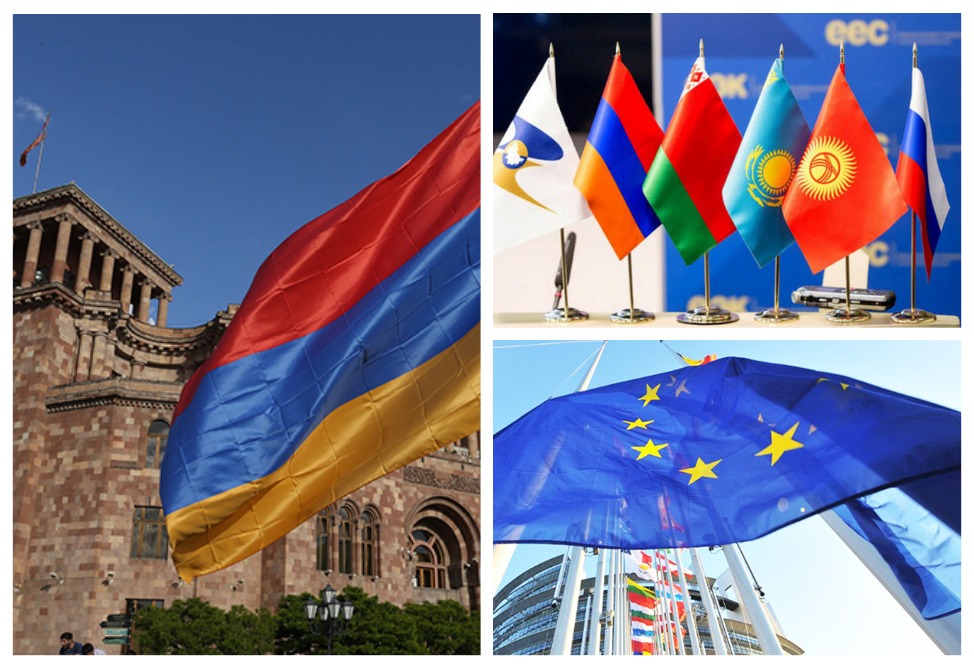
Pashinyan emphasized that Armenia's strategic task is to create alternatives—something the country and its people had lacked for a long time, including in the sphere of foreign policy. According to him, this is necessary so that the people of Armenia can decide for themselves whether the republic will remain a member of the Eurasian Economic Union, become a member of the European Union, or join neither the EU nor the EAEU.
"In any case, we will reform the Republic of Armenia, bringing it into line with European Union standards," Pashinyan emphasized.
He added that if Armenia objectively meets the requirements for EU accession, the subsequent decision will depend on two parties: whether the European Union is willing to accept the country and whether the people of Armenia support such a prospect.
"Even if Armenia, despite being objectively ready, does not become a member of the European Union, our country will still benefit, because the result will be a state that fully complies with EU standards," the Prime Minister stated.
Armenia between the EU and the EAEU
Armenian authorities have declared a course toward closer ties with the European Union and a transition to European standards, while simultaneously stating their intention to maintain EAEU membership as long as participation in both integration tracks remains compatible.
Moscow has repeatedly warned of the potential economic consequences of Armenia adopting EU standards. Russian President Vladimir Putin stated that, in such a scenario, Russia would have to scale back economic integration with Armenia. He estimated that the republic could lose up to 14% of its GDP due to rising energy prices following a withdrawal from the EAEU.
Armenia's Minister of Territorial Administration and Infrastructure, Davit Khudatyan, stated in turn that gas supplies are currently secure, contacts with partners are ongoing, and potential risks remain manageable for the country's economy.