Russian expert says Armenia’s transition to parliamentary republic make future of its relations with Russia uncertain
10.11.2015,
17:41
The package of constitutional changes providing for Armenia’s transition to a parliamentary form of government from the so-called semi-presidential form, makes the future of Russian-Armenian relations somewhat uncertain, according to Andrei Areshev.
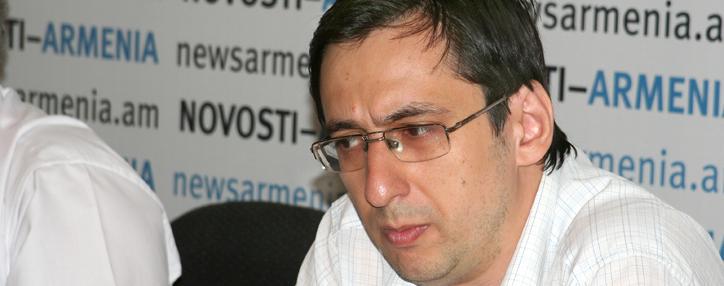
YEREVAN, November 10. / ARKA /. The package of constitutional changes providing for Armenia’s transition to a parliamentary form of government from the so-called semi-presidential form, makes the future of Russian-Armenian relations somewhat uncertain, according to Andrei Areshev, an expert on the Caucasus, Central Asia and the Ural-Volga Region from the Russian Institute of Oriental Studies.
Speaking Monday at a roundtable discussion in Yerevan he said there is some uncertainty about the impact that the transformation of Armenia’s political system may have on the Russian-Armenian relations. According to him, it causes some concern.
According to Areshev, those institutions in Russia that have influence on the formation of the country’s foreign policy are taking increasing interest in the events in Armenia.
"Today Russian foreign minister Sergey Lavrov is paying a working visit to Armenia. At the end of November prime minister is set to visit Armenia too,’ he said.
According to the Russian expert, contacts at the level of heads of state of Armenia and Russia are occurring regularly and sometimes they are accompanied by unhealthy information background, coming from various players, one way or another monitoring the Russian-Armenian relations and taking every opportunity to inject elements of mistrust in the relations between the two countries.
The roundtable of Armenian and Russian political analysts discussed Monday the possible threats and challenges facing their countries amid military and geopolitical confrontation in the region. They paid special attention to the political situation in Armenia.
The referendum on constitutional reforms is scheduled for December 6. The package of reforms, which introduce a plan to change the governance system of the country from the so-called semi-presidential to parliamentary republic, was backed by a vote of 104 to 10 and 3 abstentions in Armenia’s National Assembly on October 5. -0-