

ARKA Armenia Weekly: Key Events of the Week: Politics, Economics, and Markets (April 6–12)

YEREVAN, April 13. /ARKA/. ARKA News Agency presents a digest of the past week's key events.
SUMMARY
The week's main theme was a series of Russian signals of direct significance for businesses and markets: discussions of the railway concession and transport connectivity, confirmation of the maintenance of long-term gas contracts with Russia, and the continued dependence of export channels on the political landscape. Meanwhile, in the domestic political arena, major political forces have begun to reveal the economic and personnel contours of their campaigns.
At the macro level, the search for a balance continues between the benefits of participation in the EAEU, the European agenda, and the need to maintain predictable conditions for imports, exports, and energy supplies. For businesses, the signal remains moderate: domestic activity and digital transformation support growth potential, but issues of energy, export access, and control over infrastructure are becoming increasingly important for risk assessment.
POLITICS
The key foreign policy topic of the week was once again related to Russia and transport infrastructure. Prime Minister Nikol Pashinyan stated that Armenia does not intend to make decisions "behind Russia's back" or in defiance of it regarding the possible transfer of the Armenian railway concession to Kazakhstan, emphasizing that while opportunities for dialogue with Russia remain, work will continue. This is an important political and economic signal: Yerevan is demonstrating that, even with the diversification of its foreign relations, it does not intend to drastically reformat sensitive infrastructure mechanisms without taking Russian interests into account.
A separate foreign policy signal of the week was the opening of the Estonian embassy in Yerevan. The Armenian side linked the opening of the embassy to its support for Armenian-Estonian relations and a more expanded framework for Armenia-EU relations, while the Estonian side linked the opening to its priority cooperation with Armenia, support for democratic and European policies, and the launch of a practical business program to find new markets for Armenian companies.
According to a survey conducted by the Armenian office of GALLUP International Association, 60% of respondents consider the political situation in the country tense: 30.7% described it as "rather tense," and another 30.2% as "very tense." For the markets, this doesn't automatically mean destabilization, but it does indicate that the election cycle is taking place in an environment of heightened domestic sensitivity.
The opposition's pre-election configuration has also become more formalized. The Armenia bloc presented the economic direction of its platform, emphasizing the revival of industry, the development of a high-tech economy, and the "Made in Armenia" policy. Among the stated goals is increasing the share of industry in GDP to 25%. The Prosperous Armenia Party announced the first 30 names on its election list, headed by Gagik Tsarukyan. For the business community, this signifies that domestic political competition is entering a practical phase, where the market is no longer only interested in slogans but also in the personalities of future centers of influence.
ECONOMICS AND MACROSIGNALS
One of the central topics on the macroeconomic agenda this week was the discussion of Armenia's foreign trade balance. In an interview with ARKA news agency, economist Grant Mikaelyan stated that the authorities' current goal is to maximize the benefits of the Eurasian Economic Union (EAEU) and then attempt to integrate with the EU. If this fails, he believes, the Turkish trajectory could strengthen. This expert assessment accurately reflects the dilemma facing the economy: Armenia is attempting to maintain the benefits of existing Eurasian integration while simultaneously maintaining its European trajectory. For the market, this means continuing the multi-vector model, but without a clear answer to the question of its long-term compatibility.
A second important economic topic concerns risks to trade with Russia. Economist Grant Mikaelyan linked Russia's complaints about Armenian agricultural products to the policies of the Armenian authorities, noting that the agricultural sector is traditionally more vulnerable to political influence. For the economy, this means that foreign trade cannot be considered separately from the political agenda.
The week's energy section was also directly linked to Russia. Pashinyan stated that Armenia's long-term contracts with Russia would not be violated, commenting on risks surrounding product supplies and gas prices. He also recalled the ongoing standardization of products in accordance with EAEU regulations. For businesses, this means that basic energy supply parameters and some foreign trade obligations are not yet being revised.
BUSINESS AND CORPORATE SECTOR
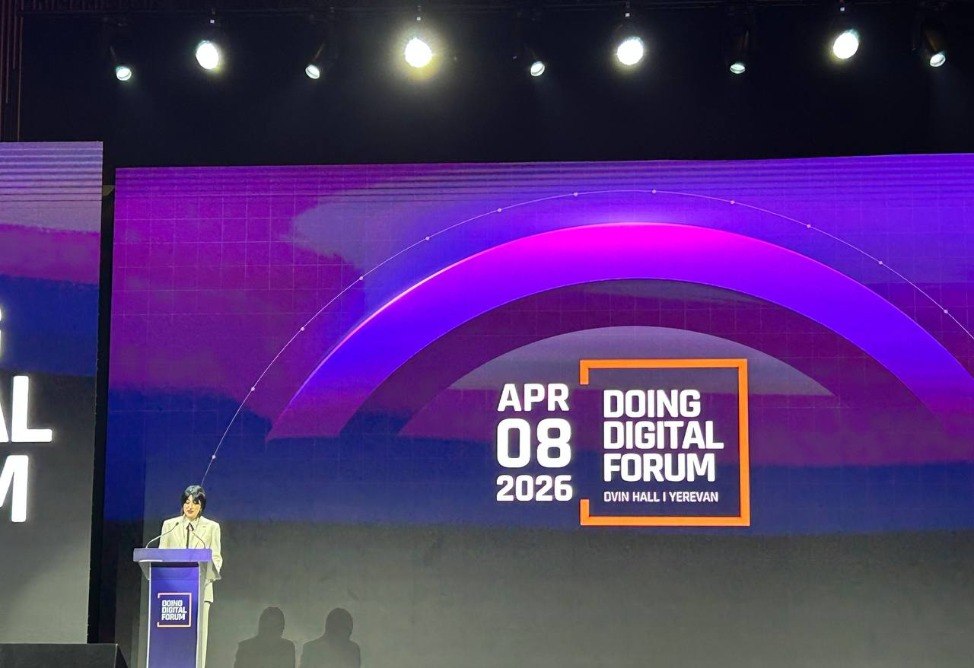
For the corporate sector, the week was dominated by infrastructure, the digital economy, and the state's role in strategic assets. Central Bank Governor Martin Galstyan stated at the Doing Digital 2026 forum that Armenia can become a bridge between continents by relying on two factors: strong macroeconomic stability and a financial and digital architecture that will allow these opportunities to unfold. This is an important benchmark for businesses: they are focusing not only on geography but also on the institutional environment.
The second major topic is the electric power sector and control over critical infrastructure. Pashinyan stated that the Electric Networks of Armenia has already been de facto nationalized. This status will subsequently be formalized legally: after de jure registration, management of the company is planned to be delegated to another structure. On the one hand, the authorities are demonstrating a willingness to firmly intervene in the management of strategic assets when systemic problems accumulate. On the other hand, the quality of the legal framework for such decisions and the future governance model are becoming increasingly important for investors, as they will determine the perception of regulatory risk in infrastructure sectors.
MARKETS AND FINANCE
Energy modernization has become a key focus on the market agenda as a future financial and investment topic. According to ARKA, Armenia is preparing to develop the energy storage sector; the authorities intend to introduce licensing for storage systems, while simultaneously discussing technological solutions and cooperation with international companies, including Huawei. This is important for the market not as a one-time corporate news item, but as an indicator of the emergence of a new energy investment segment.
Foreign trade statistics have given markets a more concrete basis. According to Armstat, Armenia's foreign trade turnover in January–February 2026 amounted to $3.06 billion, returning to growth (+9.3%) after declining throughout 2025. Russia remained the largest trading partner with a turnover of $822.5 million, despite a 17.4% decline. China ranked second with $454.5 million, up 18.4%, and the UAE third with $142.1 million, down 40.9%. Trade with EU countries increased by 61.6% to $482.3 million, while with the EAEU it decreased by 14.7% to $877.6 million. For markets and businesses, this means that the Russian direction remains dominant, but the trade structure itself is gradually becoming more diversified.
WHAT DOES THIS MEAN?
The Russian contour remains not just a foreign policy direction for Armenia, but a fundamental economic variable.
Armenia's economy is increasingly living in a multi-layered balance: continued interest in diversifying external relations, as well as the significance of current benefits from the EAEU, trade standards, and Russia's role in the energy sector.
Pre-election tensions and increased state control over strategic infrastructure do not negate Armenia's investment potential, but rather make regulatory predictability, institutional quality, and the government's ability to explain the rationale for its decisions even more important for businesses.
Themes of digital transformation, macrostability, and new energy infrastructure are becoming not a backdrop, but a part of the economic strategy.
RISKS OF THE CURRENT WEEK
Markets and businesses will be watching to see whether the current cautious approach to relations with Russia on issues of railway infrastructure, gas supplies, and trade procedures will be maintained.
The high share of respondents who consider the domestic political situation tense increases the market's sensitivity to statements from major powers and any decisions regarding major infrastructure and corporate assets.
The transition to energy storage systems and the restructuring of grid infrastructure management open up new opportunities, but markets will closely monitor how consistently licensing, access regulations, and the state participation model are formalized.