

IMF Resident Representative to Armenia on economy, agreement with EU and poverty
21.12.2017,
15:16
Armenia became a member of the International Monetary Fund in 1992. Since then, the IMF has extended financial support to Armenia in the framework of nine programs.
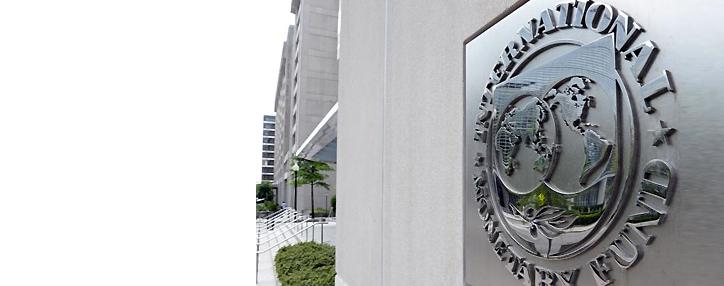
YEREVAN, December 21, /ARKA/. Armenia became a member of the International Monetary Fund in 1992. Since then, the IMF has extended financial support to Armenia in the framework of nine programs. What does the Fund project with respect to Armenia’s economy in 2018? What will the Comprehensive and Enhanced Partnership Agreement with the EU bring to the country? How does Armenia’s economy look in comparison to other countries in the region? What is to be done in relation to poverty? These and other questions were answered by IMF Resident Representative for Armenia Yulia Ustyugova in an exclusive interview with the ARKA news agency.
ARKA: in its most recent report, IMF projected growth to accelerate in emerging market economies and in developing countries. What is behind this positive assessment? Are there any key risks lying ahead of these countries?
Yulia Ustyugova: for the global economy 2017 is ending on a high note. Economic activity is strengthening. Global growth, which in 2016 was 3.2%--the lowest since the times of the global financial crisis, is expected rise to 3.6% in 2017 and 3.7% in 2018. The forecast sees a stronger rebound in advanced economies in 2017 to 2.2% (the April forecast was 2%), driven by the Eurozone, Japan, and Canada. 2017 and 2018 growth prospects for emerging markets and developing economies were revised upwards by 0.1 percentage point since April. This is largely due to the improved growth projection for China. China’s revised 2017 projection of 6.8% in October (compared to 6.6% in April) reflects stronger performance in the first-half of 2017 and more robust external demand, while the higher growth expectations for 2018 are due to the assumption that the Chinese government will continue to implement expansionary policies to achieve the objective of doubling real GDP over 2010-2020. Our growth forecast has also been revised upwards for emerging Europe, including Turkey and other countries of the region, as well as Russia and Brazil.
As to the risks, the short-term risks are broadly balanced, while risks to growth in the medium term are tilted to the downside. Potential hazards include a more rapid and sizable tightening of global financial conditions, financial turmoil in emerging market economies, an inward shift in policies – a shift to protectionism. All of this may lead to contraction of trade and cross-border investment flows, and weaken global growth; in fact, these risks are interconnected and may reinforce one another.
ARKA: you mentioned Russia. How exactly will a more buoyant Russian economy impact Armenia in view of the close economic ties between the countries?
Yulia Ustyugova: as I have already mentioned, we revised the growth projection for Russia. The current forecast is that in 2017 and 2018, Russia’s economic activity will increase by 1.8 and 1.6 percent, which are 0.4 and 0.2 percentage points higher than the April projections. This is helped by higher oil prices, easier financial conditions, and improved consumer confidence. Higher economic growth in Russia will stimulate Armenia’s export growth and raise remittance flow from Russia.
ARKA: IMF revised Armenia’s 2017 growth projection upwards to 3.5%. What is the Fund’s projection regarding Armenia’s economy in 2018, and what is it based upon?
Yulia Ustyugova: it is already noticeable that 2017 has been a good year for Armenia in terms of economic activity; especially on the backdrop of 2016, when the economy grew by only 0.2%. In the October issue of the Regional Economic Outlook, the IMF revised Armenia’s 2017 growth projection from 2.9% to 3.5%. That, however, is not our latest projection: currently we project 2017 growth to exceed 4%. Higher copper prices (copper being an important component of Armenia’s exports), increased remittances from Russia (owing to Russia’s economic growth) and expansionary monetary policy have been beneficial for Armenia’s economy. Copper prices and remittances are expected to stabilize in 2018. Under these conditions, growth is projected to moderate to about 3.4%, which is solid growth.
ARKA: according to the approved 2018 State Budget, Armenia’s GDP will grow by 4.5%.
Yulia Ustyugova: yes, we are aware. Despite the different projections of real growth, our expectations are comparable in terms of nominal fiscal revenues. Overall, we think that the approved 2018 budget meets the Government’s stated objectives of achieving fiscal consolidation.
ARKA: what could you say about the level of inflation in Armenia? At present, the world expert community is alarmed about the trend of extremely low inflation.
Yulia Ustyugova: currently we do not see risks of lower inflation in Armenia. The Central bank’s monetary policy has appropriately supported the economy by reducing the refinancing rate. Currently the Central bank is carefully monitoring the macroeconomic situation as inflation is gradually picking up. This is generally a good trend, as it reflects more buoyant economic activity. We expect that inflation will stabilize within the inflation target corridor of the Central Bank.
ARKA: public debt is a hot topic in Armenia, as it has already gone beyond 50% of GDP, and continues to rise. The IMF, however, has argued that it does not see this as an alarming trend. Could you explain why the IMF thinks so, and what recommendations of the Fund could help to address this highly important problem for the country.
Yulia Ustyugova: Armenia’s public debt level is elevated. However, the IMF regularly assesses public debt sustainability, taking into account numerous factors. They include the growth projections, interest rates, the exchange rate and fiscal plans. Our estimates suggest that Armenia’s public debt is sustainable. Of course, there are risks, because about 90% of the debt is in foreign currency, which means that, in case of a sharp devaluation of the Armenian dram, the debt-to-GDP ratio would rise. However, there are mitigating factors, too: the bulk of this debt is borrowed for a long term and at a fixed low interest rate. This reduces the refinancing risks and interest rate risks. This said, it is essential that the Government continues the ongoing fiscal consolidation, which will enable to stabilize and subsequently reduce the debt. The revised fiscal rule is well placed to support fiscal consolidation plans and provide for a credible corrective mechanism that puts the debt on a declining path.
ARKA: taxes are expected to rise from January 1, 2018, including in particular taxes on some excisable goods. In your opinion, how justified are such increases?
Yulia Ustyugova: the new Tax Code comes into force on January 1, 2018. And it is not just about higher excise tax rates; it is also about redistribution of the tax burden within society (where, with the introduction of more progressive taxation, higher incomes are taxed at a higher tax rate). It is also about broadening the tax base and eliminating the tax loopholes. Taken together, all of this will help the Government to generate higher revenue for investments in infrastructure and social projects that are crucial for the country’s development, and not for fiscal consolidation only.
ARKA: on November 24, Armenia signed a Comprehensive and Enhanced Partnership Agreement with the European Union. In your opinion, can the CEPA be seen as a key to new opportunities for the Armenian economy, and what real advantages can Armenia gain from this Agreement?
Yulia Ustyugova: the signed Agreement unleashes wide-ranging possibilities for the country, as it implies extensive expert, financial, and technical assistance to support economic stability and institutional development in Armenia. It will gradually allow improving the investment climate in the country for foreign investors and forming a basis for further deepening of trade and financial ties between Armenia and the EU.
ARKA: how does the Armenian economy compare to other countries in the region?
Yulia Ustyugova: there are different countries in the region. Some are oil importers, and others are exporters. Therefore, it would be fair to compare Armenia with oil-importing countries such as Georgia, Kyrgyzstan, and Tajikistan. All have benefited from the improved economic situation in the trading partners and higher remittances from Russia, although the GDP growth trends in the regional countries are varied. In Georgia, similar to Armenia, growth is projected to accelerate in 2017. In the Kyrgyz Republic, on the contrary, growth is expected to slow down somewhat as gold mining stabilizes; the same holds true for Tajikistan, where the financial sector remains in a difficult situation. A stable financial sector, by the way, is an important strength of the Armenian economy. Unlike Tajikistan, as well as Kazakhstan and Azerbaijan, the Armenian authorities did not have to use public resources to support the financial sector on the backdrop of unfavorable external conditions in recent years. Nevertheless, the region’s growth in the medium term is expected to remain below the historical trend. Hence, all the countries in the region need to speed up the implementation of the reforms in order to boost the growth potential and reduce unemployment.
ARKA: but poverty is very high in Armenia, as well, it is around 30%.
Yulia Ustyugova: we are concerned about it. The economy grows, but the level of poverty remains high. One should not hope that it will change by itself. It is important to ensure that economic growth creates new jobs in all regions of the country. It is also necessary to identify what professions are demanded in the market today and what education they require. Special targeted vocational training programs are needed, with a focus on young people and women as more vulnerable groups in society. The education system needs to be revisited. It is also important to ensure that there is access to affordable and quality health services. We see that work in this area is already underway and is expected to continue within the government program for 2017-2022.
ARKA: Armenia’s economy is currently in dire need of investments in infrastructure projects. Considering that the IMF assigns great importance to higher infrastructure investments, what is the Fund’s contribution to infrastructure development in Armenia, and what main challenges does the country face in this sphere?
Yulia Ustyugova: modernization of the infrastructure is crucial for Armenia. It would help to boost growth in export-oriented sectors, thereby stimulating FDI, diversifying the production base, and augmenting the growth potential. These would also help reduce the country’s dependency on remittances and improve resilience to negative external economic spillovers. Limited budget resources, however, require special attention to investment prioritization and effective and transparent management of these public resources.
ARKA: in 25 years of its work in Armenia, to which economic sectors has the IMF provided the greatest financial support? What investment policy does the Fund intend to carry out in view of the new Government Program?
Yulia Ustyugova: Armenia became a member of the IMF in 1992. Since then, the IMF has extended financial assistance to Armenia in the framework of nine programs. As you know, IMF’s primary mandate is to support global economic and financial stability. Therefore, the IMF provides financial support to its members to maintain economic stability and overcome problems related to the balance of payments. For example, the IMF’s previous program with Armenia (for 2014-2017) supported government economic policies aimed at mitigating the negative impact of the external shock: the contraction of the Russian economy, and the devaluation of the ruble. Currently we see that Armenia’s economic situation has stabilized. There was a period of low growth (0.2%) in 2016, but in 2017 economic activity has accelerated significantly. Inflation is well controlled. The financial sector is stable. The IMF will continue close cooperation with the Armenian authorities, providing macroeconomic policy advice, technical assistance and facilitating global and regional cooperation. The IMF always stands ready to consider another program with Armenia if needed. -0-
ARKA: in its most recent report, IMF projected growth to accelerate in emerging market economies and in developing countries. What is behind this positive assessment? Are there any key risks lying ahead of these countries?
Yulia Ustyugova: for the global economy 2017 is ending on a high note. Economic activity is strengthening. Global growth, which in 2016 was 3.2%--the lowest since the times of the global financial crisis, is expected rise to 3.6% in 2017 and 3.7% in 2018. The forecast sees a stronger rebound in advanced economies in 2017 to 2.2% (the April forecast was 2%), driven by the Eurozone, Japan, and Canada. 2017 and 2018 growth prospects for emerging markets and developing economies were revised upwards by 0.1 percentage point since April. This is largely due to the improved growth projection for China. China’s revised 2017 projection of 6.8% in October (compared to 6.6% in April) reflects stronger performance in the first-half of 2017 and more robust external demand, while the higher growth expectations for 2018 are due to the assumption that the Chinese government will continue to implement expansionary policies to achieve the objective of doubling real GDP over 2010-2020. Our growth forecast has also been revised upwards for emerging Europe, including Turkey and other countries of the region, as well as Russia and Brazil.
As to the risks, the short-term risks are broadly balanced, while risks to growth in the medium term are tilted to the downside. Potential hazards include a more rapid and sizable tightening of global financial conditions, financial turmoil in emerging market economies, an inward shift in policies – a shift to protectionism. All of this may lead to contraction of trade and cross-border investment flows, and weaken global growth; in fact, these risks are interconnected and may reinforce one another.
ARKA: you mentioned Russia. How exactly will a more buoyant Russian economy impact Armenia in view of the close economic ties between the countries?
Yulia Ustyugova: as I have already mentioned, we revised the growth projection for Russia. The current forecast is that in 2017 and 2018, Russia’s economic activity will increase by 1.8 and 1.6 percent, which are 0.4 and 0.2 percentage points higher than the April projections. This is helped by higher oil prices, easier financial conditions, and improved consumer confidence. Higher economic growth in Russia will stimulate Armenia’s export growth and raise remittance flow from Russia.
ARKA: IMF revised Armenia’s 2017 growth projection upwards to 3.5%. What is the Fund’s projection regarding Armenia’s economy in 2018, and what is it based upon?
Yulia Ustyugova: it is already noticeable that 2017 has been a good year for Armenia in terms of economic activity; especially on the backdrop of 2016, when the economy grew by only 0.2%. In the October issue of the Regional Economic Outlook, the IMF revised Armenia’s 2017 growth projection from 2.9% to 3.5%. That, however, is not our latest projection: currently we project 2017 growth to exceed 4%. Higher copper prices (copper being an important component of Armenia’s exports), increased remittances from Russia (owing to Russia’s economic growth) and expansionary monetary policy have been beneficial for Armenia’s economy. Copper prices and remittances are expected to stabilize in 2018. Under these conditions, growth is projected to moderate to about 3.4%, which is solid growth.
ARKA: according to the approved 2018 State Budget, Armenia’s GDP will grow by 4.5%.
Yulia Ustyugova: yes, we are aware. Despite the different projections of real growth, our expectations are comparable in terms of nominal fiscal revenues. Overall, we think that the approved 2018 budget meets the Government’s stated objectives of achieving fiscal consolidation.
ARKA: what could you say about the level of inflation in Armenia? At present, the world expert community is alarmed about the trend of extremely low inflation.
Yulia Ustyugova: currently we do not see risks of lower inflation in Armenia. The Central bank’s monetary policy has appropriately supported the economy by reducing the refinancing rate. Currently the Central bank is carefully monitoring the macroeconomic situation as inflation is gradually picking up. This is generally a good trend, as it reflects more buoyant economic activity. We expect that inflation will stabilize within the inflation target corridor of the Central Bank.
ARKA: public debt is a hot topic in Armenia, as it has already gone beyond 50% of GDP, and continues to rise. The IMF, however, has argued that it does not see this as an alarming trend. Could you explain why the IMF thinks so, and what recommendations of the Fund could help to address this highly important problem for the country.
Yulia Ustyugova: Armenia’s public debt level is elevated. However, the IMF regularly assesses public debt sustainability, taking into account numerous factors. They include the growth projections, interest rates, the exchange rate and fiscal plans. Our estimates suggest that Armenia’s public debt is sustainable. Of course, there are risks, because about 90% of the debt is in foreign currency, which means that, in case of a sharp devaluation of the Armenian dram, the debt-to-GDP ratio would rise. However, there are mitigating factors, too: the bulk of this debt is borrowed for a long term and at a fixed low interest rate. This reduces the refinancing risks and interest rate risks. This said, it is essential that the Government continues the ongoing fiscal consolidation, which will enable to stabilize and subsequently reduce the debt. The revised fiscal rule is well placed to support fiscal consolidation plans and provide for a credible corrective mechanism that puts the debt on a declining path.
ARKA: taxes are expected to rise from January 1, 2018, including in particular taxes on some excisable goods. In your opinion, how justified are such increases?
Yulia Ustyugova: the new Tax Code comes into force on January 1, 2018. And it is not just about higher excise tax rates; it is also about redistribution of the tax burden within society (where, with the introduction of more progressive taxation, higher incomes are taxed at a higher tax rate). It is also about broadening the tax base and eliminating the tax loopholes. Taken together, all of this will help the Government to generate higher revenue for investments in infrastructure and social projects that are crucial for the country’s development, and not for fiscal consolidation only.
ARKA: on November 24, Armenia signed a Comprehensive and Enhanced Partnership Agreement with the European Union. In your opinion, can the CEPA be seen as a key to new opportunities for the Armenian economy, and what real advantages can Armenia gain from this Agreement?
Yulia Ustyugova: the signed Agreement unleashes wide-ranging possibilities for the country, as it implies extensive expert, financial, and technical assistance to support economic stability and institutional development in Armenia. It will gradually allow improving the investment climate in the country for foreign investors and forming a basis for further deepening of trade and financial ties between Armenia and the EU.
ARKA: how does the Armenian economy compare to other countries in the region?
Yulia Ustyugova: there are different countries in the region. Some are oil importers, and others are exporters. Therefore, it would be fair to compare Armenia with oil-importing countries such as Georgia, Kyrgyzstan, and Tajikistan. All have benefited from the improved economic situation in the trading partners and higher remittances from Russia, although the GDP growth trends in the regional countries are varied. In Georgia, similar to Armenia, growth is projected to accelerate in 2017. In the Kyrgyz Republic, on the contrary, growth is expected to slow down somewhat as gold mining stabilizes; the same holds true for Tajikistan, where the financial sector remains in a difficult situation. A stable financial sector, by the way, is an important strength of the Armenian economy. Unlike Tajikistan, as well as Kazakhstan and Azerbaijan, the Armenian authorities did not have to use public resources to support the financial sector on the backdrop of unfavorable external conditions in recent years. Nevertheless, the region’s growth in the medium term is expected to remain below the historical trend. Hence, all the countries in the region need to speed up the implementation of the reforms in order to boost the growth potential and reduce unemployment.
ARKA: but poverty is very high in Armenia, as well, it is around 30%.
Yulia Ustyugova: we are concerned about it. The economy grows, but the level of poverty remains high. One should not hope that it will change by itself. It is important to ensure that economic growth creates new jobs in all regions of the country. It is also necessary to identify what professions are demanded in the market today and what education they require. Special targeted vocational training programs are needed, with a focus on young people and women as more vulnerable groups in society. The education system needs to be revisited. It is also important to ensure that there is access to affordable and quality health services. We see that work in this area is already underway and is expected to continue within the government program for 2017-2022.
ARKA: Armenia’s economy is currently in dire need of investments in infrastructure projects. Considering that the IMF assigns great importance to higher infrastructure investments, what is the Fund’s contribution to infrastructure development in Armenia, and what main challenges does the country face in this sphere?
Yulia Ustyugova: modernization of the infrastructure is crucial for Armenia. It would help to boost growth in export-oriented sectors, thereby stimulating FDI, diversifying the production base, and augmenting the growth potential. These would also help reduce the country’s dependency on remittances and improve resilience to negative external economic spillovers. Limited budget resources, however, require special attention to investment prioritization and effective and transparent management of these public resources.
ARKA: in 25 years of its work in Armenia, to which economic sectors has the IMF provided the greatest financial support? What investment policy does the Fund intend to carry out in view of the new Government Program?
Yulia Ustyugova: Armenia became a member of the IMF in 1992. Since then, the IMF has extended financial assistance to Armenia in the framework of nine programs. As you know, IMF’s primary mandate is to support global economic and financial stability. Therefore, the IMF provides financial support to its members to maintain economic stability and overcome problems related to the balance of payments. For example, the IMF’s previous program with Armenia (for 2014-2017) supported government economic policies aimed at mitigating the negative impact of the external shock: the contraction of the Russian economy, and the devaluation of the ruble. Currently we see that Armenia’s economic situation has stabilized. There was a period of low growth (0.2%) in 2016, but in 2017 economic activity has accelerated significantly. Inflation is well controlled. The financial sector is stable. The IMF will continue close cooperation with the Armenian authorities, providing macroeconomic policy advice, technical assistance and facilitating global and regional cooperation. The IMF always stands ready to consider another program with Armenia if needed. -0-