


Russia again reminds Armenia of contradictions between EU and EAEU regulations
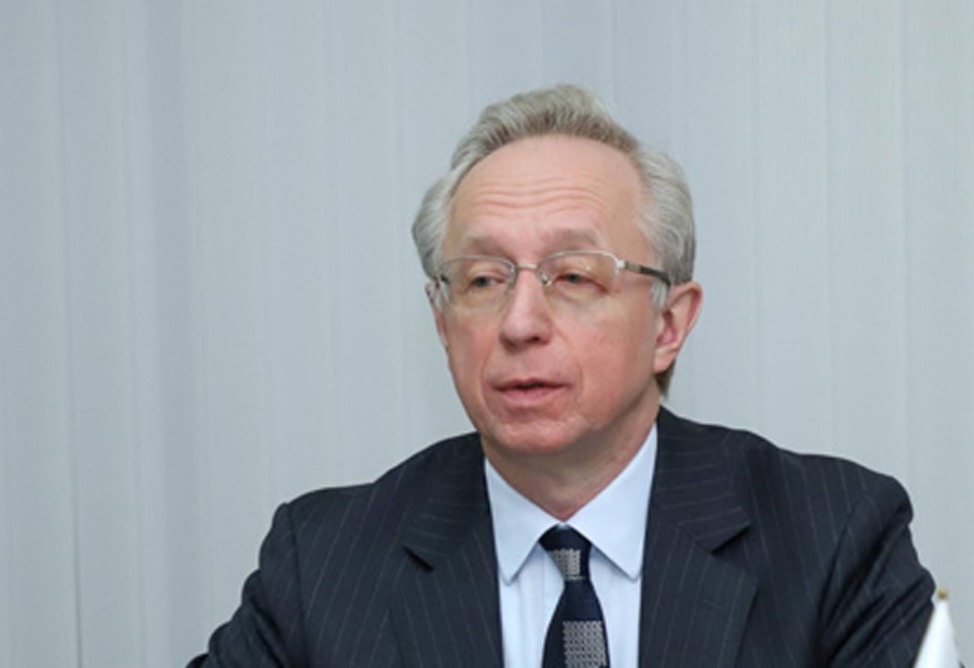
YEREVAN, December 30. /ARКА/. Russia is openly telling its Armenian counterparts that harmonizing its legal framework with the EU will inevitably conflict with the corresponding EAEU regulations, stated Russian Deputy Foreign Minister Mikhail Galuzin.
"Armenia is Russia's ally, a strategic partner, and these fundamental parameters of our relations remain unchanged. We base our relations with Armenia on this very nature. As for its right to maintain relations with any country or association, including the European Union, we believe this is the right of any sovereign country. But cooperation is one thing, and integration is quite another," Galuzin noted in an interview with Russian daily Izvestia.
According to him, the developments in the new strategic agenda of the Armenia-EU partnership, as assessed by the Russian side, are precisely integration, which includes the harmonization of Armenia's legal framework with relevant EU standards in key areas such as politics, security, economics, energy, ecology, and so on.
The deputy minister noted that Moscow is closely monitoring potential contradictions between Armenia's course toward harmonizing its legal framework with EU norms and the corresponding rules of the EAEU.
"We are discussing these issues honestly and openly. We are pleased to note that Armenian Prime Minister Nikol Pashinyan participated in both the Eurasian Intergovernmental Council meeting in Moscow (December 11) and the Supreme Eurasian Economic Council meeting in St. Petersburg (December 21) in relevant formats, particularly within the framework of the bilateral intergovernmental commission on economic cooperation, which last met on December 17 in Yerevan. He also reaffirmed Armenia's commitment to further participation in Eurasian integration. We hope this will be the case. Armenia has been a member of the EAEU since 2015. And, of course, over these 10 years, we are confident that Armenian society and the country's leadership have experienced all the significant benefits that membership in the Eurasian Economic Union provides," Galuzin noted.
According to him, for example, in 2015, when Armenia joined the EAEU, its GDP was approximately $10.5 billion, while today it is already $26 billion, more than doubling.
"And we see that Armenia's trade with union countries is also growing. Today, it is already almost $14 billion, and free access for Armenian products to EAEU markets has already led to the majority of Armenia's trade being with the EAEU, and primarily with our country, Russia. For example, in the first 10 months of this year, according to our statistics, Armenia's export volume amounted to $6.4 billion. Of this, $2.6 billion went to EAEU countries, primarily Russia, which accounts for 37% of Armenia's exports. And only half a billion dollars goes to the European Union," Galuzin said.
As the deputy minister stated, the enormous benefits for Armenia from membership in the Eurasian Economic Union are obvious, on the one hand. "On the other hand, it's clear that if a country is a member of one association with supranational regulation, then its accession to another association (also with supranational regulation under completely different standards) calls into question its membership in the first," Galuzin emphasized.
He stated that Russia hopes that cooperation with Armenia within the EAEU will continue, especially since the Armenian side, at the senior leadership level, confirms this.
Armenia – EAEU – EU
On March 26, 2025, the National Assembly of Armenia approved a draft law on the country's accession to the European Union. On April 4, the President of Armenia signed the law.
Prime Minister Nikol Pashinyan stated that Armenia does not plan to sever economic ties with the EAEU and does not aim to reduce trade with the EAEU and Russia. He stated that Armenia is pursuing economic diversification and wants to increase trade with the European Union.
The head of government also noted that the beginning of the EU accession process offsets certain foreign policy risks. He stated that Armenia can only join the EU if the people approve this initiative in a referendum, and that the main challenge facing Armenia in the EU accession process is compliance with EU standards.
In September 2025, Russian Deputy Prime Minister Alexey Overchuk stated that Yerevan's statements about rapprochement with the EU could lead to a revision of Russia's economic policy toward Armenia, the loss of duty-free trade, rising energy and food prices, and problems in business, aviation, and logistics. Noting that this would be Armenia's choice, Overchuk stated that the consequences would be serious.-0-