


20 years of “Novosti-Armenia”: A conversation with Director General Galina Davidyan about trust, meaning, and the future of journalism
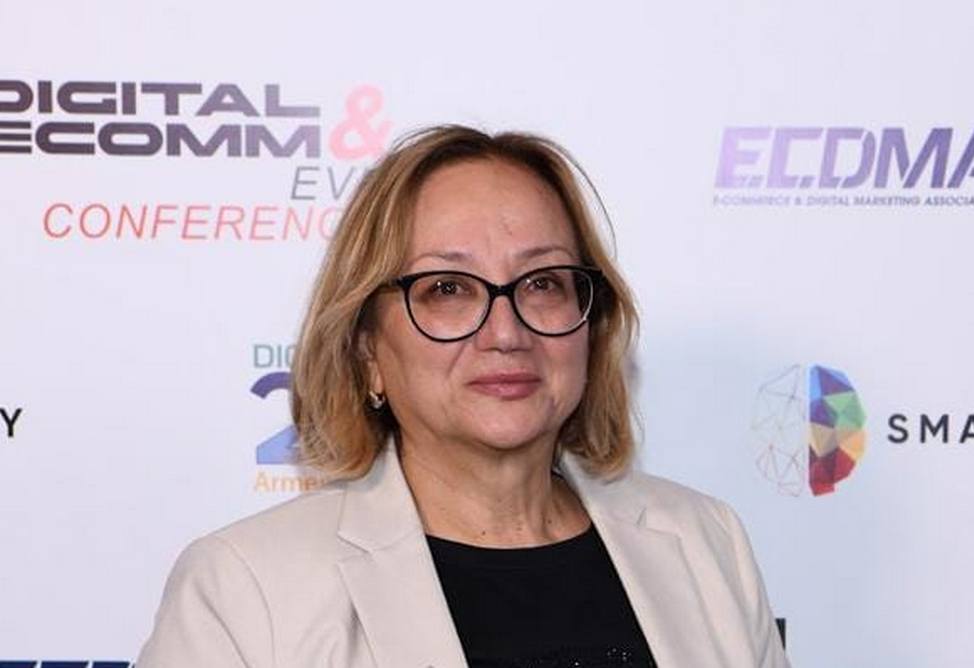
YEREVAN, November 25. /ARKA/. On December 8, Novosti-Armenia news agency turns 20. During this time, the editorial team has evolved from a classic news agency to a media system operating on various platforms and in various formats. How has the philosophy of journalism changed, what have these 20 years taught us, and what transformation will news journalism undergo in the next five years? We discuss these issues in a conversation with the agency's Director General, Galina Davidyan.
ARKA – 20 years is a period when we can not only take stock but also understand the patterns. If you had to name one fundamental law of news that always works, what would it be?
G. Davidyan – Be truthful. Truth always lasts longer than sensationalism. It gains momentum more slowly, but it is precisely this truth that shapes the reputation and longevity of a media outlet over the years. Speed can create a flash, but only accuracy builds trust—and this is the only asset that cannot be restored once destroyed.
ARKA — Do you remember that moment in 2005 when you first realized that Novosti-Armenia wasn't just an agency, it was a worldview? What was that moment?
G. Davidyan — When we first saw that a piece of news we published in the morning was soon being cited in global and regional media as an argument, as fact. At that moment, it became clear that we weren't just "posting notes"; we were influencing reality. We help people understand what's happening around us, shape public opinion, and can influence change in society.
ARKA — Over the past 20 years, Armenia has experienced political crises, wars, paradigm shifts, and digital revolutions. What events were the most transformative for you professionally, when the editorial team truly changed its approach?
G. Davidyan — The 2020 war. Then, the ability to work within the linear logic of "collection - clarification - publication" disappeared. This forced us to implement new verification procedures, new source standards, and new nighttime work protocols. And then there's the COVID-19 information pandemic. It showed that the media is often fighting panic, not fake news.
ARKA — If an agency were to operate by only one philosophy—"be as fast as possible" or "be as accurate as possible"—which would you choose? And why?
G. Davidyan — Accurate. Speed is the platform's advantage. Accuracy is the agency's advantage. And if we had to choose, we would choose accuracy and reliability as the criteria for the informativeness of a news report, not an algorithm.
ARKA — What do you consider more important in news today: fact or context?
G. Davidyan — Fact. But a fact without context is meaningless today. Context is not commentary. Context is a frame of reference that helps readers understand the scale of events and their consequences.
ARKA — The agency's history is the history of people. Which editorial qualities do you consider innate, not teachable? That is, you either have them or you don't.
G. Davidyan — Honesty. Intelligence—it can be developed. Let's say, reading books, learning languages, developing critical thinking, communicating with intelligent people, etc. Ultimately, skills can be developed. But honesty is not a skill, but a quality. You either have it or you don't.
ARKA — Case question: the editorial staff receives an exclusive that will change the news agenda tomorrow, but verification requires at least another six hours. What's your solution?
G. Davidyan — I give the editorial staff six hours. If we publish early and make a mistake, we'll have to spend six years explaining why. If we publish later, but accurately, that's only six hours lost.
ARKA — Many say: newsmakers create events, editorial staff only report. Do you agree that sometimes the media shapes reality, not just describes it?
G. Davidyan — Yes. But not all of reality. The media shapes the horizon of attention. And attention changes the priorities of politics, business, and society. Therefore, the media don't just describe reality; they select which parts of reality have the right to be heard and seen.
ARKA — If a modern reader were to see the Newsarmenia.am archive for 2005–2025, what emotion would you like them to experience?
G. Davidyan — Good question. Respect. So that he sees not just some news cycles, but a chronicle of the country's maturation.
ARKA —A news agency always has obvious metrics—audience, reach. But is there a metric that you personally recognize, but it's not a number at all?
G. Davidyan —When a newsmaker comes to us not because they need reach, but because they want to be heard honestly.
ARKA — What is "news" for you, stripped of all formalism and genres? What is your internal definition?
G. Davidyan — News is a new meaning that changes the perception of a fact. It is much more than a simple list of past or predicted events. News directly impacts our lives and can change our understanding of everything happening around us, right down to the health and economy of the entire country. News is a powerful influence on human consciousness.
ARKA — Can you describe the ideal model of a news agency in five years? What would it look like to not just survive, but to be a leader?
G. Davidyan — Hybrid: AI + editorial + analytics. Where AI does the initial filtering, the journalist provides content and meaning, and analytics provides depth. An agency should become more than just a "feed," but a system of meanings, for example, communicative, existential, cognitive, and others.
ARKA — AI has already transformed the work of journalists. Where is the line at which AI will replace journalists, and where will it never be able to?
G. Davidyan — Artificial intelligence will replace routine work: data collection, filtering, and drafting. But it will never be able to replace human intuition, the understanding of "what is important" and "why it is important now." Artificial intelligence is truly the main challenge for journalism. In the coming years, the profession must prove that technology is only a means, not the essence. Because in a world where anyone can create text, the most valuable asset is the one responsible for the words.
ARKA — Case question: Let's imagine two editors joining a newsroom—one a genius analyst, the other an ideal reporter. The budget is only for one. Who would you choose and why?
G. Davidyan — The ideal reporter. Analysts can be trained. The ability to extract facts is the primary foundation.
ARKA — What is the most important lesson you would like to impart over the past 20 years to a young editor just entering the profession in 2025?
G. Davidyan — Cherish your reputation and the agency's reputation from the very first minute of your career.
ARKA — What is the most valuable thing you personally have learned in these past 20 years, not as a leader, but as an individual?
G. Davidyan — That this hasn't been a lone wolf's journey, but a team's journey.
ARKA — If you could ask Newsarmenia.am readers one question and get an honest answer, what would it be?
G. Davidyan — What does trust in the media mean to you today, and how can it be maintained?