

Robert Kocharyan’s case is largely politically motivated - political scientist says
28.07.2018,
12:41
Charges of “overthrowing Armenia's constitutional order," levied against Armenia’s ex-president Robert Kocharyan have been in the limelight of the country’s public at large over the last several days.
YEREVAN, July 28. /ARKA/. Charges of “overthrowing Armenia's constitutional order," levied against Armenia’s ex-president Robert Kocharyan have been in the limelight of the country’s public at large over the last several days.
Some political analysts even described them as the most resonating event over the last decade. A Yerevan district court late on July 27 ruled that the Special Investigative Service (SIS) could hold Kocharyan for two months in pre-trial detention pending investigation. The case dates back to late February and early March 2008 following the disputed presidential election, when then prime minister Serzh Sargsyan was declared the winner, angering the opposition, led by the first Armenian president Levon Ter-Petrosyan and setting off 10 days of nonstop protests that led to a crackdown on March 1 in which 10 people, including two police officers, were killed and more than 200 injured.
Following his interrogation by the Special Investigative Service, Kocharyan said in an interview with the Armenian television channel Yerkir Media that the accusations brought against him are far-fetched, falsified, politically motivated and have nothing to do with reality.
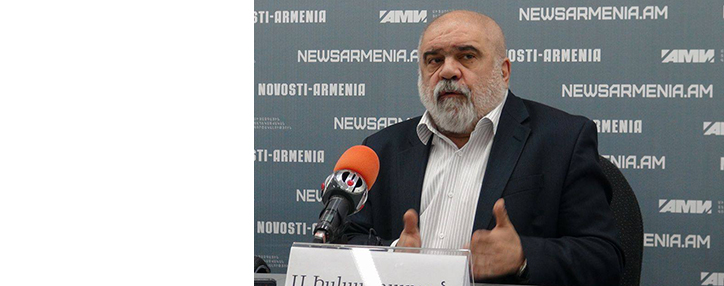
In an interview with Novosti Armenia news agency the director of the Yerevan-based Caucasus Institute Alexander Iskandaryan speaks about what is really behind this criminal process and what are its possible consequences for Armenia.
- How would you comment on the arrest of former Armenian president Robert Kocharyan and what consequences it may have?
A. Iskandaryan - The case against Robert Kocharyan, I do not mean the formal charges levied against him by the law-enforcement agency, but the process itself, cannot be viewed separately from the context of what is happening in the country. I mean the change of political elites, which is still in transition. The first part of this process was the appointment of Mr. Pashinyan as prime minister. This was followed by the change of the entire upper part of the elite in the executive branch at the national level. The next stage is the legislative power, the parliament. This requires some legal procedures, since the new power pursues the so-called legalistic path. The due procedure is being observed. Snap parliamentary elections will be held and then, evidently, the ruling Republican Party of Armenia will be replaced in the legislative branch as well. Then, apparently, the process will embrace the judiciary and so on. But before the changes in the legislative power at the national level, local authorities must change. This process is already underway, but it is not fully completed, in particular, in Yerevan. The logic of change requires the replacement of elites at local levels too. Usually any election is organized and handled by local authorities, so it is logical to take control over them before the national elections are held. We can see a similar process happening across the business sector as well. Businessmen should somehow express their loyalty to the new government or at least stop showing it to the previous authorities. A component of this process are influential representatives of the former political elite, including their relatives and close people, who have come under fire. Robert Kocharyan is perceived by the public at large as the man who created the system that ruled the country. It's not even about whether this is really so, or not. For the society Kocharyan is the symbol of that system. The Republican Party of Armenia became the ruling party when he was still in office. The third president Serzh Sargsyan is perceived in the country as his successor. Kocharyan is viewed as the central figure in that system.
- How do you assess the new round of the "March 1" case? Is this a principled position, and is it necessary to investigate the case, or is it a chain of events?
A. Iskandaryan - New people came to power, whose weapons were discourses, newspaper stories, civic activism, protest actions. These discourses were built around simple and understandable theses, such as struggle against corruption, oligarchy, for establishing legality and justice. It is very interesting that the technology of protests was built around negative theses, they were "against", not "for". This is a proficient strategy, because any "for" entails a narrowing of support, since people have different views on positive actions. And there are no people who advocate corruption and are against justice.
Any person can sign under such slogans. But when the protests end in success, you must meet expectations, and expectations are sometimes unrealistic. The society expects sharp and cardinal changes in almost all areas -from salaries and pensions to social lifts and justice. It is clear that serious changes cannot happen easily and quickly. The country’s problems are of systemic nature, they must be addressed, but this requires a protracted activity, and in one day they cannot be solved. And the expectations remain, and something must be done. And what is easiest to do? Fight with people and symbols. The March 1 case is a symbol. The symbol of how the previous regime mistreated and ignored the citizens, how it trampled on their rights and freedoms. The investigation into March 1 case is not completed, and no one was punished for 10 deaths. Nothing was said who was to blame for them. This is a trigger that irritates people. Naturally, after the change of power there is a social demand, which must be addressed. Something must be given to people. Moreover, this should be given in cases where the punished people are perceived as a danger. Robert Kocharyan is one of such people.
- Lawyers say that Kocharyan has immunity. Is this really so, and could then incumbent president overthrow the constitutional order?
A. Iskandaryan - I read that article, just today, but I will not comment on it - I cannot comment on legal aspects, I'm not a lawyer. The president has immunity. How much and how this immunity can be circumvented is the prerogative of lawyers, it is beyond my competence. But I can comment on the political component. It seems to me that the immunity does not matter much. Because, in my opinion it is hardly just one of the crimes that was committed a decade ago, and which the current government decided suddenly to investigate now. This process has a political context. To say that we have an independent court that suddenly made a decision, not three months ago, but now, to become interested in cases that happened a decade ago and began to investigate them would be naive. This case was promoted by political circumstances, as well as all cases against representatives of former elites. I do not say that there are no grounds for this particular investigation, there can be. But this phenomenon is called selective justice - selective application of the law. Here, too, the new government follows a legalistic path: people are persecuted by law. But those people who are persecuted are politically important figures. It should be assumed that the motivation here is largely political.
-Kocharyan said that everything that is happening is a bomb planted under Armenian statehood. How would you comment on this statement?
A. Iskandaryan - Kocharyan is a man who is being charged with serious crime, so he says what he says. Any sharp changes in political elites are both hopes and risks. Hopes, because in the stagnant structures, the elites cease to be adequate to the situation. Risks, because people who come to power lack managerial experience and come under the influence of various, often random, circumstances. They are people with different mindsets and views. Some of them are prepared for management activities, but this does not happen very often, this contradicts the very essence of the process of abrupt change of elites. Armenia already experienced this in 1988-1991. As a result, a lot of good things happened, but a lot of problems arose too. The popularity ratings of the then revolutionaries went off scale, the consolidation of society was gigantic. But the euphoria quickly subsided. This is a separate conversation about how much this was the fault of the then elites, but there is such a risk now too. Leaders can make wrong steps that can cost dear. Such steps can be significant in terms of state’s foreign policy, in interaction with neighbors, but also in domestic politics. For the time being, I see that no serious mistakes are being made in foreign policy. As for domestic policy, everything is just beginning. Often systemic problems are perceived as problems that can be solved by a simple action – to arrest and punish some person. But it is impossible to replace building of a state with police measures. Fighting corruption and fighting corrupt officials are two different things. You can catch all the corrupt officials, but corruption will remain. The fight against corruption is fundamentally more complicated than simply catching some concrete people. Let's hope that the new government will tackle this problem as well.
- What consequences can the "March 1" case have for Armenia in the geopolitical context?
A. Iskandaryan - There is an example of Ukraine’s Yanukovych, there is an example of Kyrgyzstan’s Bakiyev and, finally, there is the example of Saakashvili. These people are still outside their own countries, but they have been prosecuted. There have been no cases of real arrest of former presidents across the post-Soviet space. I think that there is general understanding of what is happening in Armenia, and if no drastic changes in foreign policy are made, it is unlikely that this will have a big impact on the geopolitical component. -0-
Some political analysts even described them as the most resonating event over the last decade. A Yerevan district court late on July 27 ruled that the Special Investigative Service (SIS) could hold Kocharyan for two months in pre-trial detention pending investigation. The case dates back to late February and early March 2008 following the disputed presidential election, when then prime minister Serzh Sargsyan was declared the winner, angering the opposition, led by the first Armenian president Levon Ter-Petrosyan and setting off 10 days of nonstop protests that led to a crackdown on March 1 in which 10 people, including two police officers, were killed and more than 200 injured.
Following his interrogation by the Special Investigative Service, Kocharyan said in an interview with the Armenian television channel Yerkir Media that the accusations brought against him are far-fetched, falsified, politically motivated and have nothing to do with reality.
In an interview with Novosti Armenia news agency the director of the Yerevan-based Caucasus Institute Alexander Iskandaryan speaks about what is really behind this criminal process and what are its possible consequences for Armenia.
- How would you comment on the arrest of former Armenian president Robert Kocharyan and what consequences it may have?
A. Iskandaryan - The case against Robert Kocharyan, I do not mean the formal charges levied against him by the law-enforcement agency, but the process itself, cannot be viewed separately from the context of what is happening in the country. I mean the change of political elites, which is still in transition. The first part of this process was the appointment of Mr. Pashinyan as prime minister. This was followed by the change of the entire upper part of the elite in the executive branch at the national level. The next stage is the legislative power, the parliament. This requires some legal procedures, since the new power pursues the so-called legalistic path. The due procedure is being observed. Snap parliamentary elections will be held and then, evidently, the ruling Republican Party of Armenia will be replaced in the legislative branch as well. Then, apparently, the process will embrace the judiciary and so on. But before the changes in the legislative power at the national level, local authorities must change. This process is already underway, but it is not fully completed, in particular, in Yerevan. The logic of change requires the replacement of elites at local levels too. Usually any election is organized and handled by local authorities, so it is logical to take control over them before the national elections are held. We can see a similar process happening across the business sector as well. Businessmen should somehow express their loyalty to the new government or at least stop showing it to the previous authorities. A component of this process are influential representatives of the former political elite, including their relatives and close people, who have come under fire. Robert Kocharyan is perceived by the public at large as the man who created the system that ruled the country. It's not even about whether this is really so, or not. For the society Kocharyan is the symbol of that system. The Republican Party of Armenia became the ruling party when he was still in office. The third president Serzh Sargsyan is perceived in the country as his successor. Kocharyan is viewed as the central figure in that system.
- How do you assess the new round of the "March 1" case? Is this a principled position, and is it necessary to investigate the case, or is it a chain of events?
A. Iskandaryan - New people came to power, whose weapons were discourses, newspaper stories, civic activism, protest actions. These discourses were built around simple and understandable theses, such as struggle against corruption, oligarchy, for establishing legality and justice. It is very interesting that the technology of protests was built around negative theses, they were "against", not "for". This is a proficient strategy, because any "for" entails a narrowing of support, since people have different views on positive actions. And there are no people who advocate corruption and are against justice.
Any person can sign under such slogans. But when the protests end in success, you must meet expectations, and expectations are sometimes unrealistic. The society expects sharp and cardinal changes in almost all areas -from salaries and pensions to social lifts and justice. It is clear that serious changes cannot happen easily and quickly. The country’s problems are of systemic nature, they must be addressed, but this requires a protracted activity, and in one day they cannot be solved. And the expectations remain, and something must be done. And what is easiest to do? Fight with people and symbols. The March 1 case is a symbol. The symbol of how the previous regime mistreated and ignored the citizens, how it trampled on their rights and freedoms. The investigation into March 1 case is not completed, and no one was punished for 10 deaths. Nothing was said who was to blame for them. This is a trigger that irritates people. Naturally, after the change of power there is a social demand, which must be addressed. Something must be given to people. Moreover, this should be given in cases where the punished people are perceived as a danger. Robert Kocharyan is one of such people.
- Lawyers say that Kocharyan has immunity. Is this really so, and could then incumbent president overthrow the constitutional order?
A. Iskandaryan - I read that article, just today, but I will not comment on it - I cannot comment on legal aspects, I'm not a lawyer. The president has immunity. How much and how this immunity can be circumvented is the prerogative of lawyers, it is beyond my competence. But I can comment on the political component. It seems to me that the immunity does not matter much. Because, in my opinion it is hardly just one of the crimes that was committed a decade ago, and which the current government decided suddenly to investigate now. This process has a political context. To say that we have an independent court that suddenly made a decision, not three months ago, but now, to become interested in cases that happened a decade ago and began to investigate them would be naive. This case was promoted by political circumstances, as well as all cases against representatives of former elites. I do not say that there are no grounds for this particular investigation, there can be. But this phenomenon is called selective justice - selective application of the law. Here, too, the new government follows a legalistic path: people are persecuted by law. But those people who are persecuted are politically important figures. It should be assumed that the motivation here is largely political.
-Kocharyan said that everything that is happening is a bomb planted under Armenian statehood. How would you comment on this statement?
A. Iskandaryan - Kocharyan is a man who is being charged with serious crime, so he says what he says. Any sharp changes in political elites are both hopes and risks. Hopes, because in the stagnant structures, the elites cease to be adequate to the situation. Risks, because people who come to power lack managerial experience and come under the influence of various, often random, circumstances. They are people with different mindsets and views. Some of them are prepared for management activities, but this does not happen very often, this contradicts the very essence of the process of abrupt change of elites. Armenia already experienced this in 1988-1991. As a result, a lot of good things happened, but a lot of problems arose too. The popularity ratings of the then revolutionaries went off scale, the consolidation of society was gigantic. But the euphoria quickly subsided. This is a separate conversation about how much this was the fault of the then elites, but there is such a risk now too. Leaders can make wrong steps that can cost dear. Such steps can be significant in terms of state’s foreign policy, in interaction with neighbors, but also in domestic politics. For the time being, I see that no serious mistakes are being made in foreign policy. As for domestic policy, everything is just beginning. Often systemic problems are perceived as problems that can be solved by a simple action – to arrest and punish some person. But it is impossible to replace building of a state with police measures. Fighting corruption and fighting corrupt officials are two different things. You can catch all the corrupt officials, but corruption will remain. The fight against corruption is fundamentally more complicated than simply catching some concrete people. Let's hope that the new government will tackle this problem as well.
- What consequences can the "March 1" case have for Armenia in the geopolitical context?
A. Iskandaryan - There is an example of Ukraine’s Yanukovych, there is an example of Kyrgyzstan’s Bakiyev and, finally, there is the example of Saakashvili. These people are still outside their own countries, but they have been prosecuted. There have been no cases of real arrest of former presidents across the post-Soviet space. I think that there is general understanding of what is happening in Armenia, and if no drastic changes in foreign policy are made, it is unlikely that this will have a big impact on the geopolitical component. -0-