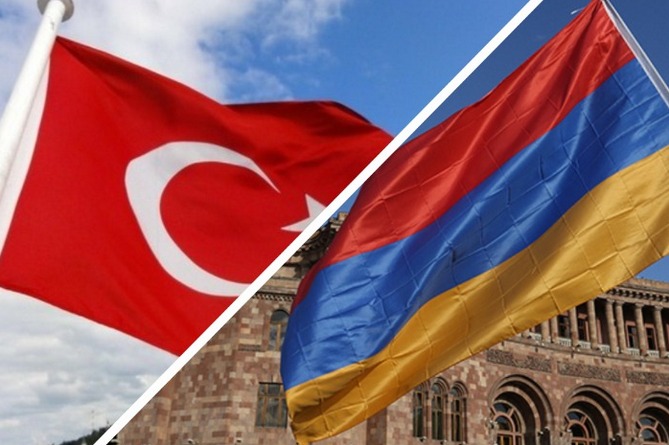


Armenian and Azerbaijani presidents end talks on Karabakh in Geneva
16.10.2017,
16:24
The talks over the Karabakh conflict between the presidents of Armenia and Azerbaijan Serzh Sargsyan and Ilham Aliyev in Geneva have ended , Vladimir Hakobyan, the press secretary of Armenian president, wrote in his Twitter microblock.
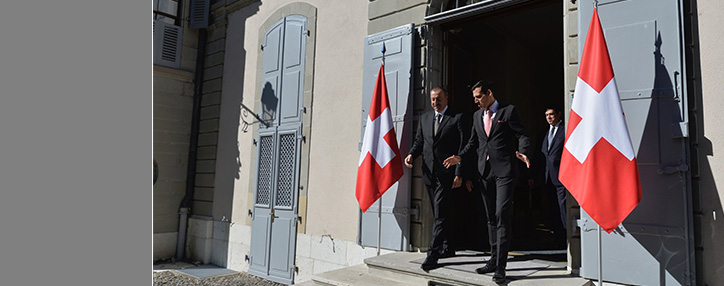
YEREVAN, OCTOBER 16. /ARKA/. The talks over the Karabakh conflict between the presidents of Armenia and Azerbaijan Serzh Sargsyan and Ilham Aliyev in Geneva have ended , Vladimir Hakobyan, the press secretary of Armenian president, wrote in his Twitter microblock. "The talks are over, Aliyev left the residence of the permanent representative of Switzerland at the UN headquarters," Hakobyan wrote. He said the presidents of Armenia and Azerbaijan had a tete-a-tete meeting after the talks with the co-chairs of the OSCE Minsk Group.
The talks involved co-chairs Igor Popov (Russia), Andrew Schaefer (USA) Stefan Visconti (France), as well as foreign ministers of the two countries Edward Nalbandian of Armenia and Elmar Mammadyarov of Azerbaijan as well as the personal representative of the OSCE Chairman-in-Office Andrzej Kasprzyk.
The Nagorno-Karabakh conflict erupted into armed clashes after the collapse of the Soviet Union in the early 1990s as the predominantly Armenian-populated enclave of Azerbaijan sought to secede from Azerbaijan and declared its independence backed by a successful referendum. On May 12, 1994, the Bishkek cease-fire agreement put an end to the military operations.
A truce was brokered by Russia in 1994, although no permanent peace agreement has been signed. Since then, Nagorno-Karabakh and several adjacent regions have been under the control of Armenian forces of Karabakh.
Nagorno-Karabakh is the longest-running post-Soviet era conflict and has continued to simmer despite the relative peace of the past two decades, with snipers causing tens of deaths a year. On April 2, 2016, Azerbaijan launched military assaults along the entire perimeter of its contact line with Nagorno-Karabakh. Four days later a cease-fire was reached. ---0---
The talks involved co-chairs Igor Popov (Russia), Andrew Schaefer (USA) Stefan Visconti (France), as well as foreign ministers of the two countries Edward Nalbandian of Armenia and Elmar Mammadyarov of Azerbaijan as well as the personal representative of the OSCE Chairman-in-Office Andrzej Kasprzyk.
The Nagorno-Karabakh conflict erupted into armed clashes after the collapse of the Soviet Union in the early 1990s as the predominantly Armenian-populated enclave of Azerbaijan sought to secede from Azerbaijan and declared its independence backed by a successful referendum. On May 12, 1994, the Bishkek cease-fire agreement put an end to the military operations.
A truce was brokered by Russia in 1994, although no permanent peace agreement has been signed. Since then, Nagorno-Karabakh and several adjacent regions have been under the control of Armenian forces of Karabakh.
Nagorno-Karabakh is the longest-running post-Soviet era conflict and has continued to simmer despite the relative peace of the past two decades, with snipers causing tens of deaths a year. On April 2, 2016, Azerbaijan launched military assaults along the entire perimeter of its contact line with Nagorno-Karabakh. Four days later a cease-fire was reached. ---0---