


Lavrov and Nalbandian discuss situation on line of contact in Karabakh
26.04.2018,
17:16
Russian foreign minister Sergey Lavrov and Armenia’s acting foreign minister Edward Nalbandian discussed the situation on the border of Artsakh (Nagorno-Karabakh) and Azerbaijan at a meeting in Moscow on Thursday, a spokeswoman for the Russian foreign ministry Maria Zakharova said.
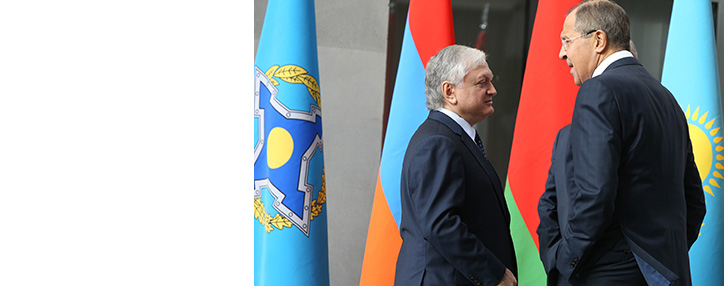
YEREVAN, April 26. /ARKA/. Russian foreign minister Sergey Lavrov and Armenia’s acting foreign minister Edward Nalbandian discussed the situation on the border of Artsakh (Nagorno-Karabakh) and Azerbaijan at a meeting in Moscow on Thursday, a spokeswoman for the Russian foreign ministry Maria Zakharova said.
Deputy acting prime minister Armen Gevorgyan also flew to Moscow for “working consultations,” according to a statement Thursday on the government’s website. It did not say who he was to meet there.
The Nagorno-Karabakh conflict erupted into armed clashes after the collapse of the Soviet Union in the early 1990s as the predominantly Armenian-populated enclave of Azerbaijan sought to secede from Azerbaijan and declared its independence backed by a successful referendum.
On May 12, 1994, the Bishkek cease-fire agreement put an end to the military operations. A truce was brokered by Russia in 1994, although no permanent peace agreement has been signed. Since then, Nagorno-Karabakh and several adjacent regions have been under the control of Armenian forces of Karabakh.
Nagorno-Karabakh is the longest-running post-Soviet era conflict and has continued to simmer despite the relative peace of the past two decades, with snipers causing tens of deaths a year. On April 2, 2016, Azerbaijan launched military assaults along the entire perimeter of its contact line with Nagorno-Karabakh. Four days later a cease-fire was reached. -0-
Deputy acting prime minister Armen Gevorgyan also flew to Moscow for “working consultations,” according to a statement Thursday on the government’s website. It did not say who he was to meet there.
The Nagorno-Karabakh conflict erupted into armed clashes after the collapse of the Soviet Union in the early 1990s as the predominantly Armenian-populated enclave of Azerbaijan sought to secede from Azerbaijan and declared its independence backed by a successful referendum.
On May 12, 1994, the Bishkek cease-fire agreement put an end to the military operations. A truce was brokered by Russia in 1994, although no permanent peace agreement has been signed. Since then, Nagorno-Karabakh and several adjacent regions have been under the control of Armenian forces of Karabakh.
Nagorno-Karabakh is the longest-running post-Soviet era conflict and has continued to simmer despite the relative peace of the past two decades, with snipers causing tens of deaths a year. On April 2, 2016, Azerbaijan launched military assaults along the entire perimeter of its contact line with Nagorno-Karabakh. Four days later a cease-fire was reached. -0-