


No starvation in Artsakh, but children undernourished- state minister
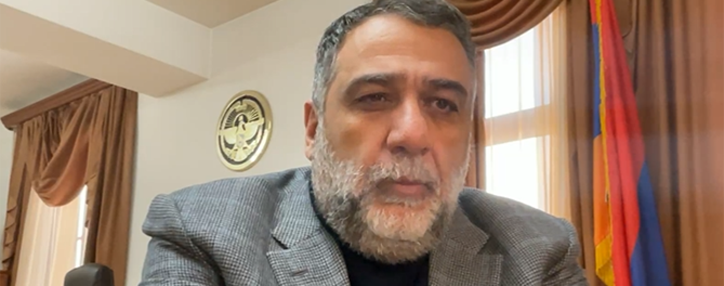
YEREVAN, January 12. /ARKA/. In an interview with The American Conservative magazine Artsakh (Nagorno-Karabakh) Minister of State Ruben Vardanyan said that basic foodstuffs were available and there was no famine, but children were not getting proper nutrition.
"We have reserves that we have been planning for many years. And don’t forget that Artsakh is a rich land. We have some good meat and some grain. So there are some basic foods, and starvation hasn’t started, but not everything. We don’t have vegetables. Kids aren’t getting normal food, it’s bad for their development. Medicines, the Red Cross is helping us to some extent, but of course we have problems that continue," Vardanyan said.
The American Conservative reminded that on December 12, the regime in Baku has imposed a blockade against Karabakh, which the Armenians call Artsakh.
The so-called Lachin Corridor, the single road connecting Karabakh to Armenia proper, has been closed by Azerbaijani ‘environmental’ protesters, while the Azerbaijani government has threatened to shoot down aircraft delivering aid. As the blockade stretches into its second month, rights groups are warning of an impending humanitarian catastrophe.
"Azerbaijani “activists” do allow the Red Cross through. Now the Azeris play this game, saying, “Look, the road is open, the Red Cross is getting through.” But with others, they check your passport now, asking, “Why are you going where you’re going?“ But the [international] agreement is that the road should be free and clear. This is unacceptable from our side,’ Vardanyan said.
Asked how much the government in Yerevan was able to help Vardanyan said Armenia is facing its own challenges with Azerbaijan. The Armenian government and Armenian society have limited resources.
At the same time, Vardanyan stressed that ‘despite all the difficulties and all the dangers for us, this is our homeland. We will die, but we will stay in our homeland. Azerbaijan faces a difficult choice: They will have to kill 120,000 people, including 30,000 kids. Azerbaijan would face a huge price for this, not only their own soldiers but the fact that the world wouldn’t accept such an operation. Anyway, we have made up our minds: We are not leaving our homes.’
He also said it is unacceptable for Artsakh people to live in such a non-democratic, authoritarian state as Azerbaijan.
"The Azerbaijani state is not a democracy. It’s an autocratic state. Just ask yourself: What kinds of rights do ordinary Azerbaijani people have? They don’t have any rights. There is no opposition, no real elections, no real democracy. It’s one family controlling the country. So we say, "How do you want us to live as citizens of a country where violations of human rights against their own people are so routine, let alone national minorities?"
‘The leaders of Azerbaijan need to understand: If you really want to make peace in the region, they need to come up with suggestions that would be acceptable to both sides. And the solution is very simple: They need to accept that Artsakh and its people are used to living independently, and they will not just become ordinary citizens of Azerbaijan.... They need to find a way to accept this. They need to be wise enough to recognize this, not only to overcome the current conflict, but so as not to impose the conflict on the next generation. You need to sit and talk with the people. It will take a lot of time, and a lot of will from both sides to talk to each other, to bring the hatred down to the point where we can live next to each, like it has taken place between Britain and France, between Germany and France. If we don’t try, we will never find the solution.” --0—