


OSCE conducts planned monitoring on Artsakh-Azerbaijan border
11.03.2020,
14:12
On March 11, in accordance with the arrangement reached with the authorities of the Republic of Artsakh (Nagorno Karabakh Republic), the OSCE Mission conducted a planned monitoring of the ceasefire regime on the border of Artsakh and Azerbaijan, in the south-east of Akna.
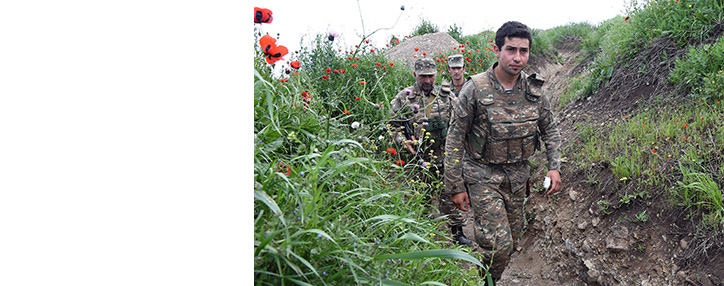
YEREVAN, March 11. /ARKA/. On March 11, in accordance with the arrangement reached with the authorities of the Republic of Artsakh (Nagorno Karabakh Republic), the OSCE Mission conducted a planned monitoring of the ceasefire regime on the border of Artsakh and Azerbaijan, in the south-east of Akna.
From the positions of the Defense Army of the Republic of Artsakh, the monitoring was conducted by Field Assistants to the Personal Representative of the OSCE Chairperson-in-Office (CiO) Mihail Olaru (Moldova) and Ognjen Jovic (Bosnia and Herzegovina).
From the opposite side of the border, the monitoring was conducted by Field Assistant to the Personal Representative of the OSCE CiO Ghenadie Petrica (Moldova) and staff member of the Office of the CiO Personal Representative Martin Schuster (Germany).
The monitoring passed in accordance with the agreed schedule.
From the Artsakh side, the monitoring mission was accompanied by representatives of the Republic of Artsakh Ministry of Foreign Affairs and Ministry of Defense.
The Nagorno-Karabakh conflict erupted into armed clashes after the collapse of the Soviet Union in the early 1990s as the predominantly Armenian-populated enclave of Azerbaijan sought to secede from Azerbaijan and declared its independence backed by a successful referendum.
On May 12, 1994, the Bishkek cease-fire agreement put an end to the military operations. A truce was brokered by Russia in 1994, although no permanent peace agreement has been signed. Since then, Nagorno-Karabakh and several adjacent regions have been under the control of Armenian forces of Karabakh. Nagorno-Karabakh is the longest-running post-Soviet era conflict and has continued to simmer despite the relative peace of the past two decades, with snipers causing tens of deaths a year.
In the early hours of April 2, 2016 Azerbaijan, in gross violation of the agreements launched a large-scale offensive along the entire Line of Contact between the armed forces of the Nagorno-Karabakh Republic and Azerbaijan, using heavy weaponry, artillery and combat aircraft. Only thanks to the decisive actions of the Defense Army, which gave a fitting rebuff, on April 5, Azerbaijan was forced to ask, as in 1994, through the mediation of the Russian Federation for the cessation of the hostilities. It has been generally maintained, despite the recurrent violations by the Azerbaijani side. -0-
From the positions of the Defense Army of the Republic of Artsakh, the monitoring was conducted by Field Assistants to the Personal Representative of the OSCE Chairperson-in-Office (CiO) Mihail Olaru (Moldova) and Ognjen Jovic (Bosnia and Herzegovina).
From the opposite side of the border, the monitoring was conducted by Field Assistant to the Personal Representative of the OSCE CiO Ghenadie Petrica (Moldova) and staff member of the Office of the CiO Personal Representative Martin Schuster (Germany).
The monitoring passed in accordance with the agreed schedule.
From the Artsakh side, the monitoring mission was accompanied by representatives of the Republic of Artsakh Ministry of Foreign Affairs and Ministry of Defense.
The Nagorno-Karabakh conflict erupted into armed clashes after the collapse of the Soviet Union in the early 1990s as the predominantly Armenian-populated enclave of Azerbaijan sought to secede from Azerbaijan and declared its independence backed by a successful referendum.
On May 12, 1994, the Bishkek cease-fire agreement put an end to the military operations. A truce was brokered by Russia in 1994, although no permanent peace agreement has been signed. Since then, Nagorno-Karabakh and several adjacent regions have been under the control of Armenian forces of Karabakh. Nagorno-Karabakh is the longest-running post-Soviet era conflict and has continued to simmer despite the relative peace of the past two decades, with snipers causing tens of deaths a year.
In the early hours of April 2, 2016 Azerbaijan, in gross violation of the agreements launched a large-scale offensive along the entire Line of Contact between the armed forces of the Nagorno-Karabakh Republic and Azerbaijan, using heavy weaponry, artillery and combat aircraft. Only thanks to the decisive actions of the Defense Army, which gave a fitting rebuff, on April 5, Azerbaijan was forced to ask, as in 1994, through the mediation of the Russian Federation for the cessation of the hostilities. It has been generally maintained, despite the recurrent violations by the Azerbaijani side. -0-