

Political scientist: Armenia's move toward the EU creates risks for relations with Russia
07.07.2026,
16:26
Russian-Armenian relations are going through difficult times due to Armenia's search for a new path, said Vladimir Avatkov, head of the Department of Middle and Post-Soviet East at the Institute of Scientific Information on Social Sciences of the Russian Academy of Sciences, in an exclusive interview with the Novosti-Armenia news agency.
YEREVAN, July 7. /ARKA/. Russian-Armenian relations are going through difficult times due to Armenia's search for a new path, said Vladimir Avatkov, head of the Department of Middle and Post-Soviet East at the Institute of Scientific Information on Social Sciences of the Russian Academy of Sciences, in an exclusive interview with the Novosti-Armenia news agency.
According to him, this is due to Armenia trying to make a choice about its future. He also pointed out the risks of moving toward Europe.
"Here, it's fundamentally important to understand: the 'carrots' dangled before Armenian society by Europeans, Americans, and especially Turks will never replace the genuine economic cooperation that already exists between Russia and Armenia. We supply gas at significantly lower prices than the market, we have established strong ties in agricultural production, and historically, our peoples have experienced so much together that it's difficult to even list them," Avatkov noted.
Armenia's EU Path
Russia cannot sponsor Armenia's move toward the EU, which, according to Avatkov, is de facto transforming from an economic bloc into a militarized one.
"The main issue of Russian foreign policy today is to prevent the emergence of new 'anti-Russias.' We have seen what this leads to, and we categorically do not want a repeat of this scenario with Armenia. The restrictions being introduced are linked to this move toward the EU," Avatkov said.
The EAEU, the CSTO, and the Question of Foreign Policy
Responding to a question about the future of Armenia's membership in the CSTO, he stated that Armenia had "frozen" its membership, but this cannot continue for long.
"Sooner or later, the issue will have to be resolved. Russia has repeatedly called on the Armenian leadership to decide on a course of action, including through a referendum, since it is impossible to move indefinitely simultaneously toward the EAEU and the European Union and NATO," Avatkov noted.
According to him, there is a certain connection that exists in the West between NATO and the European Union.
"In our case, the connection between the Eurasian Union and the CSTO is obvious. If joint exercises are conducted, and the army of a CSTO member country is gradually drawn into the NATO army, then this clearly contradicts the spirit and letter of the CSTO. Moreover, in its concept, the North Atlantic Alliance has declared one of the CSTO members—Russia—an enemy, one of the key threats," Avatkov emphasized.
Trade and Transport Communications
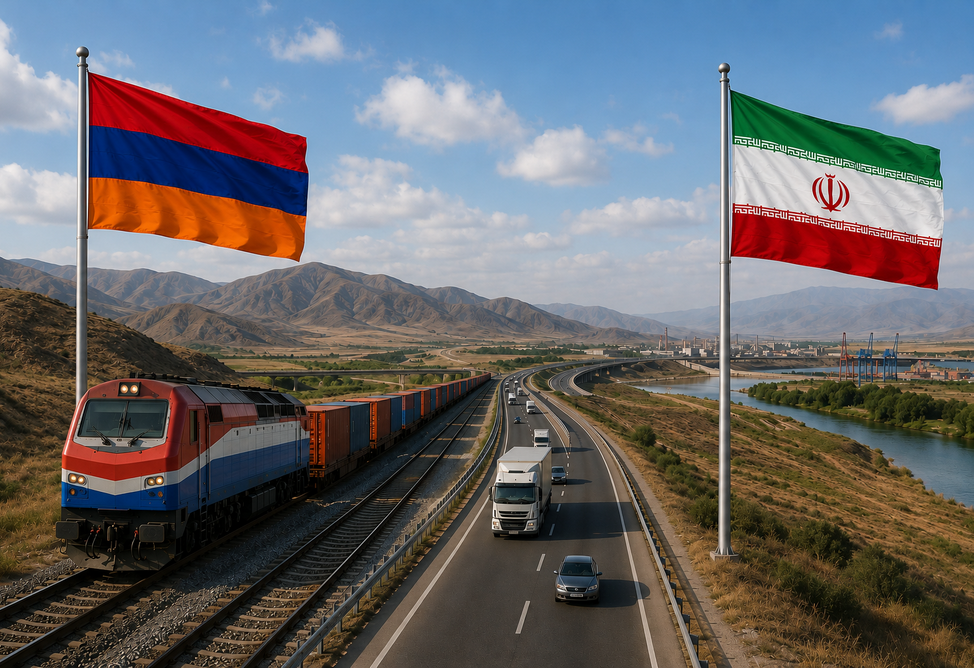
Commenting on the risks that political disagreements between Armenia and Russia will negatively impact trade and joint projects, Avatkov stated that Armenia has not yet opened its borders with its neighbors, so the North-South corridor with normal communications through Iran, Georgia, and Russia is fundamentally important for it.
Risks for Armenian Exports
"Armenian agricultural products have been and remain in demand on the Russian market." If supplies are routed in a roundabout way for a period—through Turkey or Iran and Azerbaijan—the Turkish side will allow this only to separate Armenia from Russia. This has already led to higher prices and lower demand for Armenian products in Russia," Avakov noted.
In the long term, Turkey, which has its own agricultural sector, will not, in his opinion, constantly purchase foreign products and will sooner or later offer to buy, say, Armenian apricots at a rock-bottom price, which will ultimately hurt the Armenian economy.
He added that the markets where these products truly have potential are definitely not Turkey, where they are already in abundance.
According to him, this is due to Armenia trying to make a choice about its future. He also pointed out the risks of moving toward Europe.
"Here, it's fundamentally important to understand: the 'carrots' dangled before Armenian society by Europeans, Americans, and especially Turks will never replace the genuine economic cooperation that already exists between Russia and Armenia. We supply gas at significantly lower prices than the market, we have established strong ties in agricultural production, and historically, our peoples have experienced so much together that it's difficult to even list them," Avatkov noted.
Armenia's EU Path
Russia cannot sponsor Armenia's move toward the EU, which, according to Avatkov, is de facto transforming from an economic bloc into a militarized one.
"The main issue of Russian foreign policy today is to prevent the emergence of new 'anti-Russias.' We have seen what this leads to, and we categorically do not want a repeat of this scenario with Armenia. The restrictions being introduced are linked to this move toward the EU," Avatkov said.
The EAEU, the CSTO, and the Question of Foreign Policy
Responding to a question about the future of Armenia's membership in the CSTO, he stated that Armenia had "frozen" its membership, but this cannot continue for long.
"Sooner or later, the issue will have to be resolved. Russia has repeatedly called on the Armenian leadership to decide on a course of action, including through a referendum, since it is impossible to move indefinitely simultaneously toward the EAEU and the European Union and NATO," Avatkov noted.
According to him, there is a certain connection that exists in the West between NATO and the European Union.
"In our case, the connection between the Eurasian Union and the CSTO is obvious. If joint exercises are conducted, and the army of a CSTO member country is gradually drawn into the NATO army, then this clearly contradicts the spirit and letter of the CSTO. Moreover, in its concept, the North Atlantic Alliance has declared one of the CSTO members—Russia—an enemy, one of the key threats," Avatkov emphasized.
Trade and Transport Communications
Commenting on the risks that political disagreements between Armenia and Russia will negatively impact trade and joint projects, Avatkov stated that Armenia has not yet opened its borders with its neighbors, so the North-South corridor with normal communications through Iran, Georgia, and Russia is fundamentally important for it.
Risks for Armenian Exports
"Armenian agricultural products have been and remain in demand on the Russian market." If supplies are routed in a roundabout way for a period—through Turkey or Iran and Azerbaijan—the Turkish side will allow this only to separate Armenia from Russia. This has already led to higher prices and lower demand for Armenian products in Russia," Avakov noted.
In the long term, Turkey, which has its own agricultural sector, will not, in his opinion, constantly purchase foreign products and will sooner or later offer to buy, say, Armenian apricots at a rock-bottom price, which will ultimately hurt the Armenian economy.
He added that the markets where these products truly have potential are definitely not Turkey, where they are already in abundance.