


Syrian parliament votes to adopt resolution recognizing and condemning Armenian genocide
13.02.2020,
16:50
The Syrian parliament voted today to adopt a resolution recognizing and condemning the Armenian Genocide, committed by the government of the Ottoman Empire, Armenpress reported.
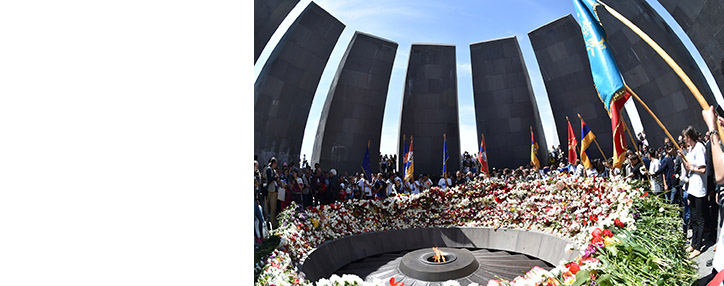
YEREVAN, February 13. /ARKA/. The Syrian parliament voted today to adopt a resolution recognizing and condemning the Armenian Genocide, committed by the government of the Ottoman Empire, Armenpress reported.
The motion was included in the agenda by the Syria-Armenia parliamentary friendship group. During the discussions, Syrian parliamentary secretary Rami Saleh recalled that in 2015, Syrian parliamentarians paid tribute to the victims of the Armenian Genocide.
Syrian Ambassador to Armenia Mohammed Hajj Ibrahim noted the importance of adopting the resolution, saying of Arab countries so far only Lebanon has recognized the Armenian Genocide. He said by recognizing the Armenian genocide Syria will make its contribution to the prevention of such crimes in the future.
"The heirs of those who committed the Armenian Genocide, are committing the same crime today against the people of Syria," he said.
Syrian President Bashar al-Assad referred to the killing of 1.5 million Armenians by the Ottoman Turkey in an interview with France Presse in February 2014, comparing the 1915 Armenian Genocide with the brutal killings of Syrian citizens by terrorists. He blasted Turkey for supporting the terrorist groups. After ratification of the resolution by parliament, the document will be sent to the president of the country, who will have to sign it.
The Armenian Genocide is the first genocide of the 20th century. According to Armenian and many other historians, up to 1.5 million Armenians were killed starting in 1915 in a systematic campaign by the government of Turkey. Turkey has been denying it for decades.
The Armenian genocide has been recognized by dozens of countries. The first was Uruguay that did so in 1965. Other nations are Russia, France, Italy, Germany, Holland, Belgium, Poland, Lithuania, Slovakia, Sweden, Switzerland, Greece, Cyprus, Lebanon, Canada, Venezuela, Argentina, Portugal, U.S. Congress. It has been recognized also by the Vatican, the European Parliament, the World Council of Churches and other international organizations. -0---
The motion was included in the agenda by the Syria-Armenia parliamentary friendship group. During the discussions, Syrian parliamentary secretary Rami Saleh recalled that in 2015, Syrian parliamentarians paid tribute to the victims of the Armenian Genocide.
Syrian Ambassador to Armenia Mohammed Hajj Ibrahim noted the importance of adopting the resolution, saying of Arab countries so far only Lebanon has recognized the Armenian Genocide. He said by recognizing the Armenian genocide Syria will make its contribution to the prevention of such crimes in the future.
"The heirs of those who committed the Armenian Genocide, are committing the same crime today against the people of Syria," he said.
Syrian President Bashar al-Assad referred to the killing of 1.5 million Armenians by the Ottoman Turkey in an interview with France Presse in February 2014, comparing the 1915 Armenian Genocide with the brutal killings of Syrian citizens by terrorists. He blasted Turkey for supporting the terrorist groups. After ratification of the resolution by parliament, the document will be sent to the president of the country, who will have to sign it.
The Armenian Genocide is the first genocide of the 20th century. According to Armenian and many other historians, up to 1.5 million Armenians were killed starting in 1915 in a systematic campaign by the government of Turkey. Turkey has been denying it for decades.
The Armenian genocide has been recognized by dozens of countries. The first was Uruguay that did so in 1965. Other nations are Russia, France, Italy, Germany, Holland, Belgium, Poland, Lithuania, Slovakia, Sweden, Switzerland, Greece, Cyprus, Lebanon, Canada, Venezuela, Argentina, Portugal, U.S. Congress. It has been recognized also by the Vatican, the European Parliament, the World Council of Churches and other international organizations. -0---