

Carl Flesch's iconic work "The Art of Violin Playing" to be released in Armenian for the first time: a gift to teachers and musicians
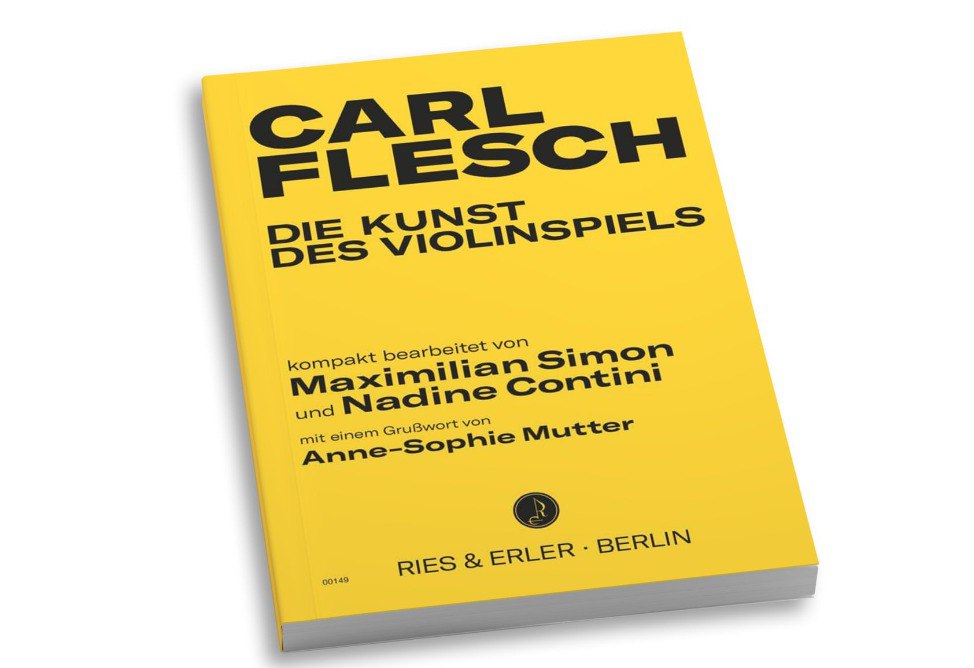
YEREVAN, November 20. /ARKA/. In a historic first for Armenia, Carl Flesch's renowned work "The Art of Violin Playing" is set to be published in the Armenian language. This publication will be provided at no cost to music educators throughout Armenia.
This significant initiative was launched and coordinated by the Primavera Charitable Foundation in partnership with the Armenian National Philharmonic Orchestra, under the direction of Artistic Director and Principal Conductor Eduard Topchjan, and made possible through the generous contributions of the Amaryan Charitable Foundation, Apricot Capital, and Balchug Capital.
The editing of the publication was carried out by Maximilian Simon, who oversees the violin program at the Primavera Foundation, along with Nadine Contini. The textbook is being published in Armenia under a licensing agreement with the Berlin-based publishing company Ries & Erler.
The Amaryan Brothers' Contribution
The translation of the book into Armenian was made feasible due to the strategic foresight and generous backing of Vardan and David Amaryan, the founders of the Amaryan Charitable Foundation. This initiative stems from their commitment to the musical and cultural advancement of Armenia, as well as their tangible support for Armenian educators through one of the most esteemed and sought-after educational resources.
"The Amaryan Charitable Foundation is delighted to introduce Carl Flesch's book, 'The Art of Violin Playing,' to the Armenian music community," remarked David Amaryan, co-founder of the Amaryan Charitable Foundation and the founder and CEO of Balchug Capital.
Vardan Amaryan, co-founder of the Amaryan Foundation and founder of Apricot Capital, emphasized that the Armenian edition will grant musicians in Armenia access to the highest standards of violin education, thereby enhancing the educational experience for both students and instructors.
"We are confident that they will utilize the book to refine their skills and continue to excel on both local and international platforms," he stated.
The Subtle Art of Translation
The Armenian version of "The Art of Violin Playing" was finalized by Aram Badalyan, a distinguished German-Armenian violinist and educator, who also took on the role of editor-in-chief for the project.
Professor Badalyan is affiliated with the Detmold University of Music and frequently receives invitations to serve as a professor and soloist at prestigious international festivals. He is active as a chamber musician, concertmaster, and a participant in various esteemed festival orchestras, such as the Pärnu Music Festival in Estonia, Palermo Classica in Italy, Liedfestspiele in Engadin, Switzerland, Les Heures romantiques in France, and the Goppisberger Music Festival in Switzerland.
"Educational resources in my native language transcend mere books; they embody my culture, history, and thought processes. When I engage with materials in my native language, I establish a bond with my ancestors and my heritage, making knowledge more accessible and comprehensible. This holds significant importance for me, as my language is integral to my identity, and learning it is synonymous with preserving that identity and transmitting it to future generations," Badalyan remarked.
He acknowledged that translating such a multifaceted and technically intricate work posed several challenges, necessitating not only linguistic precision but also a profound comprehension of the author's artistic and educational objectives.
"A key challenge in translation lies in grasping the author's technical intentions and striving to express them accurately. For instance, when determining the pressure applied to the strings, one might opt for the term 'pressure.' Alternatively, one could use 'weight.' There are numerous terms available, each carrying distinct connotations. This can significantly influence a child's cognitive development," Badalyan emphasized.
He conveyed his belief that it is crucial to grasp the author's ideas and translate them in a manner that ensures Armenian-speaking children or educators fully comprehend the content.-0-