

EBRD sees Armenia as a resilient economy and a strategic partner for regional transformation – Falcetti
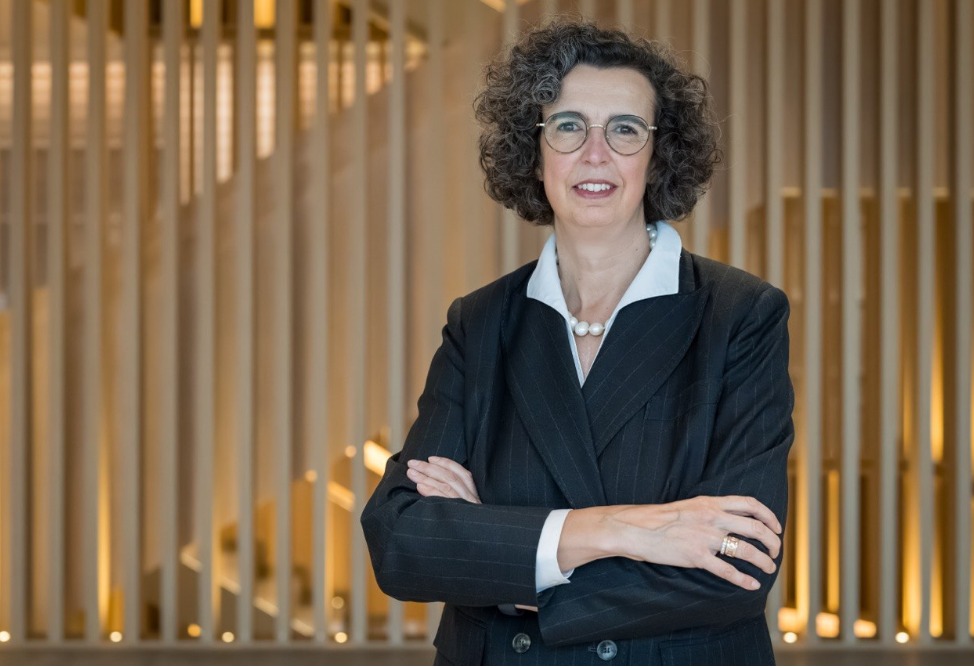
YEREVAN, May 12. /ARKA/. Elisabetta Falcetti, EBRD Managing Director for Turkey and the Caucasus, spoke with ARKA news agency about the bank's assessment of Armenia's economic potential, its role in the region, and prospects for further partnership.
The discussion focused on the EBRD's record investments in Armenia, support for the private sector and SMEs, infrastructure development and regional connectivity, as well as which reforms and financial instruments could form the basis for more sustainable and inclusive growth in the country.
ARKA- As your visit to the Caucasus commences in Armenia, what essential messages do you wish to communicate to the Armenian authorities and the business community during this visit?
E. Falcetti - Thank you, I am delighted to be back in Yerevan. Armenia remains a valued and long‑standing partner for the EBRD, and I would like to underline three core messages at the outset of this visit.
First, our long‑term commitment to Armenia is unwavering. We have stood by the country through periods of complexity and uncertainty, and today we see Armenia as a resilient and forward‑looking economy with strong private‑sector dynamism and central for regional connectivity.
Second, we highly appreciate the constructive cooperation with the Armenian authorities, particularly in advancing reforms that support investment, competitiveness and inclusion. A predictable regulatory environment and strong institutions remain essential to sustain growth and attract investment.
Third, to Armenia’s business community, our message is one of continued partnership. Armenian entrepreneurs, especially SMEs, they have demonstrated remarkable adaptability, innovation and export orientation. The EBRD will continue to support businesses to scale up, modernise, go green and access new markets, ensuring that growth is broad‑based and sustainable.
ARKA- How would you define the EBRD's current role in Armenia: is it mainly as an investor, a reform institution, or a strategic partner in economic transformation?
E. Falcetti - In Armenia, the EBRD is all three at once.
We are a leading investor, having financed over €3.0 billion across 245 projects to date, with over 85 per cent directed to the private sector. At the same time, we remain a reform partner, actively engaging in policy dialogue to strengthen capital markets, financial regulation, investment frameworks and corporate governance.
Most importantly, we see ourselves as a strategic partner in Armenia’s economic transformation. Our approach combines finance, policy dialogue and technical cooperation to deliver not just transactions, but lasting systemic change, whether in infrastructure, finance, green transition or inclusion.
ARKA -What is the total amount of EBRD's investment in Armenia at present, and which areas of collaboration do you view as priorities for long‑term economic and societal impact?
E. Falcetti - To date, the EBRD has invested over €3.0 billion in Armenia, making us one of the country’s largest institutional investors. This scale reflects both Armenia’s importance to us and the increasing capacity of the country to absorb and deploy investment effectively.
In Armenia we have had now record level of investments a second consecutive year. Following a historic high of €396 million in 2024, our investments reached a new record of about €426 million in 2025 across 26 projects. This sustained momentum reflects both the confidence of the EBRD in Armenia’s economic potential and the country’s strong capacity to absorb investment. Looking ahead, our pipeline remains robust, and we expect yet another strong year as we continue supporting private‑sector growth, sustainable infrastructure, human capital and resilience across the Armenian economy. In this context, connectivity has emerged as a central strategic priority, with a clear focus on enhancing regional links, transport, energy and digital. These areas are central to Armenia’s long‑term productivity, resilience and social cohesion.
ARKA- In practical terms, how are EBRD initiatives in Armenia transforming the business landscape? Which outcomes can already be regarded as systemic?
E. Falcetti - We increasingly see systemic outcomes emerging across several fronts.
In finance, our work with partner banks has broadened access to credit, introduced risk‑sharing products, expanded green lending and supported local‑currency finance, reducing exposure to external shocks.
In infrastructure, projects such as the Sisian–Kajaran road and the Yerevan and Syunik customs and logistics centres are reshaping trade connectivity, reducing costs and integrating Armenia more effectively into regional value chains.
In markets and institutions, our policy work with the Central Bank has strengthened derivatives and repo frameworks, while capital‑market support programmes are helping companies prepare for bond and equity issuance.
Together, these efforts are helping move Armenia from isolated interventions to structural, economy‑wide change.
ARKA- To what degree do you evaluate Armenia's preparedness for more sophisticated financial instruments, such as capital market development, green finance, and digital financial solutions?
E. Falcetti - Armenia has made meaningful progress and is increasingly ready to absorb more sophisticated financial instruments.
We already see strong momentum in green finance, with green financing facilities, green residential projects and sustainable infrastructure pipelines.
The launch of EU‑supported programmes, such as the flagship Refugee Resilience Window for Armenia, and the EU4Business–EBRD Credit Line that is underpinned by EFSD+ risk‑sharing instruments, have played a key role in expanding access to finance for SMEs. In parallel, ongoing capital market reforms and targeted capacity building for issuers are marking important steps towards developing deeper, more resilient local markets.
More broadly, EBRD–EU cooperation in Armenia is built around a layered set of programmes that combine finance, guarantees, grants and advisory, forming a comprehensive ecosystem to support inclusive, resilient and sustainable private sector growth.
In the context of capital markets development, the Central Bank of Armenia has consistently demonstrated a prudent and forward‑looking approach to regulation and supervision. Its careful oversight of the financial system, emphasis on risk management and willingness to adopt international best practices have been instrumental in safeguarding financial stability, particularly in times of external uncertainty. We value our close cooperation with the Central Bank, including on strengthening prudential frameworks, capital‑market regulation and the introduction of Armenian law‑governed documentation for derivatives and repo transactions. These reforms not only enhance confidence among market participants but also lay the groundwork for deeper, more resilient financial markets in Armenia.
Digital finance and fintech also offer strong potential, supported by Armenia’s tech‑savvy workforce and growing digital ecosystem. Continued regulatory development and investor confidence will be key to accelerating this transition.
ARKA - Does the EBRD perceive opportunities for enhancing Armenia’s position as a regional hub given current geo‑economic shifts?
E. Falcetti - Yes, very much so.
Geopolitical and geo‑economic shifts are reconfiguring trade routes and investment patterns. Armenia has opportunities to strengthen its role as a regional logistics and services hub, and plays a key role in advancing connectivity of the region.
Investments in roads, border infrastructure, customs, digitalisation and logistics platforms can significantly enhance Armenia’s role in East–West and North–South corridors. Connectivity and diversification is going to be a big priority going forward. Also, parallel growth in technology, services and knowledge‑based sectors further strengthens this proposition.
The EBRD is ready to support Armenia in capitalising on these opportunities in a pragmatic and sequenced manner, jointly with many donor and financing partners.
ARKA - How does the EBRD manage support for government initiatives while promoting private‑sector growth?
E. Falcetti - Our model is based on complementarity.
We support governments where public investment or reform creates strong spillovers for the private sector – for example in infrastructure, regulation or market institutions. At the same time, the majority of our financing is channelled to private enterprises, often through partner banks.
This balance ensures that public interventions crowd in, rather than crowd out, private investment, and that reform and finance progress in parallel.
ARKA - Considering external risks, what elements are crucial for Armenia’s economic resilience in the coming years?
E. Falcetti -Resilience rests on several pillars:
· Sustainable infrastructure and energy security
· Diversified exports and markets
· Strong and well‑capitalised financial institutions
· Competitive and innovative SMEs
· Human capital and inclusion, including support for refugees
· Armenia’s private sector has already demonstrated high adaptability, and continued reform momentum will be essential to sustaining this resilience.
ARKA - How do you foresee the next phase of the EBRD’s partnership with Armenia?
E. Falcetti - Connectivity will sit at the core of our engagement, as Armenia seeks to reinforce its role in regional trade and integration. Our focus will be on advancing investments in transport, energy, and digital infrastructure to strengthen resilience and anchor the country within broader regional corridors.
Water remains another key priority, alongside a growing focus on green and sustainable urban development, particularly through city-level investments.
Beyond sustainable infrastructure, we place a strong emphasis on fostering an inclusive and competitive private sector. This includes targeted support for women, youth, refugees, and host communities.
In parallel, we will continue to support reforms that deepen capital markets, enhance governance, and foster a more predictable and transparent business environment.
Overall, the next phase will be about deepening impact, supporting Armenia not only to grow, but to grow in a more resilient, inclusive, and sustainable way.
.
ARKA - ARKA marks its 30th anniversary this year. How do you assess its role in Armenia’s economic dialogue?
E. Falcetti - I am aware our partnership goes back to early days, late 90s and early 2000s. ARKA news agency has played a consistently valuable role in shaping Armenia’s economic discourse over three decades.
By providing credible, specialised coverage of finance, banking and investment, ARKA helps strengthen transparency, inform decision‑makers and foster dialogue between government, business and international partners.
Such institutions are essential for a healthy investment climate, and I would like to congratulate ARKA on this important milestone and wish it continued success.