

Don't panic-sell or buy on euphoria: Freedom Broker Armenia's key investment lessons
YEREVAN, May 18. /ARKA/. The role of brokers in Armenia is rapidly changing: they no longer simply provide access to the stock exchange, but help investors develop strategies, manage risks, understand global processes, and avoid emotionally driven decisions.
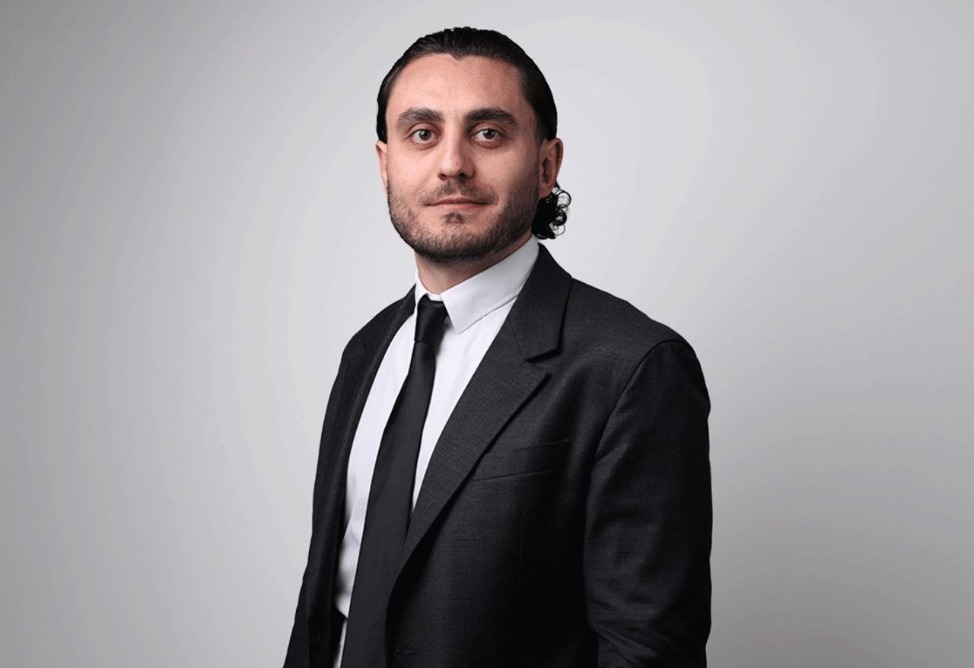
In an interview with ARKA news agency, Khachatur Beglaryan, Director Private Wealth Management at Freedom Broker Armenia, discussed why the Armenian capital market is maturing, the most common mistakes made by beginning investors, and why brokers should become long-term wealth management partners rather than consultants for wealthy clients.
ARKA - Today, a broker is no longer just an intermediary between an investor and the exchange. Do you agree that their role has expanded significantly? How does this manifest itself in practice?
Kh. Beglaryan - I definitely agree. This is especially noticeable in Armenia, where the investment market is currently actively developing and, in general, the broker's role is changing. In practice, this is evident in several things that I've highlighted.
First, the role of analytics and support has grown significantly. Clients today are faced with a huge flood of information, and it's often difficult to separate the noise from the truly relevant information and signals. Therefore, a broker doesn't just help them buy an asset; they help them develop a strategy, understand risks, diversification, tax advantages, and investment horizons.
Secondly, and this is something we always strive for at Freedom, a broker must be a technology-enabled platform. Many clients expect quick access to markets and user-friendly mobile apps to make all of this very simple.
And third, the educational function has greatly expanded, something we successfully do at the Freedom Academy. Many private investors in Armenia are just beginning to systematically work with the stock market and brokers. Our goal isn't simply to provide access to these investments, but to help clients understand the instruments and make more informed decisions. In our segment, we strive to become a wealth management partner for our clients and investors.
This is especially important in the high-net-worth client segment, where the discussions revolve around not just individual private transactions, but the portfolio structure, capital, international diversification, currency risks, and long-term financial goals.
Thus, in general, a broker is not simply an intermediary between the client and the exchange, but a full-fledged partner.
ARKA - Considering that you see the broker's role in the Armenian capital market as a partner, what requests do you most frequently encounter from businesses and private investors at Freedom Broker Armenia?
Kh. Beglaryan - Just a few years ago, many here viewed investing as either too complicated or something for the rich. Many didn't understand the essence of investing. But now things are changing dramatically. Private investors have become more involved; people no longer come to us with a request for "buy me a specific security," but are now asking about the American market, bonds, currency risks, and how to properly allocate capital. Overall, the level of interest has grown.
Previously, especially in Armenia, business interest was focused on bank lending. Now, companies are starting to take a broader view and consider how to attract capital through the market and how to work with bonds. ARKA - What qualities are especially important for a broker in Armenia today: expertise, trustworthiness, the ability to explain complex matters in simple terms, stress resistance, the ability to work with limited liquidity?
Kh. Beglaryan - All of the above, but step by step. The most important and primary qualities are professional expertise and client trust, since in emerging markets, many clients, when first investing, aren't just buying a product, but rather confidence in the person they're working with.
Of course, it's crucial for any financial advisor to be able to explain complex matters simply. The question here isn't how many clever things a person can tell you, but rather how well they can explain complex matters to a non-professional investor in simple, understandable terms.
Stress resistance is also important. I believe the market is always emotional, and during periods of high volatility, like now, the most important thing is not to panic. An investor doesn't need a financial advisor who panics alongside them when something happens, but rather someone who helps them make informed decisions. When conducting fundamental or technical analysis of a company, you initially develop a strategy, and everything that happens next is what I call emotion. We promote a strategic, not an emotional, approach.
And, of course, the Armenian market has its own specifics – it's not particularly deep or liquid yet. Working with limited liquidity is difficult, but we've learned and are able to find solutions even in the low liquidity conditions of the Armenian market.
ARKA - Which investor decisions in the Armenian capital market most often require professional brokerage support?
Kh. Beglaryan - Support is most often needed when clients begin investing significant amounts and perceive significant risks. It can be a tempting illusion that investing in a growing market is very easy: just open an app, buy a stock, and that's it – you've seen growth.
But the real difficulties begin later. For example, one of the most frequent inquiries is no longer simply about buying, but about how to allocate capital, what currency to hold funds in, what proportion to allocate in stocks and what in bonds, how much to hold in cash and liquidity. In other words, we're talking about a comprehensive approach to portfolio management. This is crucial, especially in regions where we're highly sensitive to currency and geopolitical risks.
ARKA - Where does the broker's responsibility lie? What is their responsibility to communicate to the client, and what always remains solely the investor's discretion?
Kh. Beglaryan - There can only be one answer to this question. The broker's job is to provide the client with the most complete and honest picture possible. Explain the risks, the scenario, assist with analysis, and warn against the emotional decisions already discussed.
But the final investment decision always remains with the client. This is a crucial distinction: a good broker shouldn't create the illusion of guaranteed returns or error-free trades.
We minimize risks, but we need to convey information to the client correctly. We can't guarantee that we'll offer 10 trades and that all of them will be profitable. We offer trades based on the client's needs. Initially, we need to determine their risk profile by asking specific questions and understanding their level of financial literacy. If someone comes to us and says they want 100% annual returns, our job is to explain the risks involved. The ideas we convey are largely based on client requests. We create these portfolios individually, and when they are finalized, we make a note that this does not constitute investment advice. It is our professional perspective on a particular request or company.
ARKA - What is the most common mistake made by beginning investors in the still-developing Armenian capital market?
Kh. Beglaryan - This mistake is common not only in the Armenian market, but in all markets. People are emotional, and the biggest and most common mistake is selling an asset in a moment of panic or, conversely, trying to buy an asset during a period of euphoria. And our task in these moments, with proper fundamental and technical analysis of the company, is to work with clients' emotions and prevent them from making emotional decisions.
ARKA - In other words, investors are hindered by emotions – fear, greed, the desire to "get on the last train." How does a broker help them maintain rationality and avoid panicking during exchange rate fluctuations, rate changes, market news, or the hype surrounding certain instruments?
Kh. Beglaryan – This is ingrained from the start. I communicate this to my financial advisors, and they communicate it to my clients. A strategy is developed with a client during the first few meetings, and here you must a priori explain to the client who has trusted you how the work will be conducted, that during this long journey, there may be moments when emotions will prevail over reason and sound decisions.
It's a kind of symbiosis between investor and financial advisor, so everything is discussed in advance. And when you see someone expressing emotion, you tell them, "You're making a decision based not on calculations, but on emotion."
And this often works. People listen, especially if you have a background with the client: they've already fully developed trust, and they understand that you're a professional in your field. You should become a role model for the person who comes to you to become his financial advisor.
ARKA - What are the specifics of working with large businesses and wealthy clients? How do their needs differ from those of the mass investor?
Kh. Beglaryan - The most important difference, in my opinion, is that a large private investor doesn't come for a single transaction, but for a comprehensive service, for country and currency diversification. They don't come to buy one stock and sell it. Large private investors have more fundamental needs.
Often, when you've been working with a client for a long time, you know the structure of their financial portfolio, how much is in stocks, how much in bonds, how it's distributed across different countries according to the client's tax residency. And you can then build their portfolio comprehensively, without focusing solely on a single brokerage firm.
ARKA - What solutions and tools does Freedom Broker Armenia offer to clients who want to build systematic and long-term investments?
Kh. Beglaryan - The most important and unique thing we offer our clients is direct access to over 15 global exchanges. We specialize in the American stock market.
Three years ago, clients had one set of needs, now they have something completely different. People have grown financially to the point where they understand the need for diversification, but they simply don't know how. Often, someone simply comes to us and says, in an abstract way: I want bonds, I want stocks, maybe these, maybe those. Our goal in determining a client's risk profile is to build long-term relationships with them.
ARKA - So, for a modern broker, analytics, risk management, and an understanding of global processes are paramount?
Kh. Beglaryan - Of course. If you don't monitor global processes daily in a world where everything is now interconnected and cyclical, you simply can't be competent. Therefore, analytics and strategy development are fundamental to creating any healthy financial portfolio.
ARKA - Can you give an example of a typical situation where a broker's competent work helped a client avoid a rash decision or identify a more profitable strategy?
Kh. Beglaryan - A typical example. We created a portfolio for a client of financial instruments, say, stocks, which tend to fluctuate in value. We developed a year-long strategy with him, but the client, due to his mentality, tends to monitor his portfolio daily.
Naturally, an asset can be not only positive but also negative. And this formal loss of an asset, which doesn't exist until you lock it in, puts a lot of psychological pressure on many people. That is, if your position has depreciated slightly from your entry point, you might emotionally sell the asset, not following your strategy. Emotion is the most common mistake, as people simply deviate from what they had planned in advance, taking certain factors into account, and make a decision in the moment, succumbing to emotion. Knowing that people can make such mistakes, I've already seen these situations "on the ground." I have to engage in dialogue, stop people, say "no," present facts, analyze, and explain that this is temporary and that we need to stick to our strategy. And often, people come back and say, "Yes, you were right." Our job is to advise the client so they can profit from the deal and avoid making the wrong decision based on emotion.
ARKA - Are there cases when a developed strategy needs to be revised due to force majeure, including geopolitical or financial ones?
Kh. Beglaryan - It's no secret that, since 2020, our global market conditions have changed dramatically – geopolitical, financial, as well as our portfolio architecture. There's no such thing as a model portfolio; the most flexible model portfolio is the most flexible one. The modern world forces us to be able to quickly change our strategy if necessary.
ARKA - How do you envision a successful broker in Armenia in 3-5 years?
Kh. Beglaryan - We're working on this, and we really want it to be a prototype of a Swiss banker. First and foremost, a successful image is a broker you trust. I'm confident that all of this is built on expertise and trust. Both need a little more time, and I believe 3-5 years is the time it will take for a successful, ready-made, and trusted product to appear in Armenia.
ARKA - Are you saying that a broker is more of a strategic partner for a client than a financial advisor?
Kh. Beglaryan - They are 100% partners. It's like a family therapist for a wealthy and successful businessman and his family, who comes to their home and advises them on all matters because they trust him.
We work in the private sector, with wealthy clients and large private capital, and we are like "financial doctors." Our goal is to be so competent that over time, people develop trust and want you to be their guide along the investment path. Today's rapidly changing world doesn't allow you to invest without a trusted professional at your side.