


Zakharova comments on Pashinyan's statement about Artsakh
05.09.2019,
13:18
Maria Zakharova, spokesperson of the Russian foreign ministry, speaking Wednesday at a briefing, commented on the statement Armenian Prime Minister Nikol Pashinyan made on August 5 at a rally in Stepanakert - "Artsakh is Armenia, and that's all".
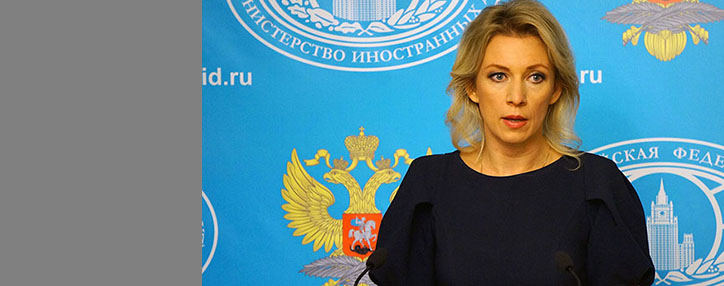
YEREVAN, September 5. /ARKA/. Maria Zakharova, spokesperson of the Russian foreign ministry, speaking Wednesday at a briefing, commented on the statement Armenian Prime Minister Nikol Pashinyan made on August 5 at a rally in Stepanakert - "Artsakh is Armenia, and that's all".
Speaking at the rally, the premier pointed out the big challenges through which Armenia should go until 2050. He said he didn't speak about Armenia and Artsakh separately, since Artsakh is Armenia, and that's all.
"Of course, we understand that there are internal rhetoric and settings, which reflect opinions of political movements and parties, given that we speak about a democratic country," Zakharova said. "There are also a peace process, with its participants and co-sponsors, and international efforts to reach a peaceful settlement. The sides, statements should be in tune with the context of the joint efforts aimed at peaceful settlement."
Zakharova said that it is very difficult to return to the previous positions in negotiations after statement that become or became an apple of discord and create additional questions or can misbalance a fragile negotiation process.
"Unfortunately, we have heard such statements, and continue encountering them at different levels from different sides," she said.
In her words, statement should derive from the logic aimed at concentration of all resources on achievement of peaceful settlement as soon as possible.
Pointing out the complicity and length of the process, Zakharova said that there is a common understanding of the necessity to move faster.
"And for that, statements maybe should be in tune and for the sake of the key goal," she said.
Karabakh conflict broke out in 1988 when Karabakh, mainly populated by Armenians, declared its independence from Azerbaijan.
On December 10, 1991, a few days after the collapse of the Soviet Union, a referendum took place in Nagorno-Karabakh, and the majority of the population (99.89%) voted for secession from Azerbaijan.
Afterwards, large-scale military operations began. As a result, Azerbaijan lost control over Nagorno-Karabakh and the seven regions adjacent to it.
Some 30,000 people were killed in this war and about one million people fled their homes.
On May 12, 1994, the Bishkek cease-fire agreement put an end to the military operations.
Тalks brokered by OSCE Minsk Group are being held over peaceful settlement of the conflict. The group is co-chaired by USA, Russia and France. --0-----
Speaking at the rally, the premier pointed out the big challenges through which Armenia should go until 2050. He said he didn't speak about Armenia and Artsakh separately, since Artsakh is Armenia, and that's all.
"Of course, we understand that there are internal rhetoric and settings, which reflect opinions of political movements and parties, given that we speak about a democratic country," Zakharova said. "There are also a peace process, with its participants and co-sponsors, and international efforts to reach a peaceful settlement. The sides, statements should be in tune with the context of the joint efforts aimed at peaceful settlement."
Zakharova said that it is very difficult to return to the previous positions in negotiations after statement that become or became an apple of discord and create additional questions or can misbalance a fragile negotiation process.
"Unfortunately, we have heard such statements, and continue encountering them at different levels from different sides," she said.
In her words, statement should derive from the logic aimed at concentration of all resources on achievement of peaceful settlement as soon as possible.
Pointing out the complicity and length of the process, Zakharova said that there is a common understanding of the necessity to move faster.
"And for that, statements maybe should be in tune and for the sake of the key goal," she said.
Karabakh conflict broke out in 1988 when Karabakh, mainly populated by Armenians, declared its independence from Azerbaijan.
On December 10, 1991, a few days after the collapse of the Soviet Union, a referendum took place in Nagorno-Karabakh, and the majority of the population (99.89%) voted for secession from Azerbaijan.
Afterwards, large-scale military operations began. As a result, Azerbaijan lost control over Nagorno-Karabakh and the seven regions adjacent to it.
Some 30,000 people were killed in this war and about one million people fled their homes.
On May 12, 1994, the Bishkek cease-fire agreement put an end to the military operations.
Тalks brokered by OSCE Minsk Group are being held over peaceful settlement of the conflict. The group is co-chaired by USA, Russia and France. --0-----