


Former Finance Minister Names Key Risks to Armenia's Rating Following Fitch's Decision (EXCLUSIVE)
YEREVAN, July 30. /ARKA/. Fitch Ratings recently affirmed Armenia's sovereign rating at 'BB-' with a positive outlook, citing growing international reserves, resilient economic momentum, and reduced short-term risks of military escalation thanks to the US-backed peace framework with Azerbaijan. However, the agency noted ongoing uncertainty surrounding the completion of the Armenian-Azerbaijani peace process, as well as risks associated with tensions with Russia.
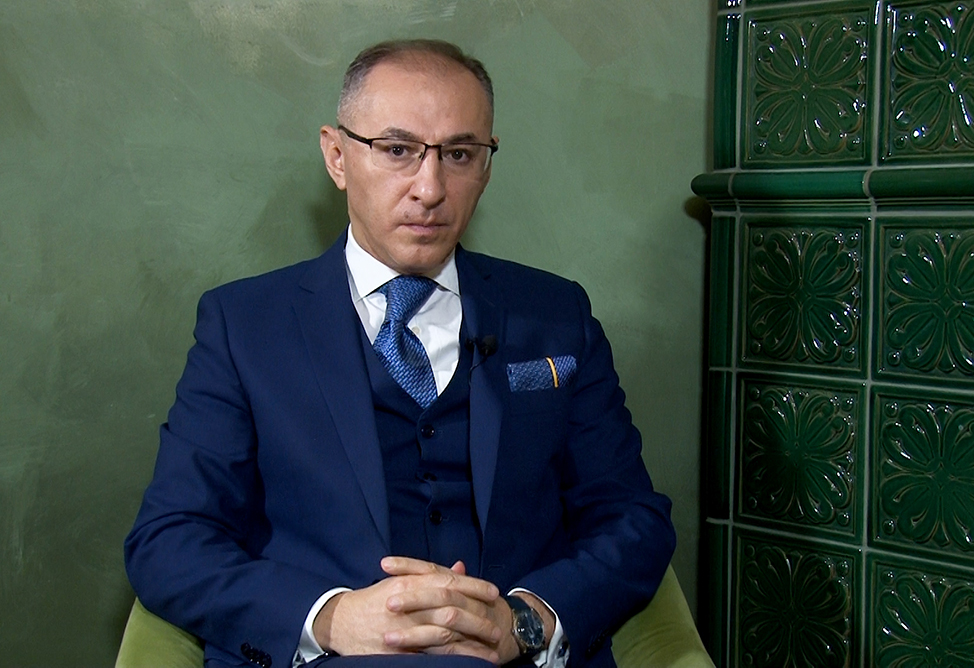
In an exclusive interview with ARKA, former Armenian Finance Minister Vardan Aramyan commented on Fitch Ratings' assessment and outlined factors that, in his opinion, could influence an upgrade or downgrade of the country's sovereign rating.
ARKA — Which of the factors noted by Fitch currently poses the greatest risks to Armenia's rating: a possible breakdown in the peace process with Azerbaijan, a deterioration in economic relations with Russia, a widening current account deficit, or an increase in public debt? V. Aramyan: I don't think the phrase "a possible breakdown in the peace process with Azerbaijan" is accurate. It's difficult to talk about a peace process when the other side, in my opinion, continues its hostile policies. Armenian prisoners remain in Azerbaijani prisons, and the so-called "Western Azerbaijan" agenda is being advanced. Therefore, this is not only an economic risk but also a continuing security threat.
The other factors identified by Fitch are interrelated. A deterioration in economic relations with Russia could lead to a reduction in exports and an increase in the current account deficit.
By the end of 2025, the current account deficit was approximately $2.6 billion, primarily due to a negative balance of merchandise trade of approximately $3.8 billion. For comparison, the deficit in 2022 was $85 million.
This deficit can be financed through foreign direct investment, private sector external debt, and government debt. However, significant growth in direct investment is difficult to expect without the protection of property rights and a predictable business environment. Public reports of potential political or administrative pressure on large private companies, regardless of the legal assessment of specific cases, negatively impact investor confidence. As a result, the primary burden of deficit financing may shift toward debt sources, including public debt.
Current expenditure commitments of recent years also put additional pressure on public finances. If the government fails to revise its spending structure and create sustainable sources of revenue, the risk of public debt growth will persist and, in the long term, could even harm fiscal stability.
ARKA — In 2025, Armenia's current account deficit widened to 7.2% of GDP, more than double the average for countries rated 'BB.' How sustainable is the financing of such a deficit, and under what conditions could it become a direct risk to the rating?
V. Aramyan — There is no single safe threshold for the current account deficit for developing countries. Its dynamics and structure are more important. According to official data from the Statistical Committee of the Republic of Armenia, the current account deficit was $85 million in 2022, and by 2025 it had already reached approximately $2.6 billion, or 8.6% of GDP. In 2022, this figure was minus 0.4% of GDP, and in 2020, it was 4%. This dynamic is certainly puzzling.
Regarding the structure, the main problem is that the deficit is primarily driven by a negative balance of trade in goods. If imports consisted primarily of investment-grade equipment and machinery, the risks would be lower. However, a significant portion of domestic investment is concentrated in housing construction and does not increase export potential.
This is precisely Fitch's primary concern. If the deficit continues to be financed by debt rather than productive investment, this could weaken external stability and become a major factor affecting Armenia's rating.
ARKA — How sustainable is the government's fiscal policy, given the increase in social spending, including healthcare and pensions?
V. Aramyan — Risks to fiscal sustainability are growing and could intensify if the government fails to implement fiscal consolidation. This involves revising priorities, reducing ineffective spending, and possibly increasing tax revenues.
Pre-election social promises have a long-term fiscal cost. For example, raising pensions by 10,000 drams per month alone would create permanent additional liabilities for the budget of approximately 78 billion drams per year.
If such expenditures are financed by reducing capital investment or increasing public debt, this will weaken the potential for economic growth. Therefore, social policy must rely on sustainable sources of financing.
ARKA — What changes are needed to improve Armenia's rating? What events could lead to a return of the outlook from "positive" to "stable"? V. Aramyan: The key condition for upgrading the rating is the creation of a predictable and trustworthy business environment. Without this, there will be no growth in foreign direct investment, especially in large manufacturing sectors.
Actions against large businesses perceived as politically motivated undermine investor confidence. When a company's operations are effectively suspended pending a final court decision, this sends a negative signal to the entire investment community.
Investors require property rights protection, predictable rules of the game, and a level playing field. Combined with consistent fiscal and structural reforms, this will increase the likelihood of a rating improvement.
However, if the investment environment further deteriorates, external and fiscal imbalances widen, or the security situation significantly worsens, a return of the outlook from "positive" to "stable" will become likely.
ARKA: Fitch expects that, amid inflationary pressures, the Central Bank of Armenia will temporarily raise the key interest rate by 0.25 percentage points to 6.75%. How justified is such a tightening of monetary policy?
V. Aramyan: In June 2026, 12-month inflation stood at 5.1%, remaining above the Central Bank's target. However, the decision to tighten monetary conditions will depend on domestic and external factors.
If Russian restrictions hinder the export of Armenian agricultural products, their supply on the domestic market may increase, creating deflationary pressure, reducing the need for a rate cut.
However, if exporters quickly reorient their supplies, this impact will be weaker. At the same time, a possible revision of the price of Russian gas and external geopolitical risks could exacerbate the inflationary backdrop and inflation expectations. In this case, a rate increase by the Central Bank would be a justified step to return inflation to the target level in the medium term.
ARKA: Restrictions on the import of Armenian goods to Russia could increase their supply on the domestic market and have a restraining effect on inflation. Could this change the interest rate trajectory?
V. Aramyan: A reduction in interest rates in this situation seems unlikely.
Certainly, if, due to Russian restrictions, some Armenian exports remain on the domestic market, this could create deflationary pressure on certain product groups, primarily in the agricultural market. However, the scale of this effect will depend on how quickly Armenian exporters can reorient supplies to other markets or find alternative export routes. This is difficult to do in the short term, so some downward pressure on prices is likely to occur.
However, this factor alone will not be sufficient to change the monetary policy trajectory. Inflation risks persist in other areas as well. For example, in June 2026, 12-month inflation in the education sector was 8.3%, and in healthcare, 3.6%.
Furthermore, the external environment remains highly uncertain. Geopolitical tensions in the Middle East, between Russia and Ukraine, and between the US and China continue to increase the risk of rising energy prices. These increases, in turn, have a multiplier effect on the cost of virtually all goods and services.
Therefore, the potential deflationary effect of Russia's restrictions will likely only partially curb inflation, but is unlikely to be sufficient grounds for the Central Bank to lower interest rates.
ARKA — Armenia's international reserves have reached a record high of $5.9 billion. How reliable a protection do they provide against a widening current account deficit and a decline in exports, tourism receipts, and transfers?
V. Aramyan — Reserve adequacy is assessed not only by their absolute volume but also by the number of months of imports they can cover.
In Armenia, the average monthly import of goods and services is approximately $1.4 billion. Therefore, reserves of $5.9 billion provide coverage for more than four months of imports, with a minimum safe limit of three months.
This is a fairly reliable safety net, but it is not a permanent solution. If the current account deficit remains high and exports, tourism, and transfers decline significantly, the reserves could eventually be depleted. In short, at this stage, this level of reserves provides protection, but only if external shocks are not prolonged and large-scale.
