


Does the Firebird AI factory threaten Armenia's water resources? What's confirmed and what's still missing
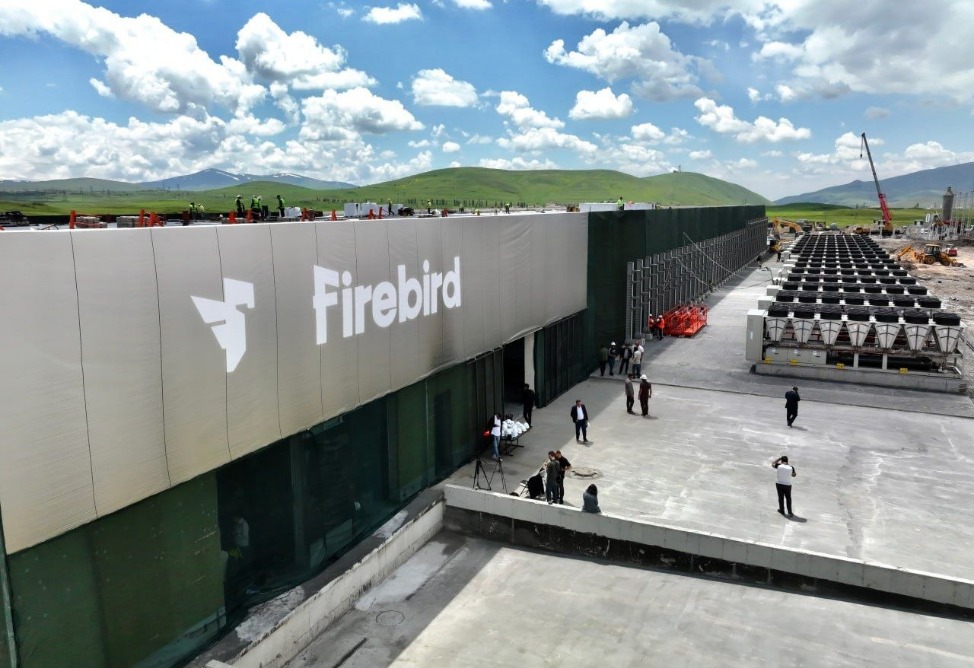
YEREVAN, September 16. /ARKA/. The opening of the Firebird AI factory in Hrazdan, powered by NVIDIA technology, has sparked serious public concern in Armenia. Discussions centered on whether further expansion of the data center could put additional strain on Armenia's water resources.
These concerns are not entirely unfounded: some large data centers do consume significant amounts of water to cool their equipment. However, water consumption depends not only on the capacity and number of servers, but also on the specific cooling system, climate, and operating conditions.
The Firebird AI factory in Hrazdan is one of the largest regional projects to create computing infrastructure for artificial intelligence in Armenia. The current first phase of the project is designed for a computing capacity of up to 15 MW, and the company has announced plans to scale the infrastructure to 300 MW.
Typical data center water consumption estimates cannot be automatically applied to the Hrazdan facility. Published information indicates a closed liquid loop and the use of dry heat removal technology, but actual data from the facility itself is needed for a definitive assessment.
A publicly reported estimate for Firebird of approximately 500,000 US gallons, or approximately 1.89 million liters of water per day, was used. However, this figure was not a confirmed indicator of the actual water consumption of the operating facility.
To determine how much water the AI factory actually requires and how this might change with its expansion, ARKA reviewed available materials from Firebird, NVIDIA, and equipment manufacturer Vertiv, requested information from Firebird and the Armenian Ministry of Environment, reviewed the expansion design documentation, and obtained an assessment from a relevant expert.
The data obtained do not confirm concerns about large-scale technological water consumption by the existing AI factory in Hrazdan. However, the issue is particularly significant given the announced scaling of the infrastructure to 300 MW.
Where did the figure of almost 2 million liters per day come from?
Eurasianet cited an estimate of approximately 500,000 US gallons, or approximately 1.89 million liters of water per day, in November 2025, for the 100 MW data center discussed at the time.
However, the publication did not cite the original source or the calculation methodology for the water consumption. The reference in the relevant paragraph refers to an estimate of electricity consumption, not water. Therefore, this figure cannot be considered a confirmed figure from Firebird or the result of a review of the project's engineering documentation.
The project parameters themselves have also changed over time. Firebird's most recent materials cited a first-stage capacity of 15 MW, while Firebird and the Ministry of High-Tech Industry's June reports indicated 18 MW.
In response to ARKA's inquiry, the company explained this discrepancy. According to Firebird, 15 MW is the peak capacity of the computing cluster, while 18 MW is the maximum possible power consumption of the entire complex, including the engineering and support infrastructure.
The first phase includes 6,144 NVIDIA B200 GPUs.
Concurrently, Firebird and NVIDIA announced plans to expand the infrastructure in Armenia to more than 70,000 GPUs and 300 MW by the end of 2027. This is the stated future capacity, not the parameters of the first phase already in operation.
Why data centers need water
Powerful graphics processing units (GPUs) used to train and run AI models generate a significant amount of heat. This heat must be continuously removed to ensure the equipment operates within acceptable temperature limits.
However, the concepts of "liquid cooling" and "water consumption" are not the same.
Water or a special coolant can circulate in a closed loop between cooled components, distribution units, and heat exchangers. In this case, the liquid transfers heat and is reused, although minor losses and periodic maintenance cannot be completely ruled out.
Significant continuous water consumption primarily occurs when data centers remove heat using cooling towers or other evaporative systems. Water evaporates in these systems, and some of the liquid is removed from the system to control dissolved solids and replaced with fresh liquid. The US Department of Energy notes that cooling towers, by their very nature, use significant volumes of water. A study by Lawrence Berkeley National Laboratory also shows that data center water consumption varies significantly depending on the technology. Systems with water-cooled chillers and cooling towers can have high direct water consumption, while dry coolers reject heat into the surrounding air and can minimize it.
Even if adiabatic operation is available, water can still be used for pre-cooling the air in hot weather.
Therefore, when assessing the potential impact of Firebird, the use of a liquid system is not the key factor, but rather how the heat is ultimately transferred to the outside environment.
What system does Firebird have?
Firebird and the Armenian Ministry of High-Tech Industry previously reported that the first-stage liquid cooling system operates in a closed loop and, according to technical specifications, requires fluid replacement only every few years.
Firebird also stated that the facility combines liquid and air cooling, supplied by Vertiv. NVIDIA clarified that Vertiv supplied the Firebird cooling architecture, which combines chilled water technology, the iCOM CWM control system, and Vertiv TrimCooler technology for external heat removal.
In Vertiv's official catalog, the CoolLoop Trim Cooler is described as a completely dry solution. The manufacturer states that it removes heat without water consumption and does not require a constant water supply or water treatment system for external cooling. At high outside temperatures, the compressors, using R1234ze refrigerant, handle the peak load.
During the open data analysis phase, the exact model of the installed equipment and the full Firebird circuit diagram were not publicly disclosed. Therefore, the specifications of the catalog model alone cannot be considered independent confirmation of all the parameters of a specific facility.
Firebird's response to ARKA's inquiry allowed us to clarify this issue.
The company reported that the existing facility uses Vertiv FIZ125 and LVZ090 series units with closed-loop cooling systems.
According to Firebird, evaporative and adiabatic cooling is not used in the data center, even during the hottest periods. The coolant circulates within the closed system and transfers heat through radiators, which are cooled by fans using only atmospheric air.
The company compares the basic operating principle of this system to a car radiator, noting that it is actually a much more complex industrial system.
Simplified, the system looks like this: the coolant circulates between the cooled components and heat exchangers, absorbs heat from the processors, transfers it to an external cooler, and then returns the cooled liquid to the loop.
In this form, it is closer to a closed-loop heating system than to a constant supply of water from a river or water main followed by evaporation. Why Firebird Chose Razdan
Firebird told ARKA that one of the factors in choosing Razdan for the AI factory was the local climate.
According to the company, the maximum air temperature in the city over the past ten years has not exceeded 36.5°C, allowing the use of dry cooling even on hot days.
This is important for the chosen technology: if external heat removal is carried out entirely in dry mode, the direct water consumption of the cooling system is significantly lower than that of data centers with cooling towers.
Firebird claims that evaporative or adiabatic stages are not required for this.
Furthermore, according to the company, there is currently no water supply infrastructure at the existing facility. In the future, it will be needed for the employees' domestic and sanitary needs.
What's inside the closed loop
Firebird told ARKA that the closed loop system contains approximately 250 tons of glycol-based coolant (an environmentally friendly compound used in the food industry). According to the company, it is imported from Europe, circulates within a closed circuit, and is not consumed during the cooling process.
The coolant is scheduled for replacement approximately every 5-8 years.
Therefore, the fluid used in the circuit serves as a heat transfer agent, rather than a constantly supplied and consumed resource.
This significantly changes the water consumption estimate compared to data centers using evaporative cooling towers.
Does this mean that no water is used at all?
No, it doesn't. Even a data center with dry external cooling does not necessarily have zero water consumption.
Fluid may be required for the initial fill of the circuit, maintenance, and loss compensation. Water may also be used for employee domestic needs, cleaning, and fire protection infrastructure. The volume of water used for these purposes at Firebird is not publicly indicated.
An Armenian Expert's Assessment
According to Arevik Hovsepyan, president of the scientific and environmental NGO Country Water Partnership Armenia, who cites company representatives, approximately ten truckloads of water were used for the initial flush of the system.
"In my opinion, this is not a significant volume," she noted.
Hovsepyan believes that the liquid in the cooling system circulates in a closed loop, so after the circuit is filled, there may not be a need to add more for approximately five to six years.
According to the expert, if distilled water is required for the system, it could potentially be obtained from various sources, including outside the Hrazdan basin, so the process flow diagram itself does not create a dependency on a specific local water source.
Hovsepyan believes that the impact on water resources will be minimal, although she relies on some information she received directly from company representatives in her assessment. There's also an indirect water footprint.
Direct water consumption on-site isn't the only component of a data center's water footprint.
There's also indirect consumption associated with electricity generation. Some power plants use water for cooling, and hydroelectric reservoirs lose some water through evaporation.
A study by Lawrence Berkeley National Laboratory distinguishes between water consumed directly on-site at a data center and water associated with electricity generation. It also indicates that systems without direct water consumption may require more electricity in some configurations.
According to the Firebird expansion design documentation, the project includes a large energy infrastructure with power supplied by sources associated with the Hrazdan Hydroelectric Power Plant and the Hrazdan Thermal Power Plant. Natural gas will not be used on-site.
However, the data available in the documentation is insufficient to accurately calculate the indirect water footprint of the AI factory's electricity supply.
Therefore, the absence of constant water consumption directly for cooling does not mean the project has no water footprint in a broader sense.
What the Ministry of Environment Says
Another significant question is whether Firebird is a water user and whether the facility requires the appropriate permit.
The Ministry of Environment told ARKA that Firebird AI CJSC is not registered in the state water cadastre as a water user and has not applied for a water use permit.
However, the facility's expansion is currently undergoing an environmental impact assessment.
On August 7, the company submitted a report on the expansion of its AI data center in Hrazdan. The environmental assessment and review process is not yet complete.
According to the revised EIA (Environmental Impact Assessment) report, an additional 30 hectares are planned for development next to the existing 5,813-hectare center. This will bring the total area of the complex to approximately 35.8 hectares.
The project includes a chiller system with a closed water-glycol loop for the technical rooms.
According to the report, no continuous water consumption for cooling is expected, and the system is expected to be filled approximately every eight years. Thus, the declared expansion technology corresponds to the closed-loop principle, which is applied in the operating first stage.
How much water will the expanded complex require?
Despite the lack of a constant process water consumption for cooling, water will be required for non-process purposes.
According to the design documentation, the maximum domestic water consumption during operation of the expanded facility is estimated at 25 cubic meters per day.
Firebird also informed ARKA that the dry cooling principle is planned to be maintained with the company's announced scaling of the AI infrastructure to 300 MW.
This is a significant clarification, as the characteristics of the existing first stage could not be automatically transferred to future infrastructure of significantly greater capacity.
Meanwhile, the process of assessing the environmental impact of the complex expansion is still ongoing.
Why is this issue particularly important for Armenia?
The World Bank assessment states that Armenia as a whole is experiencing high water stress.
The report estimates the ratio of water withdrawal to available resources at 57.8%, based on the 2019 Aqueduct global dataset. The report also states that approximately 70% of water consumption is for agriculture, with water resources becoming more limited during the dry summer months, and that water stress may further increase due to climate change.
These data explain why the topic of water consumption for large infrastructure facilities is sensitive for Armenia.
However, the national indicator alone does not allow us to determine Firebird's impact on water resources in Hrazdan specifically.
For a specific facility's assessment, the water source, actual water intake, seasonal consumption, and the state of the corresponding water basin are important.
In the case of the operating AI plant, the data obtained by ARKA significantly clarify the picture: Firebird states that water is not used for process cooling, while the Ministry of Environment reports that the company is not registered as a water user and has not applied for a water use permit.
What has been determined and what questions remain
An initial analysis of open sources did not allow us to determine: the facility's designed and actual total water consumption in cubic meters per year;
the maximum daily consumption on hot summer days; the source of process and drinking water; WUE—the amount of water consumed per unit of energy by computing equipment; an accurate model and complete configuration of the cooling system; cooling parameters for each future phase; an estimate of the indirect water footprint of the power supply, etc.
ARKA now has answers to some of these questions.
Firebird named the series of Vertiv equipment used—FIZ125 and LVZ090—and stated that evaporative and adiabatic cooling are not used. The company also disclosed the volume of coolant—approximately 250 tons—and stated that it is scheduled for replacement every 5–8 years.
The company stated that there is currently no water supply infrastructure on site, but that in the future, water will be required for domestic and sanitary purposes.
The expansion design documentation, in turn, calls for a closed water-glycol loop without a constant water flow for cooling and estimates the maximum domestic water consumption of the expanded complex at 25 cubic meters per day. Firebird also states that the dry cooling principle will be retained when scaling up to 300 MW.
However, questions remain.
In particular, the EIA and state environmental review process for the expansion has not been completed and is ongoing. Furthermore, the available data is insufficient to calculate the indirect water footprint associated with the complex's power supply.
A crucial factor during scaling is whether the actual infrastructure built will comply with the dry cooling principle stated in the documentation.
Bottom Line
The answers received by ARKA allow us to significantly refine the technical picture.
· Firebird's existing AI plant uses a closed loop with a glycol-based coolant and dry external heat removal, without evaporative or adiabatic cooling. According to the company, there is no water consumption during the cooling process.
· The Ministry of the Environment confirms that Firebird is not registered as a water user and has not applied for the relevant permit. The expansion design documentation also calls for a closed-loop cooling system without a constant water flow, and the maximum domestic water consumption of the future expanded facility is estimated at 25 cubic meters per day.
Industry expert Arevik Hovsepyan assesses the project's impact on water resources as minimal.
However, it is premature to make a final assessment of the impact of the future, significantly more powerful complex. The EIA and state review process for the expansion is still ongoing, and the characteristics of the existing first stage alone do not guarantee the parameters of the actually constructed infrastructure, with a capacity of up to 300 MW.v
