


Geopolitical uncertainty remains the main risk for Armenian banks — UBA
05.08.2026,
10:08
Geopolitical and regional uncertainty remains the biggest risk for Armenia's banking system, stated Daniel Azatyan, Chairman of the Union of Banks of Armenia, in response to a question from ARKA news agency.
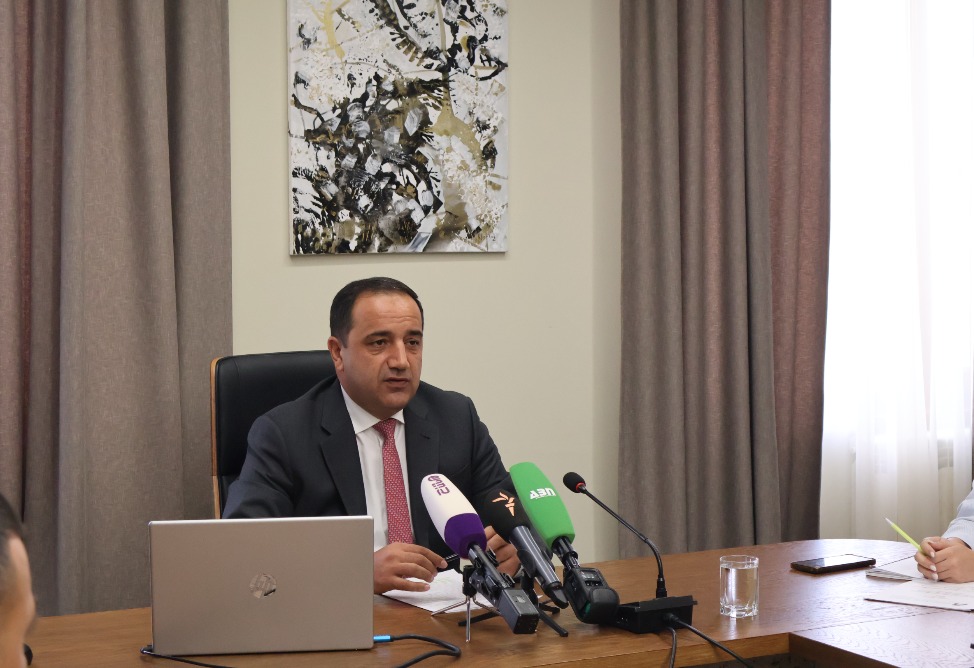
YEREVAN, August 5. /ARKA/. Geopolitical and regional uncertainty remains the biggest risk for Armenia's banking system, stated Daniel Azatyan, Chairman of the Union of Banks of Armenia, in response to a question from ARKA news agency.
"But we've been living in this situation for probably five years now. Therefore, banks are using risk-based tools to prevent possible negative consequences," he said at a press conference on Tuesday.
Azatyan cited the high and gradually increasing debt burden on consumer loans and other retail loans as another significant risk.
"Therefore, the Central Bank's recent decisions to further tighten bank capital requirements to contain these risks are no coincidence," he explained.
On July 28, the Board of the Central Bank of Armenia decided to increase the countercyclical capital buffer rate to 2% of risk-weighted assets. The new rate will come into effect on February 1, 2027. It currently stands at 1.75%.
According to the head of the UBA, the potential consequences of the current uncertainty could primarily impact the quality of the consumer loan portfolio.
Until now, no significant problems have been observed in this segment, as business lending volumes and job creation have grown, and resident bank deposits have increased, Azatyan noted.
In the long term, he also did not rule out risks in the mortgage segment. According to him, these could be related to both possible changes in the real estate market and a gradual reduction in the share of payments covered by income tax refunds.
"This ratio will change over the years: people will receive a smaller income tax refund and pay off a larger portion of the loan principal themselves. On the other hand, in five to seven years, this effect could be partially offset by inflation and rising wages," Azatyan explained.
"But we've been living in this situation for probably five years now. Therefore, banks are using risk-based tools to prevent possible negative consequences," he said at a press conference on Tuesday.
Azatyan cited the high and gradually increasing debt burden on consumer loans and other retail loans as another significant risk.
"Therefore, the Central Bank's recent decisions to further tighten bank capital requirements to contain these risks are no coincidence," he explained.
On July 28, the Board of the Central Bank of Armenia decided to increase the countercyclical capital buffer rate to 2% of risk-weighted assets. The new rate will come into effect on February 1, 2027. It currently stands at 1.75%.
According to the head of the UBA, the potential consequences of the current uncertainty could primarily impact the quality of the consumer loan portfolio.
Until now, no significant problems have been observed in this segment, as business lending volumes and job creation have grown, and resident bank deposits have increased, Azatyan noted.
In the long term, he also did not rule out risks in the mortgage segment. According to him, these could be related to both possible changes in the real estate market and a gradual reduction in the share of payments covered by income tax refunds.
"This ratio will change over the years: people will receive a smaller income tax refund and pay off a larger portion of the loan principal themselves. On the other hand, in five to seven years, this effect could be partially offset by inflation and rising wages," Azatyan explained.