

ARKA Armenia Weekly: Key Events of the Week: Politics, Economy, and Markets (August 31 – September 6)

YEREVAN, September 7. /ARKA/. ARKA News Agency presents a digest of the week's key events.
SUMMARY
The main topic of the week was the further change in Armenia's foreign economic configuration: Yerevan is simultaneously discussing a new model of relations with Russia, strengthening its peace agenda with Azerbaijan, and promoting the diversification of trade and transport routes. In this context, the railway concession and TRIPP are acquiring direct economic significance, and EU trade preferences are expanding the potential geography of exports, although businesses and experts point to persistent logistical, production, and non-tariff restrictions.
POLITICS
The management of the railway network has become a key element of Armenia's new transport strategy. Foreign Minister Ararat Mirzoyan stated that Yerevan intends to find a concession management solution that will allow the country to realize its transit potential without infringing on the interests of its Russian partners. Transferring concession rights to an acceptable third country has previously been mentioned as a possible option. Russian Railways CEO Oleg Belozerov, for his part, stated that the company is fulfilling the terms of the current contract and is open to discussing Yerevan's proposals. For businesses, the main question is whether the new management configuration will accelerate infrastructure modernization and Armenia's connection to regional routes.
Armenian-Russian relations are entering a period of more fundamental restructuring. At a meeting in Bishkek, Armenian Prime Minister Nikol Pashinyan and Russian President Vladimir Putin disagreed on the compatibility of Armenia's path toward European integration with membership in the Eurasian Economic Union (EAEU). Pashinyan stated that a final decision had not yet been made, while Putin called simultaneous participation in both integration systems incompatible. Pashinyan also announced a visit to Moscow and declared the need to "restructure" bilateral relations in accordance with the new conditions. At the same time, Russia retains its status as Armenia's largest trade and economic partner, making the future model of relations a significant factor for business and investment.
Armenian-Azerbaijani normalization has received new practical guidelines. At a meeting in Bishkek, Pashinyan and Azerbaijani President Ilham Aliyev agreed to continue direct bilateral steps to strengthen long-term peace, interstate relations, and connectivity. The parties praised existing trade contacts and discussed expanding economic, trade, and energy cooperation, as well as further implementation of the TRIPP project. For the economy, this increases the likelihood of a gradual reduction in regional transport barriers.
The domestic political agenda has taken on an anti-corruption focus: former Finance Minister and former head of the State Revenue Committee, Gagik Khachatryan, has been arrested for two months. The criminal case concerns alleged bribery and money laundering on an especially large scale. For the business community, the incident is important primarily as an indicator of the treatment of former high-ranking officials.
Technology has become part of the foreign policy and peace agenda. According to The Wall Street Journal, cited by ARKA, American negotiators used the opportunity to expand Armenia's access to advanced NVIDIA AI chips as one of the incentives in the Armenian-Azerbaijani negotiation process. The Firebird project was also discussed. For Armenia, this demonstrates the growing connection between geopolitics, regional stability, and access to critical technologies.
At the same time, Armenian-Turkish normalization is increasingly taking on a business dimension. Representatives of Turkey's Van province have expressed interest in supplying Armenia and using the country as a potential gateway to the EAEU market. While this is currently more of an indicator of business expectations, the opening of the border could significantly change regional logistics and competition.
ECONOMY AND MACRO SIGNALS
August inflation was the main domestic macro signal. Consumer prices rose by 4.4% year-on-year and by 0.2% month-on-month, with food and non-alcoholic beverage prices increasing by 6.4% year-on-year. This maintains price risks for consumers and limits expectations of a rapid easing of financial conditions.
The foreign trade picture remains mixed: agricultural exports, excluding fresh fruits and vegetables, totaled $849 million in January-July, down 1.9%. Against this backdrop, Pashinyan called export diversification a strategic direction, emphasizing that it must continue regardless of the resolution of current problems within the EAEU.
The first direct trade ties with Azerbaijan are also becoming part of this new model. Pashinyan reported that the first deal for exporting goods from Armenia to Azerbaijan has likely already been concluded, and companies are completing the necessary procedures. The economic scale is still small, but the canal itself is important as a practical consequence of regional normalization.
The EU is simultaneously expanding the potential market for Armenian companies. The EU Council supported temporary trade liberalization, providing for the abolition of duties on approximately 80% of Armenia's current exports to the EU. The practical impact will depend primarily on the competitiveness of products, logistics, and compliance with European requirements.
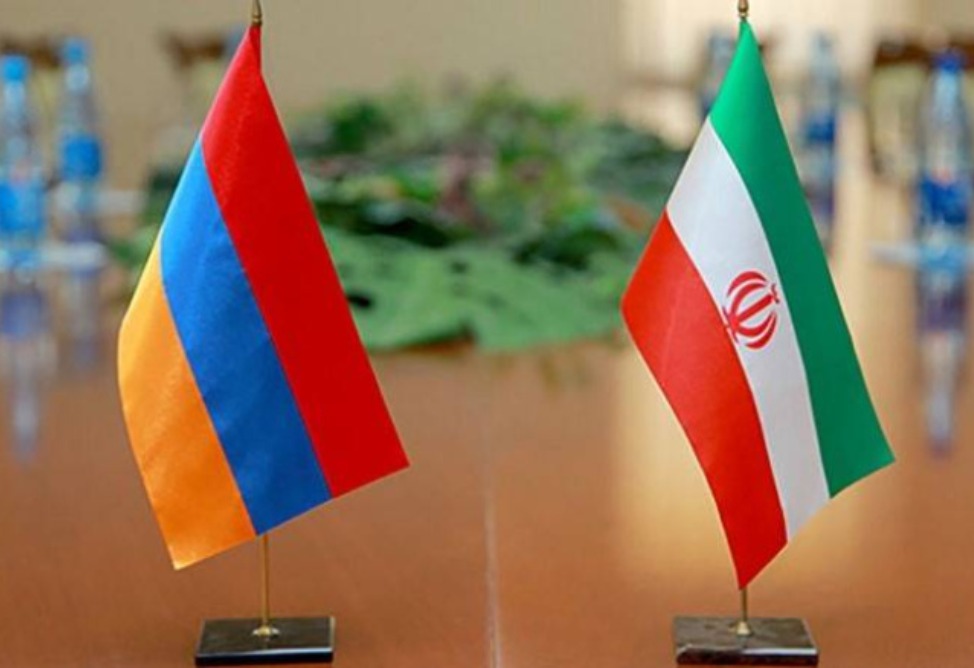
The southern route is also receiving additional infrastructure: the government supported the creation of a "Simplified Customs Corridor" with Iran based on the prior exchange of information on goods. After the modernization of the Meghri checkpoint, this mechanism could reduce administrative costs and the time required for foreign trade.
TRIPP is gradually shifting from a diplomatic agenda to an economic one. Pashinyan stated that the project will create new opportunities both on the East-West and North-South routes and will benefit all countries in the region. For Armenia, its significance lies in the opportunity to increase the country's role in the routes between the Caspian and Mediterranean Seas, as well as the Persian Gulf and the Black Sea.
Carbon taxation is a potential new element in budget and climate policy. The IMF estimates that the gradual introduction of a direct tax on emissions in Armenia could generate revenues of up to 1% of GDP, while promoting energy security and convergence with EU climate standards. For businesses, this scenario means a potential change in the structure of energy costs, so the IMF recommends a gradual and predictable reform.
BUSINESS AND CORPORATE SECTOR
Amulsar remains one of the largest investment stories of the week. According to the Ministry of Economy, the state and private sector have already invested over $750 million in the project, and the mine is expected to begin operations and produce its first gold bar in September. The mine's launch could significantly impact industrial production, exports, and tax revenues.
In the manufacturing industry, PROFAL launched a new glass processing plant with an investment of over $20 million. The project expands the company's production capacity and confirms its continued investment in the non-resource industrial sector and export-oriented production. The transportation investment agenda is also expanding within Yerevan. The government is considering the construction of at least four new metro stations and the eventual creation of a circular route. For businesses, network development means new construction orders and long-term improvements in the accessibility of urban real estate.
After a five-month scheduled maintenance, Unit 2 of the Armenian Nuclear Power Plant was reconnected to the grid. The return of nuclear power reduces short-term risks to the baseline energy supply and is important for the stability of the entire energy system.
In the energy sector, the regulator is also focusing on the Hrazdan-5 Thermal Power Plant. Gazprom Armenia presented the technical capabilities and modernization results of the unit to the Public Services Regulatory Commission; the parties discussed its efficient and reliable operation and contribution to the stability of the energy system. For the market, this confirms the importance of existing gas-fired generating capacity in the energy mix.
The opening of the Armenian-Turkish border could create new areas for private business. UPPA Chairman Arsen Ghazaryan cited trade, joint investments, tourism, agriculture, and construction as promising areas. For Armenian companies, border normalization simultaneously opens new markets and increases domestic competition.
MARKETS AND FINANCE
The market views EU trade preferences as an opportunity, but not as an automatic solution to export problems. Arsen Ghazaryan, head of the Union of Armenian Trade Unions (USPA), considers the abolition of duties an opportunity for diversification while preserving the Russian market. Economist Grant Mikaelyan points to logistics, competition, standards, and the limited product range of Armenian exports, while Tatul Manasaryan, head of the Alternative research center and Doctor of Economics, assesses the initiative as having more political than direct economic significance.
The overall message for investors is that access to the EU market is expanding, but this will require companies to invest in production, certification, partner networks, and logistics.
The dried fruit segment is a particular example of potential export specialization. Pashinyan stated that Armenia has begun to position itself as a producer of high-quality products, also highlighting the advantage of long shelf life. This creates an opportunity for producers to develop a higher-margin export segment that is less sensitive to seasonal logistical constraints. The government is simultaneously raising the issue of branding traditional alcoholic beverages. Pashinyan proposed gradually phasing out the terms "cognac" and "champagne" in official usage for Armenian products. For producers, the issue goes beyond terminology: the transition to proprietary geographical and product designations is linked to export positioning and adaptation to foreign market regulations.
Infrastructure needs are becoming a separate long-term investment risk. The IMF notes that further growth in solar energy in Armenia will require additional investment in power grids and energy storage systems. At the same time, the Fund warns of increasing water shortages due to rising demand, inefficient resource use, irrigation infrastructure issues, and climate factors. For the state and investors, this means increased capital requirements for two fundamental infrastructure systems – energy and water management.
WHAT DOES THIS MEAN?
Armenia is moving from declaring diversification to ensuring its infrastructure support.
Relations with Russia remain systemically important, but require a new configuration. The peace agenda is beginning to create economic assets.
Export diversification requires changes in the business itself, not just tariff reductions.
Infrastructure is becoming one of the main investment challenges.
The regulatory environment is becoming more complex.
RISKS OF THE CURRENT WEEK
Investors will monitor the development of the dialogue between Armenia and Russia on the railway concession and whether it can lead to a model compatible with new regional transport projects.
Further discussions about the compatibility of Armenia's European course with membership in the EAEU could influence business expectations regarding the future trade regime and regulatory environment.
The practical implementation of Armenian-Azerbaijani and Armenian-Turkish economic normalization will remain dependent on the sustainability of political agreements and the pace of the opening of communications.
The impact of EU trade preferences may be limited without a rapid resolution of issues related to standards, logistics, product range, and the access of Armenian companies to European distribution networks. Inflation will remain a key factor in expectations regarding future Central Bank decisions and the cost of financing for businesses.
Climate policy, potential carbon taxation, water shortages, and the need to modernize energy infrastructure are gradually becoming significant factors in long-term government and corporate spending.