

Capital for Growth: Investment and Financial Forum in Yerevan Discusses Opportunities and Barriers to Armenia's Market Development
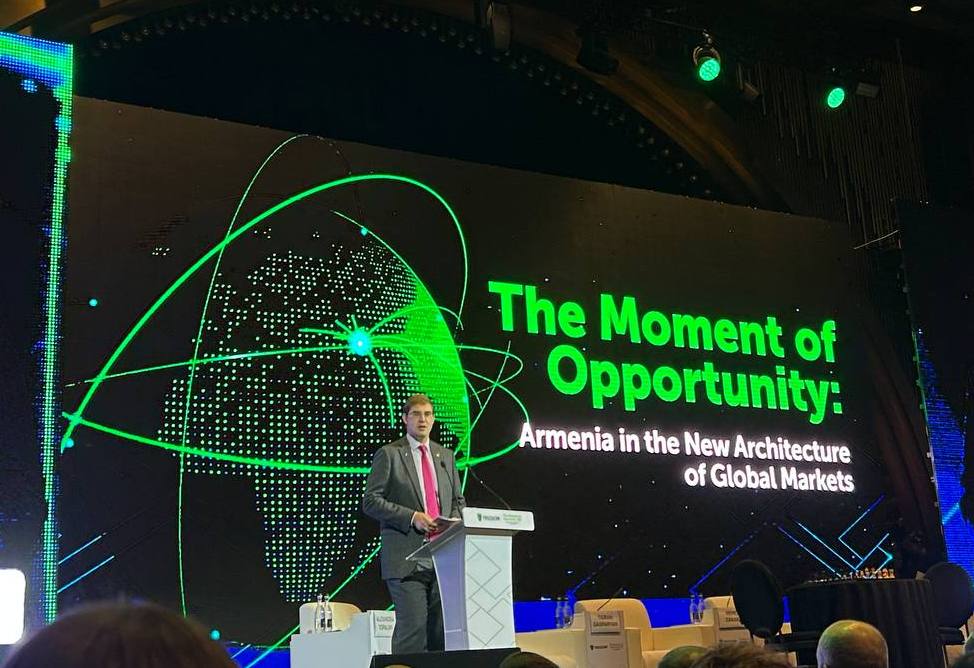
YEREVAN, October 1. /ARKA/. The second Armenia Investment and Financial Forum, titled "Time of Opportunities: Armenia in the New Architecture of Global Markets," took place in Yerevan, bringing together representatives from the government, the financial sector, the business community, international institutions, and expert circles.
Organized by Freedom Broker Armenia, the forum continued the professional dialogue initiated in 2024. While the first forum focused primarily on the future of Armenia’s capital markets, this year’s discussion expanded to a broader scope: the country's potential position in the changing global economy, sources of capital attraction, the expansion of investment opportunities, and the roles that banks, brokers, technology, and human capital should play in this process.
The event attracted around 1,000 participants, including representatives from government bodies, the financial sector, major businesses, international organizations, technology companies, and the expert community.
"Two and a half years ago, we gathered over 500 participants at our financial forum. Today, we can see that there are significantly more of us here. Our goal is to establish this forum as a permanent platform for dialogue and the exchange of ideas—bringing together leading figures from all sectors to drive the implementation of concrete projects and agreements," said Timur Turlov, CEO of Freedom Holding Corp. (FRHC) and President of the International Chess Federation (FIDE), in his opening remarks.
Opening Move
The forum’s official opening was marked by a "ceremonial first move" held in partnership with the International School Chess Federation (ISCF). This symbolic event linked the forum’s economic agenda with themes of education, analytical thinking, and strategic planning.
From September 28 to October 3, Tsaghkadzor is hosting the European stage of the FIDE World School Team Championship, featuring school teams from across Europe, their coaches, and members of the chess community. The event is organized by FIDE, the ISCF, the Chess Federation of Armenia, and the European Chess Union (ECU).
"Armenia holds a special place in chess education, and we certainly have much to learn from the country regarding the integration of chess into the school curriculum. Chess is a wonderful game with immense potential—one of the fastest-growing intellectual sports globally—and a clear indicator of the excellent human capital found in Armenia. I am convinced that Armenia is one of the world's leading chess nations," stated Turlov, who took part in the ceremony.
Armenia in the Global Economy
The plenary session titled "Armenia in the Global Economy through the Prism of Capital Markets" focused on the ongoing transformations of the global financial system and the opportunities these changes might create for Armenia.

Turlov discussed the prospects for developing Armenia's capital market, the country's potential for international investors, and the importance of developing modern financial infrastructure.
He noted that Armenia stands out for its favorable balance between human capital and resource costs. He also cited political stability and the country's relationships with neighboring nations and various blocs among its advantages.
"Armenia has a fairly high level of public administration. Many professionals work within government bodies. A very good dialogue has been established, and there appears to be a high level of trust—particularly in our interactions with the ministries and regulators we work with in the region," he emphasized.
Regulator’s Perspective on Issuers and Intermediaries
Armen Nurbekyan, Deputy Governor of the Central Bank of Armenia, highlighted the importance of having professional intermediaries to attract issuers to the capital market.
"There is no investment banking culture in Armenia, in either the retail or wholesale segments. We cannot assume that people—even if there is demand—will coordinate their actions with one another. That is why we need active financial intermediaries," he said.
According to Nurbekyan, Armenia also needs a sufficient number of issuers.
"Taking the first step toward an issuance is difficult. But it is quite clear that real-sector companies, once they have carried out an issuance, tend to do so regularly. [...] And this is precisely where I believe active intermediaries are very, very important," he added. Speaking about regulation, the Deputy Governor of the Central Bank noted that the regulator is prepared to revise existing rules if there is a genuine need to do so.
"As I understand it, there are things we need to change. For example, issues regarding direct access and remote membership, in order to simplify connection to global financial infrastructure," he explained.
Value Added for Armenia
Tigran Gasparyan, Armenia’s Deputy Minister of Economy, discussed trade opportunities, new trade routes, supply chains, and economic cooperation in the South Caucasus, noting that long-term stability and resilience create incentives for business.
"Issues regarding transport connectivity should not be reduced merely to the prospect of Armenia becoming just another stop on a train route. We need to make all of this work to boost productivity. That is the key message I want to convey here today," he emphasized.
Gasparyan explained that the Armenian authorities aim to retain value added within the country and enhance productivity.
"This means that entering new export markets should focus on more sophisticated products that can be exported from Armenia," he said.
Four Areas of EBRD Activity in Armenia
Remon Zakaria, Head of the European Bank for Reconstruction and Development (EBRD) office in Yerevan, noted that 40% of the $3.2 billion invested by the Bank in Armenia was provided over the last four years—a figure that, according to him, demonstrates the Bank's commitment to supporting the country. In this context, he highlighted four promising areas of activity.
He identified infrastructure as the first area—crucial for private sector development—including transport and energy infrastructure as well as water reservoirs.
Zakaria cited cooperation with partner financial institutions in Armenia as the second area, aimed at providing financing to various target groups. This includes support for "green" projects, small and medium-sized enterprises (SMEs), businesses led by women or young people, assistance for refugees, and support for trade diversification. According to the EBRD representative, the third area of focus is direct financing of the corporate sector, while the fourth is support for the capital market.
"We are also working on developing 'soft skills' by providing technical assistance to the stock exchange to help raise standards. We aim to foster the development of capital markets in Armenia," he emphasized.
Risks and Challenges Facing Armenia’s Capital Market
A dedicated discussion focused on the pivotal role of capital markets in shaping Armenia’s economic future. Speakers addressed the development of equity and bond markets, opportunities for Armenian companies to access public markets, IPO prospects, the role of stock exchanges in attracting foreign investment, and the capital market's potential as an alternative source of business financing.
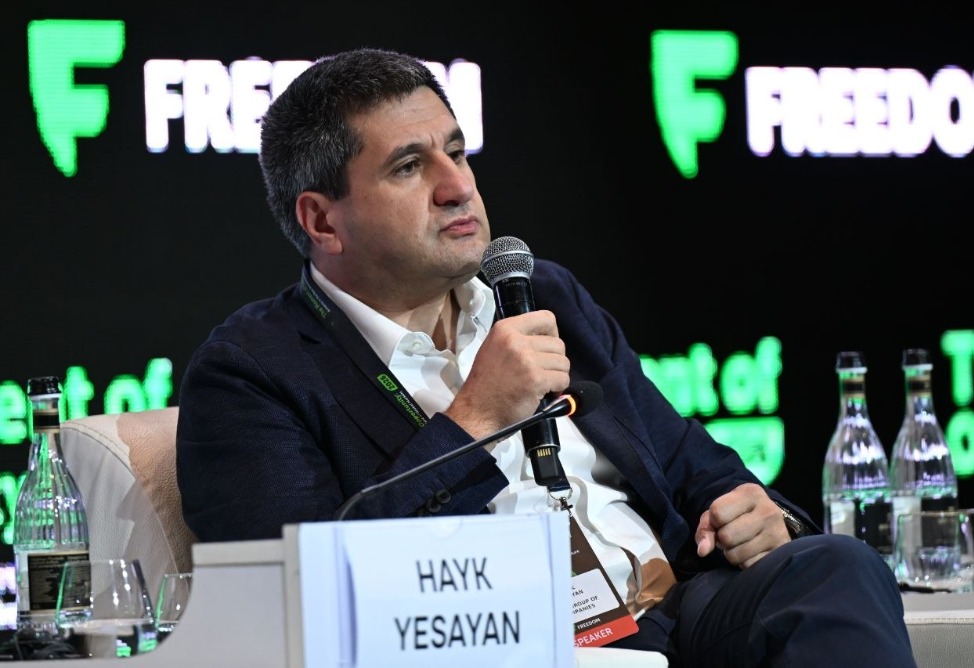
Hayk Yesayan, Co-founder and Director of Team Holding, highlighted the main challenges facing Armenia’s capital market.
"We lack a sufficient number of market participants. Large investors often bypass the local market in favor of foreign capital markets, where they invest significant funds. In this context, corporate transparency and financial reporting are crucial; companies need to be clearly understood by everyone, including investors," he said.
Yesayan also emphasized the need for dividend-paying stocks in the market.
"I think companies need to move in this direction: it is not enough to simply issue shares; they must also establish a track record of dividend payments. It needs to be clear how they intend to share their earnings," he explained, adding that this is a matter of time.
Yesayan also identified one of the primary risks associated with small markets.
"The challenge with a small market is that if a single major issuer suffers a significant failure, it can trigger a widespread collapse of the entire market. I am pleased that we haven't faced such serious issues with any major issuer in Armenia. Frankly speaking, our regulatory framework is quite stringent, which prevents such scenarios from occurring," he said.
Conditions for Capital Market Development
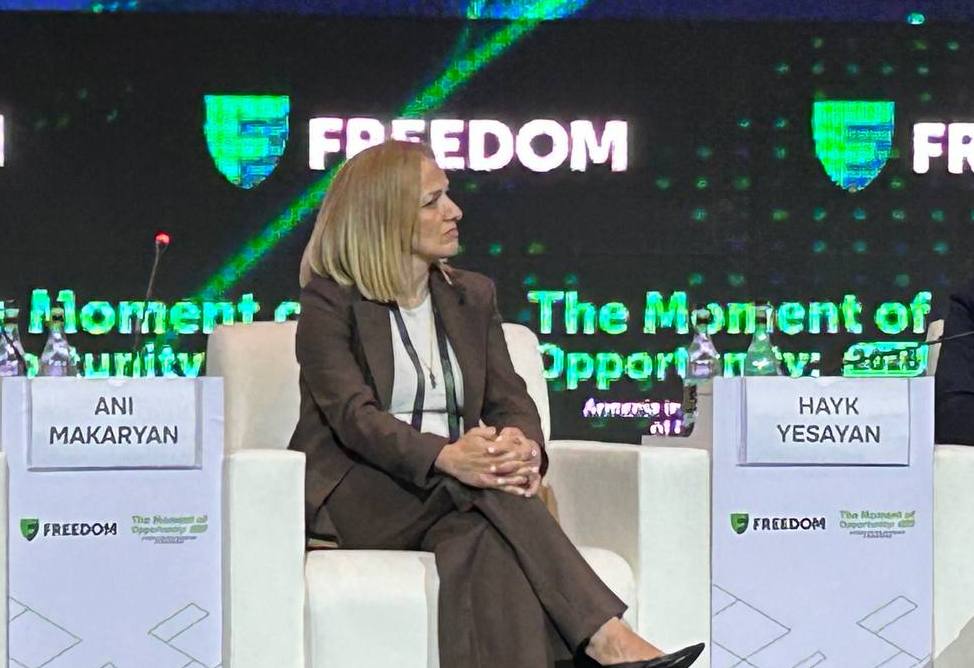
Ani Makaryan, CEO of the Central Depository of Armenia (CDA), noted that the development of Armenia’s capital market requires not only infrastructure improvements but also efforts across several other areas. These include creating a diverse range of investment instruments, fostering a favorable environment for investors, and ensuring the market reaches the necessary scale.
"I think that by addressing these three areas, we can move beyond the typical constraints of a small economy and avoid pinning our hopes on just one component of the capital market ecosystem—such as infrastructure, regulation, or macroeconomic stability. It is a complex system where all elements must work in concert, starting with the banking sector and institutional investors—the latter being quite well-developed in Armenia, particularly through pension funds and other financial institutions," she emphasized.
Full Placement of Team Holding Bonds
A key highlight of the forum was the announcement that Team Holding had completed its public corporate bond placement program in Armenia, raising funds equivalent to approximately $35 million.

The total volume of placed bonds amounted to $31.5 million and 1.4 billion drams. The placement was conducted in three stages in partnership with Freedom Broker Armenia, with all stages of the program completed ahead of schedule.
"Today, we are announcing the successful completion of our bond issuance for the first time. We will direct these funds toward developing the Team Group’s infrastructure across several sectors, including logistics, energy, and others," said Hayk Yesayan, Co-founder and Director of Team Holding.
Ovak Ovakimian, Director of Freedom Broker Armenia, highlighted the significance of the placement for the development of Armenia’s capital market.
"I think this was a very important step. Such initiatives and collaborations can serve as an example for other organizations," he said.
This transaction was showcased as a practical example of capital market development in Armenia, demonstrating that local businesses can raise capital not only through traditional bank lending but also via capital market instruments.
Other Forum Highlights
Participants in the panel discussion "Banks and Brokers at the Core of Armenia’s National Prosperity" addressed the complementary roles of banks, brokers, and the regulator within the financial system, as well as opportunities for serving international clients, diversifying financial services, and fostering an investment culture.
The technology sector was represented in the panel discussion "Digital Horizons: How Technology Is Transforming Finance." Topics included the growing role of artificial intelligence, the digitalization of financial services, the evolution of fintech, the importance of digital identification, new payment solutions, and the expansion of access to investment services. The international dimension of technological and financial shifts was further explored in a public lecture titled "Global Voices on the Future of the Economy" by Mike Rubino, a partner at Forward Global and former senior advisor to U.S. President Donald Trump’s campaign. The lecture focused on the transformations shaping the new financial system and the opportunities arising from these changes for emerging markets, including Armenia.
The forum also featured partnership and special events, including the signing of a cooperation memorandum between Freedom Broker Armenia and Juventus Academy Armenia.
Summary
Armenia’s Second Investment and Financial Forum built upon the foundation laid by the previous event, expanding both the participant base and the range of topics under discussion.
During the discussions, participants noted that the future development of Armenia’s financial market depends on the strengthening of institutions and the regulatory environment, the adoption of modern technologies, the enhancement of investment culture, and effective collaboration between the public and private sectors.
The attendance of approximately 1,000 people once again demonstrated the significant interest within both local and international business and expert communities regarding the development of Armenia’s capital market, investment landscape, and financial system.
The ARKA news agency served as the forum’s official media partner.