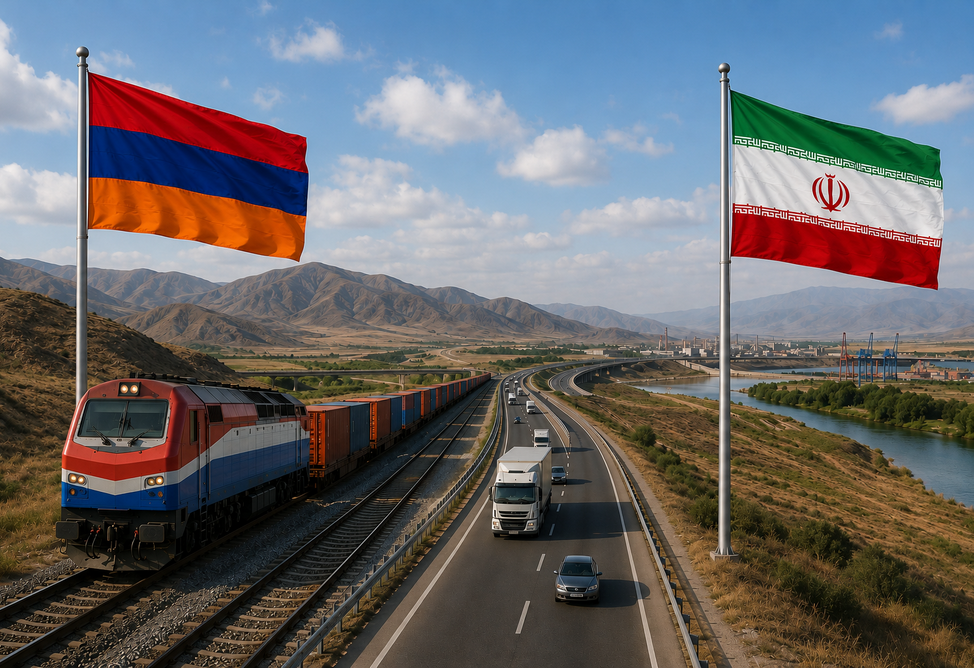


Armenia needs to improve the external competitiveness of commodity production," Central Bank.
09.07.2026,
12:08
Armenia needs to systematically improve the external competitiveness of commodity production, but it is incorrect to claim that the development of the non-export sector is happening at the expense of the export sector.
YEREVAN, July 9. /ARKA/. Armenia needs to systematically improve the external competitiveness of commodity production, but it is incorrect to claim that the development of the non-export sector is happening at the expense of the export sector. Armen Ktoyan, a member of the Board of the Central Bank of Armenia, stated this in an interview with CivilNet.
"We have a problem with the global external competitiveness of the economy, increasing the external competitiveness of commodity production, and this problem requires a systemic solution using a variety of tools," Ktoyan said.
According to him, issues related to the development of the export sector extend beyond the direct functions of the Central Bank.
At the same time, the member of the Board of the Central Bank noted that improving the competitiveness of commodity production could also have an impact on the inflation environment.
"If we project this onto the Central Bank's operations, it has the potential to influence inflation in a more favorable and acceptable direction for us." "But I wouldn't say that the growth of one sector is coming at the expense of another," Ktoyan stated.
According to Armstat, Armenia's foreign trade turnover in January-May 2026 amounted to $7,864.7 million, a decrease of 0.1% compared to January-May 2025.
Armenian exports during this period amounted to $2,864.9 million, a decrease of 3.7%. Russia was the largest export destination, with $1,031.1 million (a decrease of 3%). China followed with $407.5 million (an increase of 93.3%), the UAE with $229.2 million (a decrease of 73.4%), Bulgaria with $178.1 million (an increase of 6.4 times), and Iraq with $147.0 million (an increase of 12.7%).
Imports from Armenia amounted to $4,999.8 million, an increase of 2.2%. Russia was the leading exporting country to Armenia, with $1,223.6 million (a decrease of 30.6%). It was followed by China with $553.8 million (an increase of 4.7%), Georgia with $354.4 million (an increase of 25.6%), Iran with $279.9 million (an increase of 14.7%), and the United States with $222.7 million (an increase of 43.1%).
"We have a problem with the global external competitiveness of the economy, increasing the external competitiveness of commodity production, and this problem requires a systemic solution using a variety of tools," Ktoyan said.
According to him, issues related to the development of the export sector extend beyond the direct functions of the Central Bank.
At the same time, the member of the Board of the Central Bank noted that improving the competitiveness of commodity production could also have an impact on the inflation environment.
"If we project this onto the Central Bank's operations, it has the potential to influence inflation in a more favorable and acceptable direction for us." "But I wouldn't say that the growth of one sector is coming at the expense of another," Ktoyan stated.
According to Armstat, Armenia's foreign trade turnover in January-May 2026 amounted to $7,864.7 million, a decrease of 0.1% compared to January-May 2025.
Armenian exports during this period amounted to $2,864.9 million, a decrease of 3.7%. Russia was the largest export destination, with $1,031.1 million (a decrease of 3%). China followed with $407.5 million (an increase of 93.3%), the UAE with $229.2 million (a decrease of 73.4%), Bulgaria with $178.1 million (an increase of 6.4 times), and Iraq with $147.0 million (an increase of 12.7%).
Imports from Armenia amounted to $4,999.8 million, an increase of 2.2%. Russia was the leading exporting country to Armenia, with $1,223.6 million (a decrease of 30.6%). It was followed by China with $553.8 million (an increase of 4.7%), Georgia with $354.4 million (an increase of 25.6%), Iran with $279.9 million (an increase of 14.7%), and the United States with $222.7 million (an increase of 43.1%).