

Karabakh should be involved in the peace process – Armenian speaker
10.11.2014,
10:57
Karabakh should be involved in the peace process, Armenian speaker Galust Sahakyan said at a joint press conference with the speaker of Karabakh parliament Ashot Ghulyan on Friday.
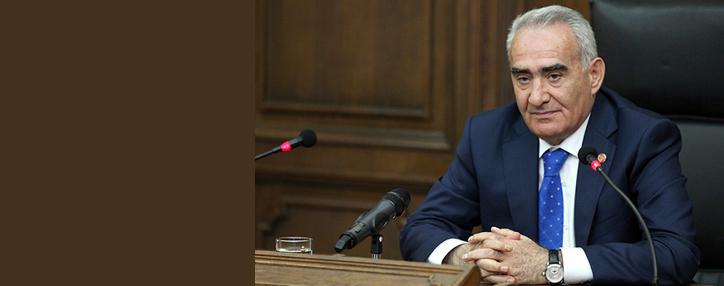
YEREVAN, November 10. /ARKA/. Karabakh should be involved in the peace process, Armenian speaker Galust Sahakyan said at a joint press conference with the speaker of Karabakh parliament Ashot Ghulyan on Friday.
The international community’s and organizations’ recognition of Karabakh people’s right to self-determination is the first issue to be solved, Sahakyan said.
The Armenian speaker refuted the rumors about possible involvement of peacekeeping force in the region and said there is no need for it right now.
The Armenian army is ready and able to ensure security and peace in the region, he said.
The Karabakh conflict started in 1988 when prevailingly Armenian population of Nagorno-Karabakh declared withdrawal from Azerbaijan. On December 10, 1991, a referendum was held in Nagorno-Karabakh where 99.89% voted for independence from Azerbaijan.
Azerbaijan responded by large-scale military operations that led to loss of control not only over Nagorno-Karabakh itself, but also over seven adjoining areas. About 25-30 thousand people were killed and about a million had to leave their homes during the military operations.
A trilateral cease-fire agreement was signed on May 12, 2004, and has been followed since then.
The ongoing Karabakh peace process started in 1992 under auspices of OSCE Minsk Group co-chaired by the USA, Russia and France. –0--
The international community’s and organizations’ recognition of Karabakh people’s right to self-determination is the first issue to be solved, Sahakyan said.
The Armenian speaker refuted the rumors about possible involvement of peacekeeping force in the region and said there is no need for it right now.
The Armenian army is ready and able to ensure security and peace in the region, he said.
The Karabakh conflict started in 1988 when prevailingly Armenian population of Nagorno-Karabakh declared withdrawal from Azerbaijan. On December 10, 1991, a referendum was held in Nagorno-Karabakh where 99.89% voted for independence from Azerbaijan.
Azerbaijan responded by large-scale military operations that led to loss of control not only over Nagorno-Karabakh itself, but also over seven adjoining areas. About 25-30 thousand people were killed and about a million had to leave their homes during the military operations.
A trilateral cease-fire agreement was signed on May 12, 2004, and has been followed since then.
The ongoing Karabakh peace process started in 1992 under auspices of OSCE Minsk Group co-chaired by the USA, Russia and France. –0--