

ARKA Armenia Weekly: Key Events of the Week: Politics, Economy, and Markets (August 17–23)

YEREVAN, August 24. /ARKA/. ARKA News Agency presents a digest of the week's key events.
SUMMARY
Last week, the Armenian government approved its action plan for 2026–2031. Transport and energy connectivity with neighboring countries is increasingly being viewed as part of a long-term development model.
The macroeconomic backdrop remains strong, but in the GDP growth structure in the second quarter, amid rapid expansion in finance, transport, and construction, agriculture, forestry, and fisheries demonstrated a double-digit decline.
For businesses, the week's key message is that expanding opportunities are accompanied by stricter requirements for the quality of institutions and regulations. The state is supporting the agricultural sector, formalizing the tourism market, and developing environmental infrastructure, while new international business contacts and trade with neighboring countries are opening up additional avenues for investment and exports.
POLITICS
The Armenian government approved its action plan for 2026–2031. Following its approval by the National Assembly, the Cabinet of Ministers must adopt a five-year action plan within three months. For businesses, this decision is significant because it shifts from general political priorities to specific implementation mechanisms, timelines, and funding sources for reforms.
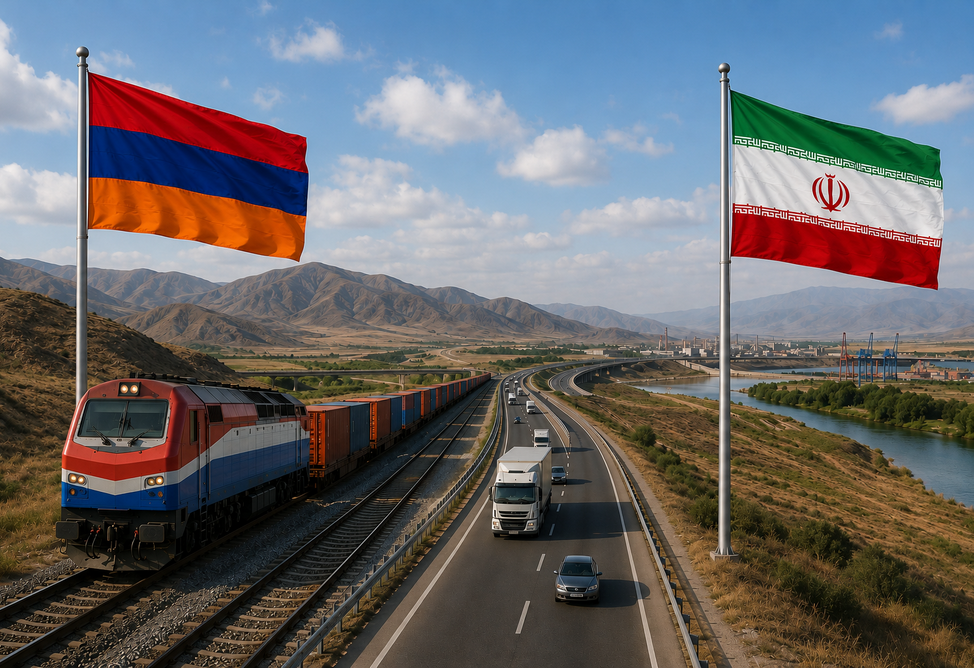
Transport connectivity has been enshrined as a strategic focus. The program includes the launch of the TRIPP railway infrastructure, the reconstruction of the Gyumri-Akhurik-Turkish border and Yeraskh-Nakhichevan border sections, and a review of the railway management system. For the economy, this increases the likelihood of Armenia's gradual integration into broader regional transport chains.
Economic cooperation with Azerbaijan is increasingly seen as part of the peace agenda. Armenian Ambassador to the United States Narek Mkrtchyan stated the need for joint economic and trade projects to support peace. For businesses, this creates a potentially new avenue for trade and transit, although its scope will depend on the further normalization and sustainability of logistics mechanisms.
A federal court in New York has ruled unlawful the State Department's blanket suspension of immigrant visas for citizens of 75 countries, including Armenia. The measure was effective January 21, 2026; the court cited the need for individual review of applications. For Armenia, the decision reduces one of the administrative restrictions on citizen mobility, although certain U.S. visa restrictions remain in effect.
ECONOMY AND MACRO SIGNALS
The main macroeconomic signal of the week was GDP statistics. In the second quarter, Armenia's economy grew by 6.7% year-on-year, following 5.2% in the first quarter. Among the fastest-growing sectors were finance and insurance (22.4%), transportation and warehousing (22.2%), and construction (20%), while agriculture, forestry, and fisheries contracted by 15.3%. This structure indicates continued strong overall growth with noticeable sectoral heterogeneity.
Prime Minister Nikol Pashinyan announced a new phase of reforms and the need to give additional impetus to economic, democratic, and anti-corruption reforms. For businesses, the key will not be the political signal itself, but its translation into improved regulation, the quality of institutions, and investment conditions.
The government is expanding targeted support for the agricultural sector. Authorities plan to compensate processors 125 drams per kilogram of purchased figs and peaches; approximately 3,000 tons of peaches and 400 tons of figs are expected to be purchased by September 1. The program is intended to simultaneously support the sale of the harvest and the workload of processing plants. Against the backdrop of declining agricultural production, this measure marks a shift toward more targeted support for problematic segments.
At the same time, restrictions on the Russian market continue to impact exports. Rosselkhoznadzor announced that it expects the Armenian side to provide inspection results, information on the measures taken, and an algorithm for meeting veterinary and phytosanitary requirements of the Eurasian Economic Union. Prime Minister Nikol Pashinyan stated that even with the full reopening of the Russian market, Armenia will continue its efforts to diversify. For producers, this transforms the search for alternative markets from an anti-crisis measure into a long-term strategy.
Trade dynamics with the EU provided an additional signal. Armenia's exports to the EU exceeded $516 million from January to June, an increase of over 80%. This confirms the acceleration of geographic diversification of exports, although a longer observation period is required to assess the sustainability of this trend.
BUSINESS AND CORPORATE SECTOR
A new major investment case has emerged in export-oriented manufacturing. Over €40 million of foreign capital has been invested in the Armenian company RARE WATER, which exports its products to six countries. For the market, this is an example of a private project focused on several external markets and reducing dependence on a single sales market.
The Cyprus Chamber of Commerce and Industry has invited local importers, distributors, and retail chains to participate in the International Trade and Investment Forum ITIF 2026, which will be held in Yerevan from October 7–9. For Armenian companies, the forum creates an additional channel for direct contact with foreign buyers and investors, which is especially relevant given the country's focus on export diversification.
The construction sector is preparing for increased digital control. Authorities are planning a unified electronic system that will unite participants in the construction process, conduct online approvals, and monitor the progress of work. For developers, this means increased transparency, coupled with more formalized compliance requirements.
Banks continue to expand their digital services. Ardshinbank has enabled clients to select and change their pension fund directly through a mobile app. Akba Bank announced that the number of cards it has issued has exceeded 1 million and the bank maintains its leadership in terms of share of card transactions. Both events reflect the continued digitalization of financial services and increased competition within retail ecosystems.
MARKETS AND FINANCE
Regulation of the tourism market is becoming stricter. Providers of tourism services are required to notify the state of their activities; violation of these requirements, depending on the damage caused, can result in penalties ranging from a fine to imprisonment. At the same time, regulations for a digital database of tourism service providers have been approved. For the industry, this means further business transition from the informal sector, increased market transparency, and a more level playing field.
Energy is becoming a separate investment market. The government's program calls for increasing solar and wind capacity to 2,000 MW by 2040 and creating at least 800 MW of storage capacity by 2031. Furthermore, it plans to extend the operation of Unit 2 of the Armenian Nuclear Power Plant until 2036, and to select the technology for the new nuclear power unit by at least the end of 2027.
At the same time, the authorities plan to expand regional energy links, including the Iran-Armenia power line and the future Armenia-Georgia line, as well as electricity trade opportunities with Turkey and Azerbaijan. For investors, this means a potential increase in demand for long-term infrastructure financing and the gradual formation of a more integrated regional energy market.
The EU and UN agencies, together with the Armenian government, have launched the EU4Clean Air in Armenia program, worth approximately €2.47 million, of which €2 million is being provided by the European Union. By February 2029, plans are in place to modernize the air quality monitoring network, establish a national reference laboratory, develop a digital data collection system, and align regulations with EU standards. For businesses, the project is important as part of a gradual improvement in environmental standards and requirements for the quality of the urban and industrial environment.
WHAT DOES THIS MEAN?
● Economic growth remains strong, but its structure is uneven.
● The government is transitioning from the formation of a new political configuration to the next stage of economic and institutional reforms.
● Trade and transport connectivity with neighboring countries are increasingly viewed as an economic component of regional normalization.
● Export diversification is supported by both international business contacts and targeted measures for producers and processors.
● Strengthened tourism regulation and the development of environmental infrastructure indicate a move toward a more formalized business environment oriented toward international standards.
CURRENT WEEK'S RISKS
● Investors will be monitoring the details of the government's five-year program.
● The 15.3% decline in the agricultural sector in the second quarter remains a significant source of sectoral risk.
● New trade and transit opportunities with Azerbaijan depend on the sustainability of political normalization.
● Restrictions in traditional export markets may continue to encourage diversification, but developing new destinations entails additional costs for logistics, certification, and marketing.
● Increased formalization of the tourism market could improve transparency in the sector, but businesses will need to adapt to new registration and control requirements.
● Energy transformation and improved environmental standards create investment opportunities, but simultaneously require significant financing and the adaptation of companies to new regulatory requirements.