

ARKA Armenia Weekly: Key Events of the Week: Politics, Economy, and Markets (June 22–28)

YEREVAN, June 29. /ARKA/. ARKA News Agency presents a digest of the week's key events.
SUMMARY
The week demonstrated a divergence between strong domestic economic momentum and growing external restrictions. Economic activity remains high, and the Eurasian Development Bank (EDB) has raised Armenia's growth forecast for 2026 to 6%, but the export agenda has become more vulnerable: the World Bank has recorded a widening trade deficit, and Russian restrictions on Armenian products have increased pressure on producers.
The political backdrop was tied to the choice and effectiveness of integration frameworks. The EAEU, EU, Iran, India, Turkey, and the US are increasingly viewed through the prism of markets, logistics, infrastructure, and standards. For businesses, the main message of the week was: growth continues, but its quality increasingly depends on access to external markets, regulatory predictability, infrastructure resilience, and companies' ability to adapt to new requirements.
POLITICS
Armenian Prime Minister Nikol Pashinyan stated that the EAEU must clearly determine whether the union allows for the free movement of labor, goods, services, and finance. This is an important signal for businesses: the focus is shifting from formal membership to the practical effectiveness of trade and regulatory mechanisms.
Russia, in turn, has stepped up its public messaging about the benefits of the EAEU for Armenia. Russian Presidential Press Secretary Dmitry Peskov stated that Moscow hopes Yerevan understands the benefits of membership in the union, while Russian Foreign Ministry spokesperson Maria Zakharova noted that Armenia needs to make a strategic choice between the EAEU and the EU. For markets, this means that Armenia's foreign economic policy remains a politically sensitive issue and will be assessed through its practical implications for trade, investment, and payments.
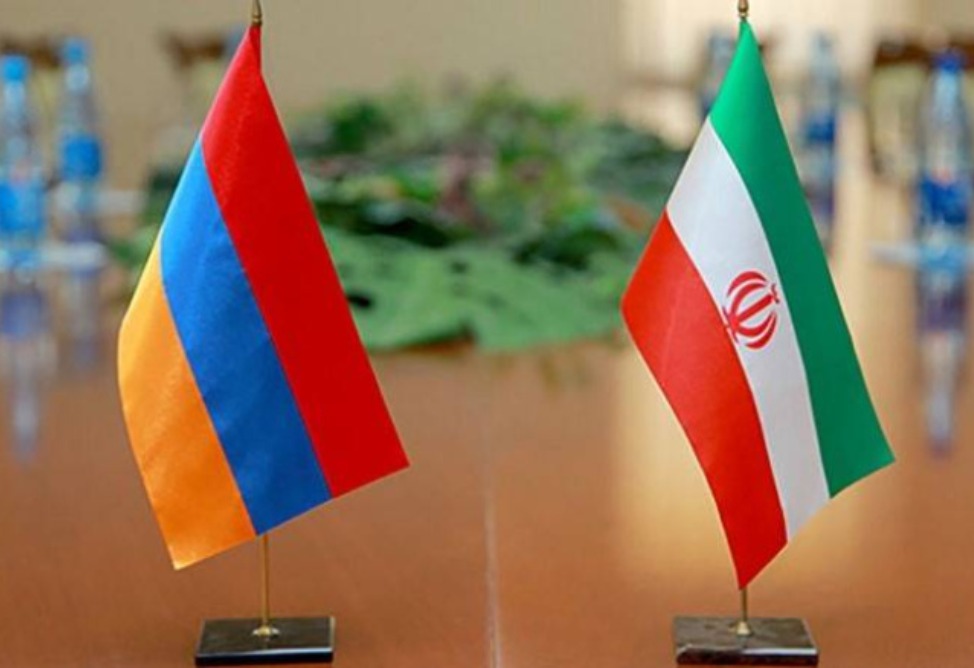
Pashinyan received Iranian Vice President Seyed Hamid Pourmohammadi. The discussion focused on the second bridge on the Armenian-Iranian border, a new terminal, customs procedures, energy, and roads. For markets, this confirms the importance of the southern route as an infrastructure and trade pillar for Armenia.
The Prime Ministers of Armenia and India, Nikol Pashinyan and Narendra Modi, discussed the development of cooperation in the economy, education, and other areas. The Indian route is becoming part of the policy of diversifying foreign relations: for businesses, it is a potential channel for market expansion, technological cooperation, and investment.
Armenian Deputy Finance Minister Avag Avanesyan stated that the restoration of the railway to Turkey should be assessed based on transit, security, and economic impact. The signal to investors is that infrastructure projects will be assessed through a balance of public benefits, private profitability, and the protection of Armenia's interests.
ECONOMY AND MACROSIGNALS
Armenia's economic activity grew by 8% from January to May, and by 11.7% year-on-year in May. Growth was supported by industry, construction, and services, while trade grew moderately. This demonstrates the resilience of the domestic economy, but also the uneven structure of growth.
Consumer prices increased by 4.5% over the first five months, with annual inflation reaching 4.2% in May, while monthly prices fell by 0.8%. This signals continued caution for the Central Bank and markets: short-term price pressure has subsided, but inflation remains significant.
Foreign trade turnover for January to May amounted to $7.86 billion, down 0.1%. Exports fell by 3.7% to $2.86 billion, while imports increased by 2.2% to $5 billion. For the economy, this is the main external imbalance of the week: increased domestic activity is accompanied by weakness in the export channel.
According to World Bank estimates, the 3.3% decline in exports and 2.5% increase in imports recorded in January-April increased Armenia's trade deficit to 5.4% of GDP. This reinforces the importance of export diversification and logistics: without expanding markets, domestic growth could rely on an increasingly expensive external balance.
Armenian Central Bank Chairman Martin Galstyan estimated that Russian restrictions on Armenian exports, under an unfavorable scenario, could have a deflationary effect of up to 0.6 percentage points. This signal is not about lower prices per se, but rather about the risk of unsold goods accumulating on the domestic market and putting pressure on producers' incomes.
Armenia's trade turnover with the EAEU has tripled in five years, reaching $8 billion, according to Nikolay Podguzov, Chairman of the Management Board of the Eurasian Development Bank. This demonstrates the scale of the economic interconnectedness with the union and simultaneously explains why any restrictions within this framework quickly become a macroeconomic issue.
Armenia is focusing on a high-value-added economy and plans to create five industrial zones, announced Finance Minister Vahe Hovhannisyan. For businesses, this signals a shift from a trade and re-export model to a more sophisticated production base, but the outcome will depend on infrastructure, personnel, and access to financing.
The Eurasian Development Bank (EDB) has raised its 2026 economic growth forecast for Armenia to 6% and sees no reason to revise it, said Alexey Kuznetsov, Head of Research at the bank. The forecast confirms the sustainability of the current trend, but foreign trade restrictions remain the main factor potentially affecting the quality of growth.
BUSINESS AND CORPORATE SECTOR
Ameriabank has attracted $50 million from the OPEC Fund to finance SMEs. The funds will be used for business development, job creation, and enterprise expansion. This supports the private sector amid growing demand for affordable financing.
Unibank will allocate 9.3 billion drams for dividend payments; The bank's net profit for 2025 amounted to AMD 9.8 billion. The bank also announced the successful placement of perpetual bonds. For the financial market, this signals demand for banking instruments and continued investor interest in the sector.
The Armenian government intends to recognize 100% of the shares of Electric Networks of Armenia CJSC as a matter of public interest. This follows from a draft government decision published on the legal information portal. For businesses, this is one of the key regulatory topics of the week: strategic infrastructure, the tariff environment, energy security, and the role of the state in managing critical assets are at stake.
The Eurasian Development Bank (EDB) plans to invest $13.5 billion by 2031, and the volume of investment in Armenia will be determined by the new country strategy, stated Nikolay Podguzov, Chairman of the EDB Management Board. For the corporate sector, this is a potential source of long-term financing for infrastructure, industry, and projects related to regional connectivity.
MARKETS AND FINANCE
Telecom Armenia and Azertelecom signed an agreement on internet traffic transit. Prime Minister Nikol Pashinyan stated that internet traffic transit does not create dependency, but experts pointed out risks to the security and resilience of infrastructure, including the potential for interdependency. This is an important test for the market: digital connectivity can reduce costs and increase transit potential, but requires a transparent assessment of infrastructure and cyber risks.
Armenia will implement a unified system for registering and monitoring IMEI codes for mobile phones. Experts criticized the initiative as potentially excessive control and data collection, and emphasized the need for a strong economic and legal justification for the chosen regulatory model. For the telecommunications market, this means increased regulatory burdens and new requirements for operators, importers, and users.
Armenian banks have created buffers of 180-190 billion drams, or approximately $490-515 million, due to risks in the real estate and construction sectors, according to Central Bank Governor Martin Galstyan. For the financial sector, this is a signal of caution: the regulator sees the need to strengthen banks' capital in advance in the event of a possible correction in real estate prices.
Russia has suspended all fish product shipments from Armenia. This expands export risks beyond plant-based products and increases pressure on producers, for whom the Russian market remains a significant sales channel.
Media Market
An analytical report by ARKA Agency Director Konstantin Petrosov highlights the alarming trend of the "black caviar effect," which concerns businesses' cautious spending: companies may declare high demand, but ultimately optimize budgets and choose more conservative decisions. This is an additional microsignal for the market: business activity is continuing, but company behavior is becoming more rational and cost-sensitive.
WHAT DOES THIS MEAN?
Armenia maintains strong domestic momentum, but foreign trade is becoming the main constraint on the quality of growth.
The EAEU and the EU are increasingly viewed less as abstract political choices and more as a matter of practical access to markets, logistics, standards, and payments. Russian export restrictions are already sending a macroeconomic and industry-specific signal: producers need alternative markets and more reliable certification mechanisms.
The government is increasing its focus on strategic infrastructure: energy, telecommunications, digital control, and transport routes.
The financial system remains stable, but the Central Bank is preemptively building buffers against the risks of real estate and construction overheating.
RISKS OF THE CURRENT WEEK
Markets will monitor further signals from the EAEU, the EU, and Armenia's foreign economic policy.
Exporters remain sensitive to Russian restrictions, especially in the agricultural and fishery sectors.
Infrastructure solutions in energy and telecommunications may impact investor regulatory expectations.
The implementation of the IMEI system may raise additional business concerns regarding regulatory costs, data protection, and the legal framework.
Inflationary pressures and the potential deflationary effect of unexported products will influence expectations regarding Central Bank policy. The real estate market and construction sector will remain the focus of banks and regulators due to accumulated risks and established capital buffers.