

ARKA Armenia Weekly: Key Events of the Week: Politics, Economy, and Markets (July 6–12)

YEREVAN, July 13. /ARKA/. ARKA News Agency presents a digest of the week's key events.
SUMMARY
The week was marked by a combination of stable domestic economic activity and heightened attention to political, foreign trade, and institutional risks.
The state increased its involvement in strategic assets and support for individual sectors. Political attention focused on the formation of the parliamentary opposition, the case of Prosperous Armenia Party leader Gagik Tsarukyan, and maintaining the foreign economic balance between the EU, the EAEU, and Russia. Discussion about the media market was a separate factor: state interest in media publications coincided with a broader industry agenda on editorial independence, sustainable business models, and the impact of artificial intelligence.
POLITICS
The opposition blocs "Armenia" and "Strong Armenia" decided to use their parliamentary mandates. "Strong Armenia" intends to call on citizens to protest when it sees a "real opportunity for change." The opposition's entry into parliament creates an institutional platform for political competition, but maintaining a focus on extra-parliamentary activity means that businesses and investors should be aware of the possibility of continued domestic political pressure.
Prosperous Armenia Party leader and prominent businessman Gagik Tsarukyan was arrested for two months on charges of large-scale fraud and money laundering. Armenian Prime Minister Nikol Pashinyan, for his part, stated that the case is not politically motivated, describing it as the end of the practice of "political non-prosecution." Given Tsarukyan's combination of political and entrepreneurial activities, the case will be viewed not only in a legal but also an investment context: transparency of the process, adherence to procedures, and the separation of criminal proceedings from political competition will be crucial for businesses.
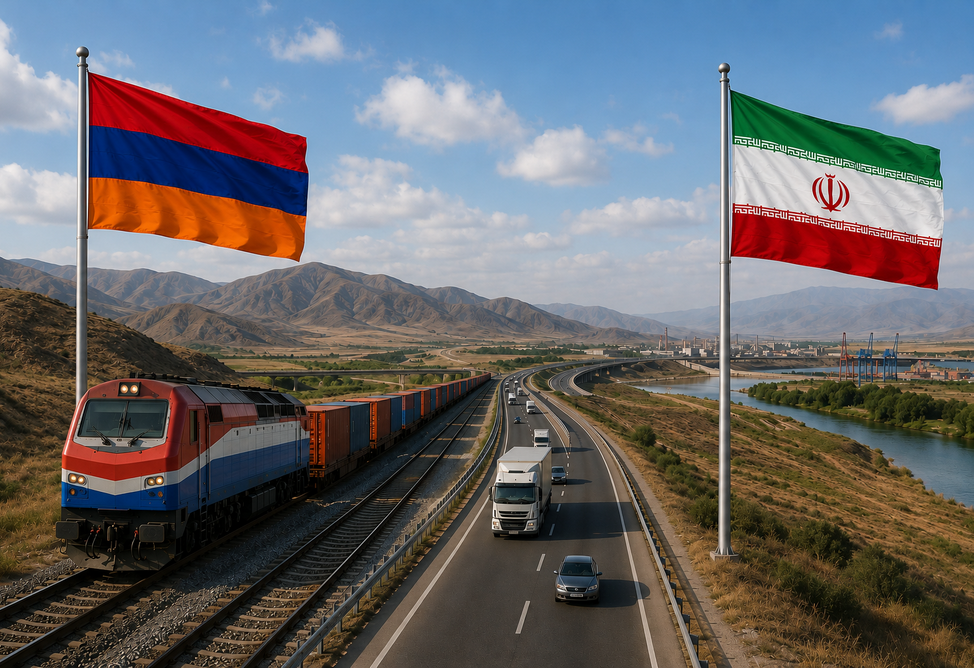
The TRIPP project, related to the development of transport infrastructure and the unblocking of communications, remained a central regional topic. Iranian Ambassador to Armenia Khalil Shirgolami called for consideration of the project's potential risks for Tehran, while Pashinyan stated that its implementation directly benefits Iranian interests. For businesses, this means that the promotion of new transport routes will be accompanied by complex negotiations with regional partners and will require coordination on security, jurisdiction, and access to infrastructure.
Amid Armenia's rapprochement with the EU, discussions continue regarding the future of relations with Russia and the country's participation in the Eurasian Economic Union (EAEU). Nikol Pashinyan reaffirmed Yerevan's interest in Eurasian integration and developing ties with Moscow. Meanwhile, Babken Tunyan, Deputy Chairman of the Parliamentary Committee on Economic Affairs, admitted that membership in the EAEU could become meaningless if the free movement of goods, capital, and services is restricted. Professor Vladimir Avatkov, Head of the Department of Middle and Post-Soviet East at the Institute of Scientific Information on Social Sciences of the Russian Academy of Sciences, in an interview with Novosti-Armenia, pointed out the risks to Russian-Armenian relations due to Yerevan's European course. For investors, the authorities' ability to maintain a balance between the two remains key.
ECONOMY AND MACROSIGNALS
According to Armstat, annual inflation in Armenia stood at 5.1% in June 2026, while consumer prices decreased by 0.5% compared to May. This annual growth was largely supported by an 8.6% increase in food and non-alcoholic beverage prices, while a 1.5% monthly decline contributed to overall deflation. These indicators indicate that significant price pressure remains significant year-on-year, but seasonal price reductions in food products may temporarily limit inflation risks.
The Armenian government will allocate 3.1 billion drams to compensate agricultural exporters. At the same time, Pashinyan reiterated the goal of diversifying the export of apricots and other agricultural products to reduce producers' dependence on a single market. This provides a short-term financial boost for agricultural businesses, but the long-term impact will depend on product certification, logistics, and access to new buyers.
Statistics for January–May indicate continued high domestic production activity, while foreign trade remained subdued. Industrial output increased by 12.2% to 1.27 trillion drams, construction by 24.1% to 207.3 billion drams, manufacturing by 8.6% to 784.1 billion drams, and electricity generation by 9.7% to 4.4 billion kWh. Meanwhile, foreign trade turnover decreased by 0.1% to $7.9 billion: Russia retained its status as the largest partner despite the decline in trade volumes, followed by China and Iran. The combination of production growth and stagnant trade turnover demonstrates that further economic expansion will depend on the ability of enterprises to find new export destinations and translate domestic industrial momentum into sustainable external demand.
The Central Bank has identified the need to improve the external competitiveness of Armenian commodity production. According to Armen Ktoyan, a member of the Central Bank Council, restrictions on Armenian agricultural exports to Russia, under a worst-case scenario, could cost the economy up to 2% of GDP. This is not a baseline forecast, but an important indicator of the scale of potential foreign trade risks and an argument in favor of accelerating export diversification.
BUSINESS AND CORPORATE SECTOR
The government has approved a budget loan of 20.1 billion drams to the Armenian Nuclear Power Plant for the extension of the unit's lifespan. For industry and investors, this signals the state's intention to maintain baseline generating capacity and reduce the risk of electricity shortages while preparing long-term decisions on the development of nuclear energy. Prime Minister Nikol Pashinyan announced that the Ararat Cement plant will soon be transferred to state ownership. Key market issues will include the plant's future management model, its investment program, and the impact of the ownership change on competition and cement supplies.
The Prime Minister instructed the development of an investment program to stimulate wheat production and improve the entire value chain. For agribusiness, this potential program could create demand for modern technologies, irrigation, storage, processing, and agricultural machinery.
Telecommunications operator Viva has acquired Ovio. The deal is aimed at developing a digital convergent offering, combining mobile and fixed-line communications, internet, and other digital services. For the telecommunications market, this means further consolidation and increased competition for comprehensive customer service. The strategic impact of the deal will depend on the speed of integration of the infrastructure, product lines, and subscriber bases of the two companies.
Russian Prime Minister Mikhail Mishustin, during a meeting with Nikol Pashinyan, called on the Armenian government to maintain favorable conditions for Russian investors and ensure the protection of their legitimate interests. The statement demonstrates that capital protection and regulatory predictability remain an important part of the bilateral agenda. For the Armenian government, this signal is particularly significant given the decisions affecting large enterprises and strategic assets.
MARKETS AND FINANCE
In the first half of 2026, 1.042 million tourists visited Armenia—14.8% more than in the same period last year. This figure was a record for the January-June period. For investors, this trend confirms the potential of the tourism sector, but also increases the importance of the quality of infrastructure and the regions' ability to accommodate the growing flow of visitors.
Iranian Ambassador Shirgolami stated that Armenia could become a link in the regional energy sector and expressed hope for the creation of its own oil refinery. While this is a political and economic signal, rather than a confirmed investment project, it demonstrates interest in expanding Armenia's role beyond its domestic energy market.
Direct seasonal charter flights have been launched between Yerevan and Burgas, Bulgaria. The new route expands the geography of direct flights and could support mutual tourist flow during the summer season.
MEDIA MARKET
Prime Minister Nikol Pashinyan has ordered the creation of a working group to comprehensively review materials published in media outlets. While the decision itself does not yet contain publicly stated regulatory implications, the monitoring objectives, publication evaluation criteria, and subsequent use of the group's findings will be of fundamental importance to the media market. Editorial boards and investors in the media sector will be particularly sensitive to the extent to which this process maintains the distinction between the analysis of public information and interference in editorial policy.
The industry debate has also touched on the economic foundations of independent journalism. An analytical paper by ARKA agency director Konstantin Petrosov notes that a press release in itself is not news, and the decision to publish should be based on the information's relevance to the audience, the market, and the economy. Separating editorial and commercial materials is seen as a prerequisite for a sustainable media business model. For companies, this means that effective engagement with editorial boards requires not an increase in the number of corporate announcements, but the provision of facts, industry expertise, and information that has independent social or market value. AI is becoming another structural factor for the media market. ARKA News Agency Director Konstantin Petrosov emphasizes that publishers' dependence on search engines and social platforms has weakened their control over distribution, audience, and revenue. Generative AI further reduces the likelihood of users going to the original source, but simultaneously increases the value of primary information, fact-checking, specialization, and editorial reputation. This is changing investment priorities for media companies: direct relationships with audiences, proprietary subscriber bases, content licensing, and the development of niche analytics, which cannot be replaced by automated retellings without losses, are becoming more important.
WHAT THIS MEANS
• Growth across economic sectors continues, but its structure remains uneven.
• Inflation is once again becoming a key benchmark for business.
• The role of the state in the economy is expanding.
• The corporate sector is entering a phase of consolidation and restructuring.
• The media market is becoming an independent institutional and investment factor.
RISKS OF THE CURRENT WEEK
• Markets will assess whether the June monthly deflation is a seasonal bout or the beginning of a more sustained moderation in price pressures.
• Dependence on the Russian market and virtually flat foreign trade turnover could impact manufacturers, logistics companies, and foreign exchange earnings.
• Businesses and investors will monitor the transparency of the Gagik Tsarukyan trial and whether a clear distinction is made between the criminal and political aspects of the case.
• The possible transfer of Ararat Cement to state ownership could impact competition, investment expectations, and the perception of private property security.
• The progress of TRIPP will remain sensitive to Iran's position, negotiations with other partners, and the coordination of jurisdictional and security issues.
• Market participants will monitor the mandate of the government-established working group to review media materials, the methods used to review publications, and the potential implications of its activities for the media. • Changes in search engine algorithms, social media, and AI services can impact audiences and advertising revenue, accelerating editorial shifts to direct distribution channels and content licensing.