

Fitch rating does not eliminate main threats to Armenian economy - Manasaryan
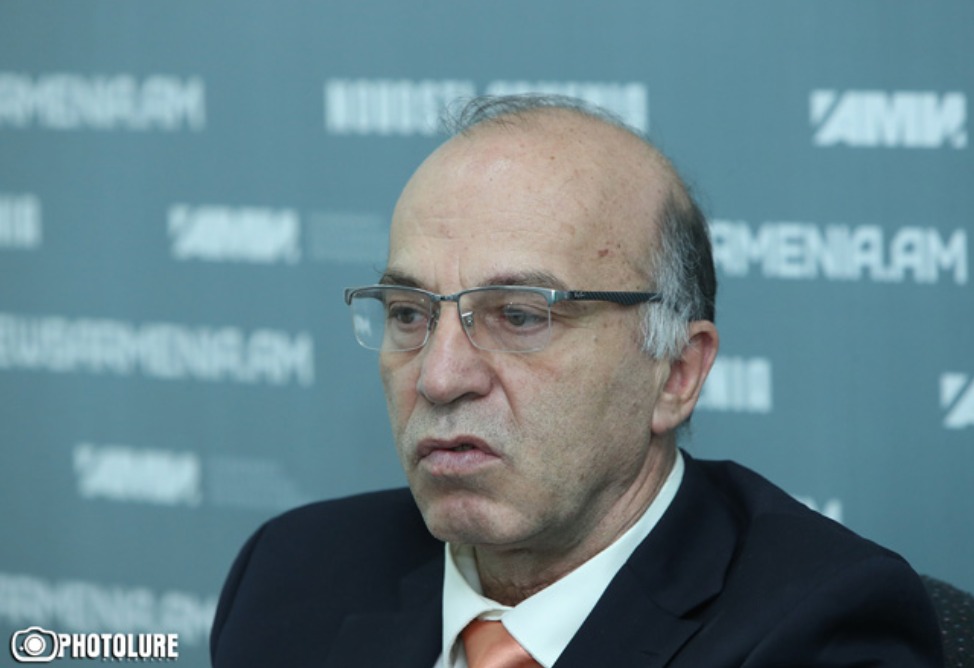
YEREVAN, July 22. /ARKA/. Fitch Ratings' affirmation of Armenia's "BB-" rating with a "positive" outlook is overly optimistic, as the sustainability of the peace process with Azerbaijan remains uncertain and the country's economy faces serious structural and external risks. This opinion was expressed by Tatul Manasaryan, Doctor of Economics and head of the Alternative research center.
In an interview with ARKA news agency, he discussed why Armenia needs to prioritize economic security, the potential consequences of worsening relations with Russia, and whether the exploitation of the Amulsar oil field, the development of the "Trump Route," and the construction of a large AI data center are capable of ensuring sustainable economic growth.
ARKA — Fitch maintained its positive outlook on Armenia's rating, particularly given the progress of the peace process with Azerbaijan. How sustainable is this factor, given that Fitch links further progress to constitutional amendments and a possible referendum?
T. Manasaryan — I think the outlook is overly optimistic and even somewhat out of touch with reality, as a great deal of serious work remains to be done to implement it.
The future of Armenian-Azerbaijani relations is unpredictable even over the next month. Despite the agreements reached between the two countries, new surprises from the neighboring country's leadership can be expected every day. The current situation can be characterized by the formula "neither peace nor war." I would not base long-term forecasts on this.
It is necessary to analyze the state of the Armenian economy in more depth and, taking into account a variety of factors, develop various scenarios that could benefit the country. Thus, it is necessary to assess in advance the consequences of a possible border opening with Turkey, changes in trade terms, and various scenarios for developing relations with the Eurasian Economic Union. Currently, Armenia's exports to Russia are estimated at over $700 million per year, while the European Union offers less than €50 million in compensation.
For the economy, such scenario analysis is a much more useful tool than calculations based solely on favorable expectations.
At the same time, issues of economic security should become a key element of state economic policy.
ARKA — Could delays in preparation for the constitutional referendum or a negative vote result be grounds for revising Armenia's rating outlook?
T. Manasaryan — Of course. However, such organizations are not always capable of the necessary flexibility and often demonstrate insufficient knowledge of the country and the region.
Moreover, local organizations practically do not conduct such research. The forecasts of the few entities that do undertake this work are not taken into account by either the government or the Central Bank of Armenia.
ARKA — Fitch considers the potential breakdown of the peace process with Azerbaijan a negative rating action factor. How likely is such a scenario in the next one to two years?
T. Manasaryan — Geopolitical risks remain one of the most significant factors of uncertainty for the Armenian economy.
No one has guaranteed either the establishment of peace or that Azerbaijan or Turkey will not take aggressive actions against Armenia.
Therefore, the state's economic strategy must include mechanisms for resilience even in the event of an unfavorable development.
ARKA — How quickly can Armenia diversify its foreign trade and energy ties to reduce its dependence on the Russian market? Can EU support significantly mitigate potential losses in the medium term?
T. Manasaryan — Trade and economic relations with the EU and other countries must be developed in any case. However, this does not mean that Armenia should do so at the expense of relations that have been built over decades. Even the world's largest economies, despite political disagreements and sanctions restrictions, continue to maintain certain economic ties with Russia, guided primarily by their own national interests.
Why should small Armenia abandon trade and economic cooperation with Russia?
ARKA - How realistic is it to maintain economic growth at around 5% in the medium term without accumulating imbalances—accelerating inflation, excessive lending growth, and increasing pressure on imports and the current account?
T. Manasaryan - Given the current government policy, I am quite skeptical of this forecast.
Sustainable growth at around 5% requires not only investment, but also increased labor productivity, expanded export potential, improved industrial technology, and an increased share of high-value-added products.
If growth is driven primarily by consumption, construction, or individual temporary factors, it cannot be considered sustainable in the long term.
ARKA — Fitch cites the start of production at the Amulsar field, the development of the Trump Route, and the implementation of a major artificial intelligence data center project as potential growth drivers. How could these projects impact the economy—through direct investment, employment, exports, tax revenues, or infrastructure development?
T. Manasaryan — Certainly, the start of production at the Amulsar field, the construction of a major artificial intelligence data center, and the implementation of the Trump Route project could have a positive impact on the country's economy. They could generate an influx of foreign direct investment, create new jobs, increase tax revenues, expand export opportunities, and stimulate the development of related infrastructure.
However, such an effect manifests itself gradually and takes time.
ARKA: Are these projects capable of ensuring sustainable economic growth of approximately 5% in the medium term, or does Armenia need additional structural growth sources?
T. Manasaryan - No. Even a few large investment projects cannot ensure such growth. The economy must develop in a balanced manner. Only with the formation of a sustainable gross domestic product structure can we expect long-term economic growth. However, in my opinion, this is not happening yet.